table of contents
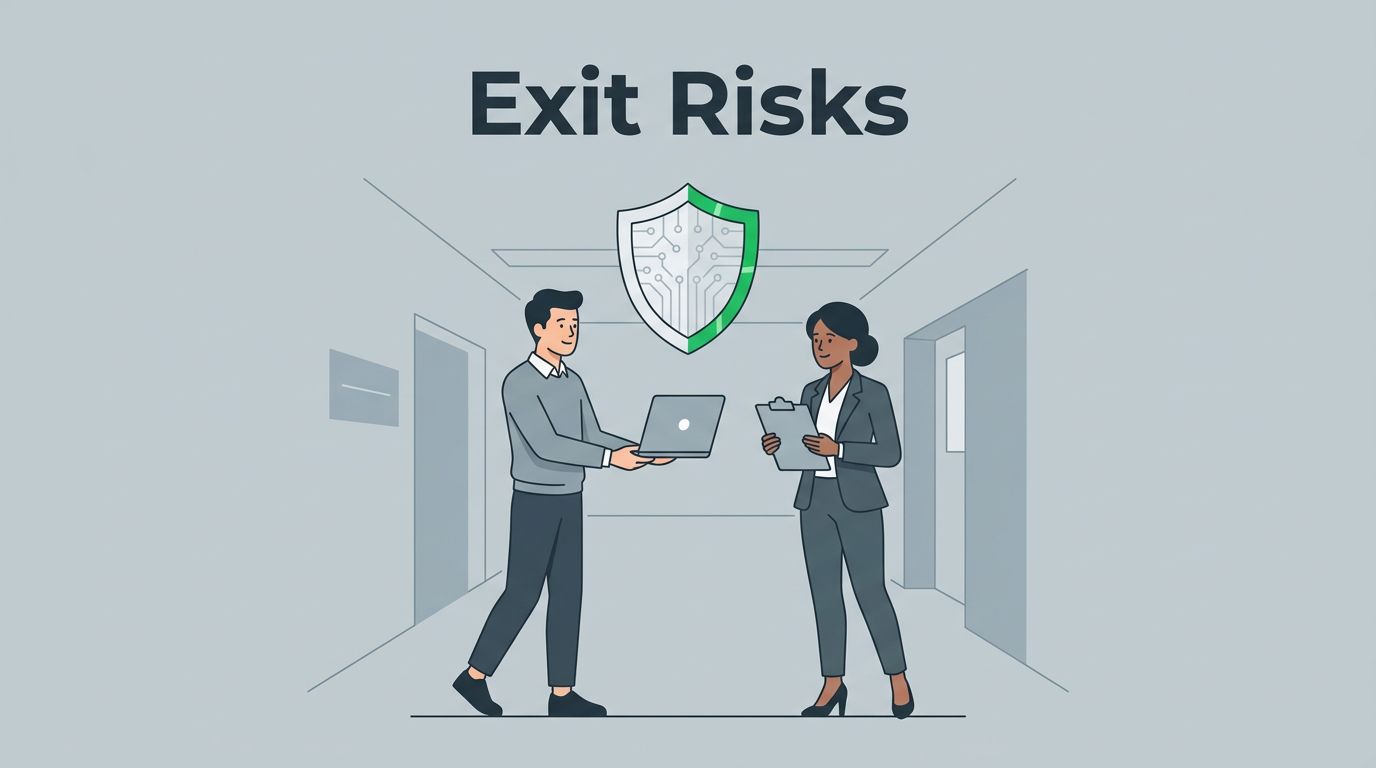
When an employee resigns, your immediate focus often shifts to administrative tasks like payroll or benefits. Yet, failing to look deeper into the security footprint of a departing staff member creates significant vulnerabilities. Cybersecurity exit interviews bridge the gap between HR processes and technical offboarding, helping you identify and mitigate threats that standard automated checklists often miss.
Treating offboarding as a strategic control point rather than a routine HR box-ticking exercise is vital for modern security. By integrating specific security-focused conversations into the departure process, you gain insight into where an employee may have inadvertently or intentionally stored sensitive assets. This conversation complements, rather than replaces, core technical controls such as access revocation, hardware retrieval, and log reviews.
Identifying the Risks Beyond the Checklist
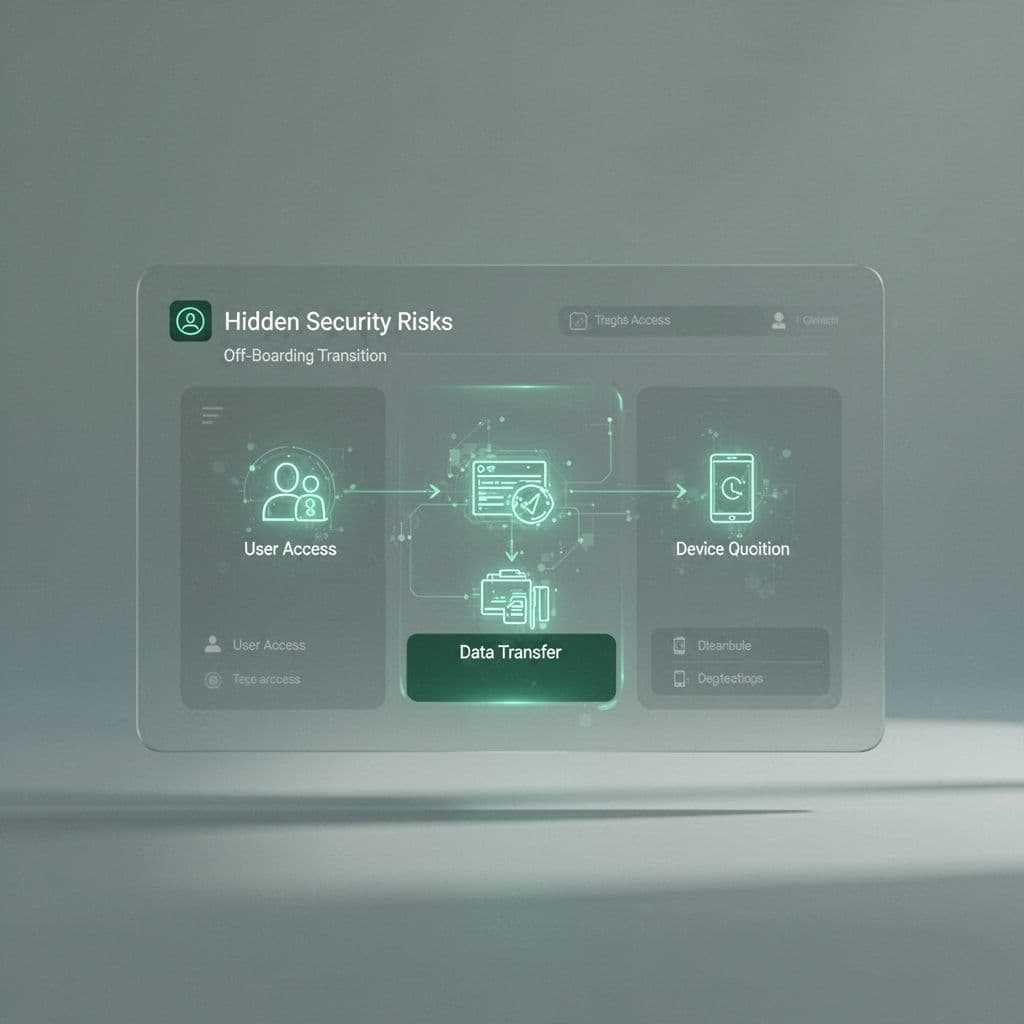
Technical offboarding handles the obvious: shutting down email access, wiping company-owned laptops, and revoking VPN credentials. However, hidden risks often reside in the periphery of an employee’s daily operations. These gaps include shadow IT, personal device synchronization, and forgotten third-party application connections. If an employee used personal tools to manage workflows, that data might remain outside your perimeter long after they depart.
Employees often maintain access to systems that bypass standard IT procurement. Examples include unauthorized cloud storage, personal email forwarding rules, or even hard-coded credentials in private code repositories. You must identify these assets to effectively secure them before they become legacy vulnerabilities.
Developing a Structured Conversation
A security-focused exit interview should be collaborative and transparent. Your goal is to gather information about the employee’s digital footprint to protect the organization and the individual from future liability. Always coordinate these sessions with your HR and legal teams to ensure you respect privacy laws and labor regulations while focusing on security outcomes.
When conducting these interviews, approach the conversation by asking about the tools the employee used to get their work done. Often, people use unofficial apps because they are faster or more convenient than corporate-approved solutions. Understanding this behavior helps you tighten your defenses, but in the short term, it allows you to secure the data currently held in those unauthorized locations.
Practical Questions for Departure Security
You need a repeatable list of questions to ensure consistency across all departures. Avoid vague inquiries; instead, focus on specific categories of information. Use these questions to prompt honest disclosure:
- Did you use any personal cloud storage, such as Dropbox or Google Drive, to sync or back up work files?
- Are there any personal devices, like tablets or home computers, that still contain active synchronizations to company mail or files?
- Do you know of any shared or team-level passwords that are not stored in our central password manager?
- Have you set up any email forwarding rules or automated scripts that move data to external addresses?
- Did you connect any third-party apps or browser extensions to your corporate accounts to assist with productivity?
- Are there any specific project files stored on local hard drives or external USB media that we need to recover?
If an employee is unsure, suggest they perform a quick check of their browser history or file sync settings during the transition period. Providing this guidance helps them act as a partner in the security process, reducing the likelihood of accidental data exposure later.
Coordinating with Technical Offboarding
These interviews serve as a discovery phase that directs your technical team. Once the interview concludes, use the findings to trigger specific remediation tasks. If the employee identifies a personal device with corporate data, the IT team must execute a remote wipe or data removal process.
Technical offboarding must remain the primary defense. If you struggle to maintain visibility across your environment, you may want to Book a Discovery Call with Bud Consulting to discuss how to improve your internal security controls and asset management. Organizations that fail to align their offboarding process often find themselves dealing with unnecessary security noise and potential audit failures. For a deeper look at the risks associated with inadequate offboarding, refer to industry guidance on secure employee offboarding.
Risk Mitigation Checklist
Use the following checklist to ensure every departure covers both administrative and security bases. This process ensures you capture risks that might otherwise go unnoticed.
| Action Item | Priority | Responsibility |
|---|---|---|
| Revoke access to cloud and local systems | Immediate | IT/Security |
| Conduct security exit interview | High | HR/Security |
| Review recent data export logs | High | IT/Security |
| Retrieve company hardware | High | IT/Operations |
| Audit for shared credentials | Medium | Security |
| Clear personal device access | Medium | IT/Security |
| Terminate email forwarding rules | Immediate | IT |
Managing this checklist consistently limits the window of opportunity for data leakage or unauthorized access. Treat offboarding as a continuous security process rather than a single point-in-time task.
Maintaining Security Culture
The exit interview is also an opportunity to reinforce your security culture. Remind the departing employee of their ongoing obligations regarding confidentiality and data protection. When employees leave feeling respected and informed, they are much more likely to comply with security requirements during their final days.
Keep the tone professional and non-accusatory. If a worker feels targeted, they might become defensive, which decreases the quality of the information you receive. Frame the discussion around protecting the company and ensuring a clean break for the individual. This transparency often results in better cooperation and a more effective offboarding experience.
When the interview is done, ensure that you document all identified risks and the steps taken to mitigate them. This evidence is valuable for future audits and helps demonstrate that you have handled the departure with the required level of diligence and oversight. For a comprehensive overview of why this discipline is required, review common cybersecurity risks during employee offboarding.
Final Thoughts
Cybersecurity exit interviews are a necessary component of a robust risk management program. By uncovering hidden access points and unauthorized data storage, you significantly reduce the surface area for potential insider threats. Always ensure that these conversations occur alongside rigorous technical offboarding procedures.
When you normalize these security conversations, you transform a period of transition into an opportunity to validate your defenses. Taking this step ensures that your data remains secure, your compliance posture stays strong, and you minimize the risk of accidental exposure during every employee departure. Integrate these checks into your standard operations, and you will see a meaningful increase in your overall security confidence.