table of contents
A weak hiring brief can slow a cyber hire for weeks. Worse, it can send the wrong candidates into the funnel and waste everyone’s time. A strong cybersecurity hiring brief gives the search a target, so recruiters, managers, and security leaders all work from the same page.
That matters more in 2026. Security teams are hiring for cloud, AI, GRC, identity, and response skills at the same time, and the job titles often overlap. When the brief is clear, the role feels real, not vague.
Start with the risk the role must reduce
A good brief begins with the business problem, not the title. Are you cutting alert noise, fixing cloud gaps, improving audit readiness, or building stronger incident response? Say that in plain language, because it shapes everything that follows.
A vague title like security analyst can hide a dozen different jobs. That usually creates interview drift, especially when the team wants cloud, IAM, or incident support.
The ISC2 cybersecurity hiring trends study shows that employers keep valuing hands-on skill, training, and certification fit. That means a brief should describe outcomes, not just tools. If the team can’t explain why the role exists, candidates will feel that confusion too.
If the brief starts with a title only, the search will drift.
Build the brief around six core fields
If you need a starting point, a cybersecurity analyst job description template can help you see the shape, then you can tailor it to the role. The same structure works for analyst, engineer, and leadership searches.
| Field | What to capture |
|---|---|
| Role purpose | The risk or gap the hire will address |
| Key responsibilities | Five to seven day-to-day tasks |
| Success measures | Metrics, response times, or audit goals |
| Reporting line and partners | Who the person supports and who signs off |
| Tools and environments | SIEM, cloud, IAM, endpoint, GRC, or code tools |
| Working model | On-site, hybrid, shift, travel, on-call |
A clear field list keeps the brief tight and makes screening easier. Add a note on success in the first 90 days. That could mean cleaner escalations, fewer false positives, faster audit evidence, or better cloud guardrails.
A visual layout helps teams see where each section belongs.

Translate the job by role, not by generic security language
In 2026, role names can hide very different needs. A SOC analyst, cloud security engineer, and GRC analyst may all work in security, but they solve different problems. The role brief should say that out loud.
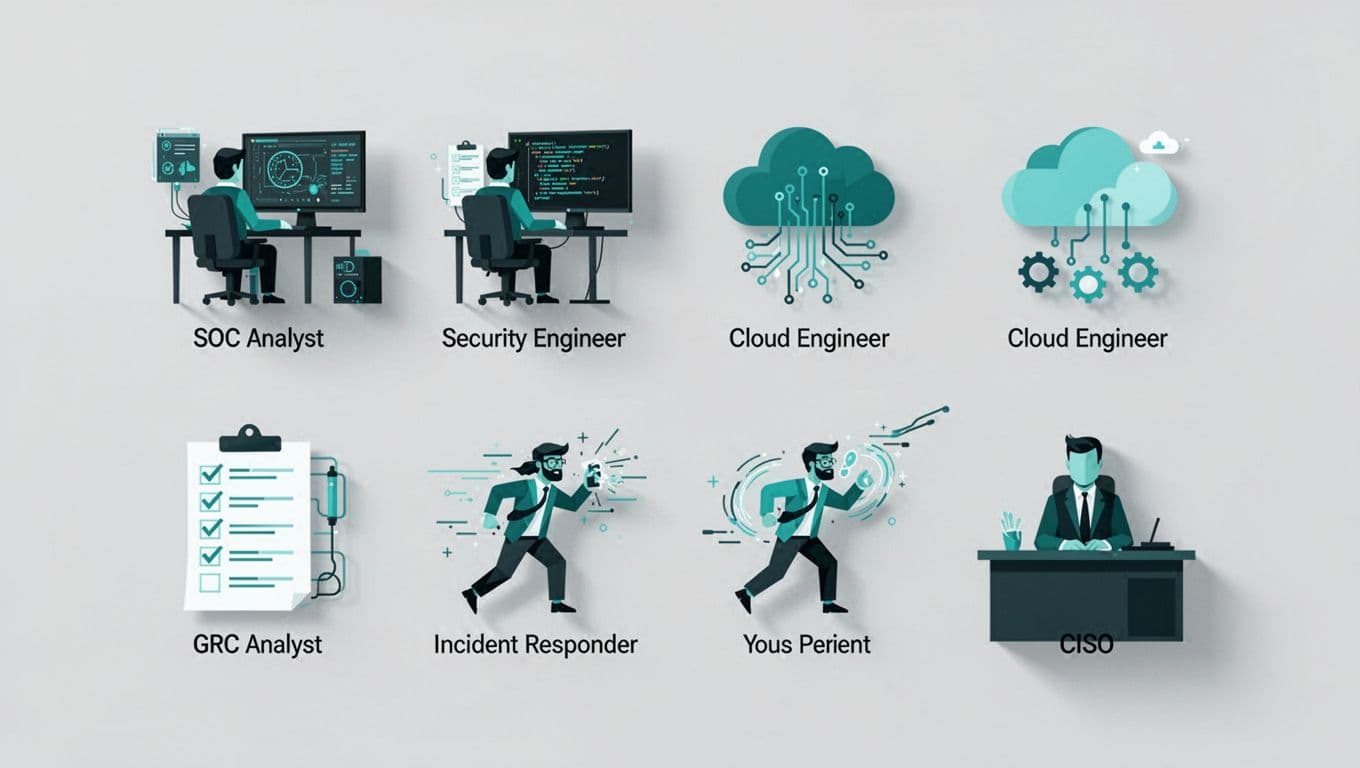
SOC analyst roles should emphasize SIEM triage, alert review, escalation notes, and cloud log familiarity. Many teams now expect analysts to read identity, endpoint, and cloud signals together. For a practical overview of the role, this SOC analyst guide is a useful reference.
Security engineer roles need scripting, detection logic, endpoint controls, and comfort with automation. Cloud security engineer roles should cover AWS or Azure, IAM design, policy-as-code, container basics, and guardrails for shared accounts. If your stack spans Kubernetes or serverless, name that too. A cloud security engineer guide can help you shape those expectations.
GRC analyst roles need risk assessments, evidence collection, vendor reviews, NIST or ISO 27001 mapping, and clean reporting. Incident responder roles should focus on containment steps, forensics basics, stakeholder updates, and after-action reviews.
CISO and director-level roles are different again. They need strategy, budget ownership, board reporting, team leadership, and a clear view of business risk. At that level, the brief should describe influence, not only technical depth.
Separate must-haves from preferences before the search opens
This is where many briefs go wrong. If every skill is listed as required, recruiters screen too hard and good people drop out. If the must-haves are too thin, the hiring manager ends up with mismatched candidates.
Use two short buckets.
| Must-haves | Preferences |
|---|---|
| Needed in the first 90 days | Helpful, but not a blocker |
| Tied to the main risk | Nice to have for fit or speed |
| Easy to prove in interview | Can be learned on the job |
For example, a cloud security engineer may need AWS IAM, incident support, and policy design on day one. A Kubernetes cert, a niche vendor badge, or industry background can sit in preferences unless the job truly depends on them. That approach matches how hiring has shifted toward skills-first screening in 2026, not just credential counting. The cybersecurity certifications employers want in 2026 article is a useful reminder that certs should support the brief, not replace it.
If the must-have list runs past six items, the brief is probably too broad. A tight brief helps recruiters sort faster and gives candidates a fair read on the job.
Also, get sign-off from the recruiter, hiring manager, and a security stakeholder before posting. Each person sees a different risk, so the brief needs one shared version.
Use a template your team can approve fast
A simple cybersecurity hiring brief can follow this order:
- Role title and level
- Why the role exists
- Main outcomes for the first six months
- Must-have skills and experience
- Preferences and stretch skills
- Team structure and reporting line
- Interview stages and decision makers
It also keeps the interview panel from inventing new requirements halfway through. The recruiter checks market fit, the hiring manager checks the work itself, and the security lead checks the risk.
When senior hiring gets messy, a second review helps. If you’re filling a hard-to-source role, Book a Discovery Call with Bud Consulting to pressure-test the brief before it goes live. Small gaps in the brief often become big delays later.
A final check makes the process cleaner. Does the brief name the risk, separate needs from wants, and match the role level? If not, rewrite it before the search begins.
A strong hiring brief doesn’t just describe a role, it sets the search up to succeed. When recruiters, hiring managers, and security leaders agree on the problem, the skills, and the trade-offs, the hiring process gets sharper and faster.
That matters in a market where cyber roles keep shifting toward cloud, compliance, and hands-on delivery. Get the brief right, and you’ll spend less time sorting resumes and more time meeting the right people.