table of contents
A strong candidate can walk out of three interviews and still end up stuck in limbo. That usually means the interviews were fine, but the debrief was not.
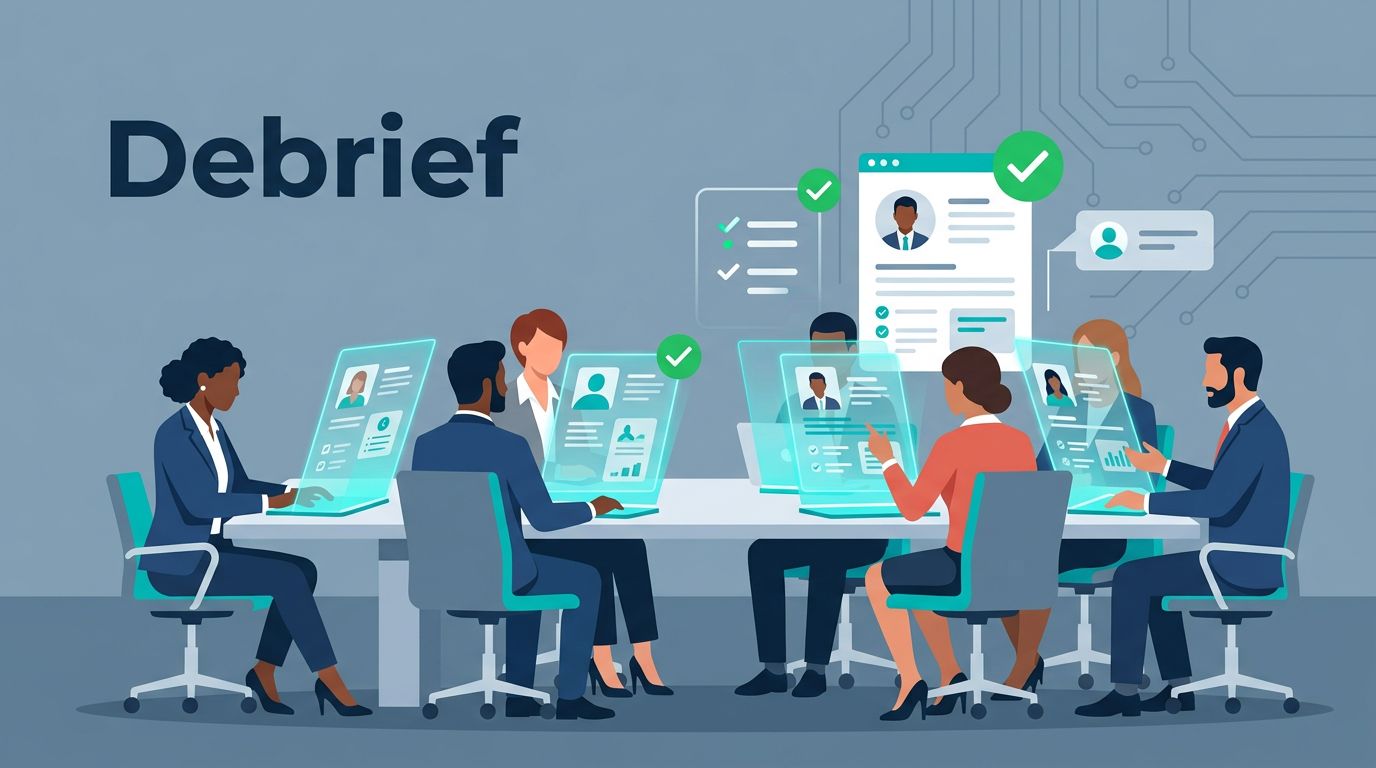
Cybersecurity hiring debriefs should turn scattered opinions into one clear shortlist. When they don’t, teams miss strong SOC analysts, overrate polished talkers, and slow down urgent hires.
The fix is simple in concept and hard in practice, a structured debrief with shared criteria, clear evidence, and a fast decision path. In security hiring, that matters because weak decisions show up fast.
What a strong debrief actually does
A debrief is not a casual recap of who “felt good” in the room. It’s the point where interview data gets tested against the role.
That sounds basic, yet many teams skip it. They talk about confidence, energy, or seniority, then forget to ask what the candidate actually proved.
A better debrief asks whether the candidate handled real security problems well. Did they explain an incident response choice clearly? Could they talk through IAM controls without drifting into buzzwords? Did they show judgment, not just memory?
This is where shortlist quality improves. A team that compares evidence will spot the difference between a slick interview and a useful hire.
For a useful model, see Metaview’s guide to an effective interview debrief. The core idea is simple, shared evidence beats loose opinion.

If the debrief sounds like a popularity contest, the shortlist will look like one too.
Security teams also move fast. A clear debrief shortens time to offer, because hiring managers don’t need a second round of internal guessing.
Build a scorecard that fits the role
One scorecard for every job creates weak hiring signals. A SOC analyst, a cloud security engineer, and a security leader need different proof.
Start with four to six job-critical criteria. Keep them narrow and practical.
A SOC analyst scorecard may include alert triage speed, escalation judgment, and communication under pressure. A security engineer should show secure design, scripting ability, and good handoffs with product teams. For cloud security roles, look for identity controls, policy-as-code, and platform depth. GRC candidates should show control mapping, audit readiness, and strong writing. For security leadership, prioritize prioritization, team building, and calm decision-making.
Use a simple scale, such as 1 to 4. Add one evidence field for notes. That keeps interviewers focused on what they saw, not how they felt.
This matters because security hiring still mixes skill, training, and credentials in uneven ways. The ISC2 cybersecurity hiring trends study is a good reminder that teams need a clearer way to weigh those inputs.
Keep the debate focused on evidence
Debriefs go off track when people argue from memory. They also drift when one loud voice sets the tone.
Ask every interviewer to answer the same questions.
- What did the candidate do well, with one example?
- What concern matters most for this role?
- Which answer changed your view, and why?
- Would you hire this person for this seat today?
If someone says “strong culture fit,” push for a behavior. If they say “not senior enough,” ask what task they couldn’t handle. Vague language hides weak evidence.
When the team can’t point to proof, the issue is usually the scorecard or the interview questions, not the candidate.
Cut bias before it cuts your shortlist
Bias creeps in when debriefs become memory contests. The first person to speak can anchor the room. A polished first impression can also crowd out better evidence later.
Start by collecting written scores before the group talks. That cuts groupthink and gives each interviewer room to think. Then have everyone read their notes before anyone defends a candidate.
This matters in cybersecurity hiring because confidence often gets too much weight. A smooth cloud security candidate may still miss basic IAM issues. A quiet GRC candidate may be the one who spotted the gap no one else saw.
Good structure helps here too. Secure hiring process guidance is a useful reference for reducing risk, especially in remote interviews and high-trust roles.

Interviewers should also calibrate before the hiring loop starts. If one person grades on technical depth and another grades on polish, the shortlist will become a compromise instead of a decision.
Your quick-start checklist for better debriefs
If the process feels messy, use this on the next opening. It works for SOC, cloud security, incident response, GRC, and leadership searches.
If you need help tightening the process for senior or hard-to-fill roles, Book a Discovery Call with Bud Consulting.

- Send the scorecard before interviews begin.
- Ask interviewers to capture evidence, not impressions.
- Review scores before the group discussion starts.
- Focus the debrief on the top strengths and top risks.
- End with one clear outcome, hire, reject, or next step.
If the team still disagrees after that, hold a smaller follow-up with the hiring manager and recruiter. More people usually means more noise.
Better shortlists don’t come from longer meetings. They come from clearer thinking.
The best cybersecurity hiring debriefs are short, structured, and honest. They turn interviews into decisions, and decisions into stronger teams.