table of contents
A new hire can create a security problem on day one with one bad click, one shared password, or one overdone permission set. That’s all it takes to expose data, slow down work, or open a path for attackers.
A strong cybersecurity onboarding plan stops those mistakes early. It gives people the right access, clear rules, and simple habits they can follow without guesswork.
The best plans work for every employee, and they also scale for security-sensitive roles. In 2026, that means short training, identity checks, and regular follow-up, not a one-time slide deck.
Start before the first login
Security onboarding should begin before a new hire touches a laptop. If HR, IT, and security wait until day one, they’re already behind.
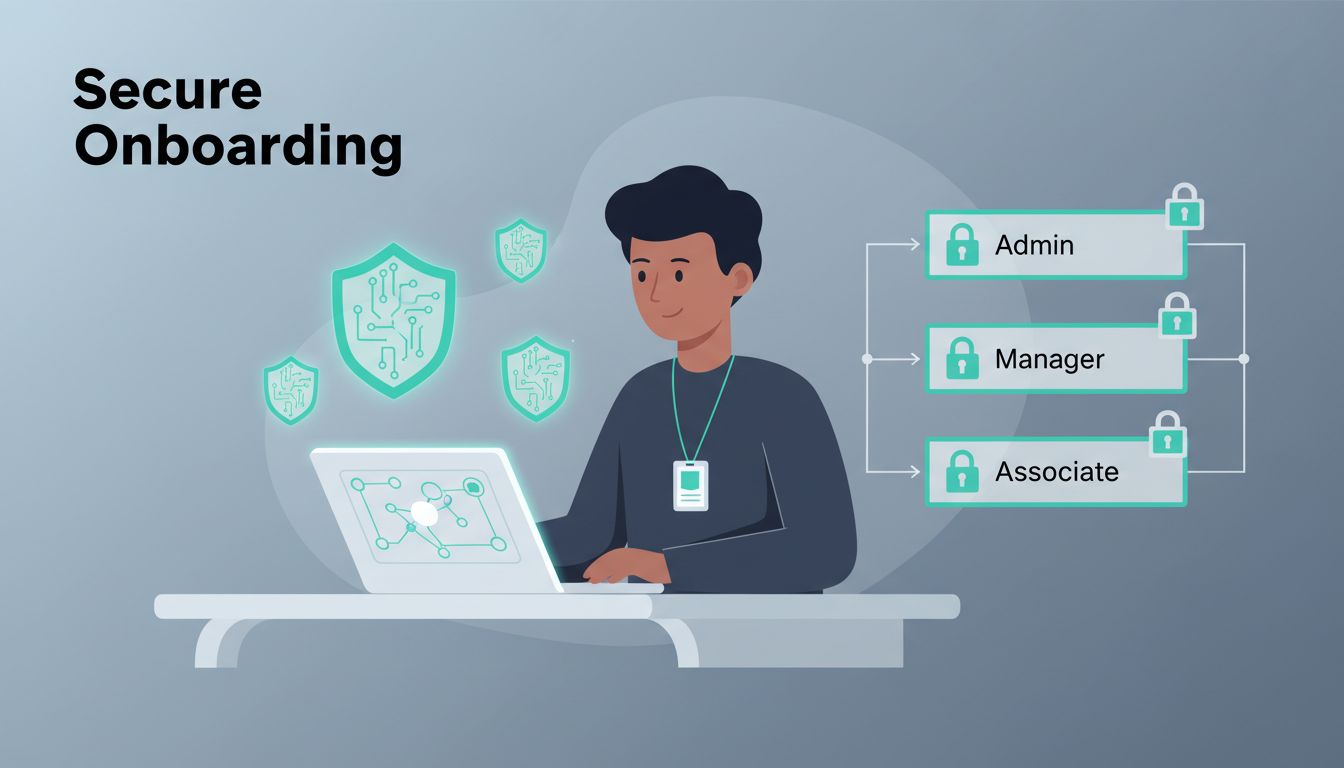
Start by deciding who approves access, what devices are issued, and where policy training lives. Then map each role to the tools it truly needs. A finance hire and a developer should not start with the same access, and a new analyst on the security team needs a different path again.
For a practical model, compare your process with a 30-day security-first new hire onboarding guide. It shows how much risk drops when access and training move together.
The goal is simple, reduce surprise. When the first login happens, the company should already know the answer to every basic security question.
Build the first 30 days around access, setup, and habits
The first month should feel like a guided path, not a pile of tasks. Secure device setup belongs at the front of the plan, because a clean device makes every other control easier.

Use a short timeline so everyone knows what happens next.
| Time | What to cover | Checkpoint |
|---|---|---|
| Before day 1 | Create accounts, ship device, activate MFA | Login works without admin rights |
| Day 1 | Review policies, contacts, and reporting steps | New hire knows where to report issues |
| Week 1 | Complete phishing and device training | Pass a short quiz or live check |
| Days 2 to 14 | Open only role-based tools | Access matches job needs |
| Day 30 | Review permissions and training gaps | Remove unused access |
That rhythm keeps the process tight. It also keeps pressure off managers, because the checkpoints are already built in.
Teach the few habits that stop most mistakes
New hires don’t need a giant rulebook. They need the handful of actions that prevent common attacks.
That means MFA on every account, least privilege by default, secure device setup, and a clear incident reporting path. It also means phishing awareness from the start. A fake invoice, a gift-card scam, or a lookalike login page can catch anyone who hasn’t practiced.
Most first-week security mistakes come from confusion, not bad intent.
Short lessons work better than long lectures. A ten-minute module on password managers, a five-minute drill on suspicious links, and a quick walk-through of data handling rules can stick far better than a long annual course.
For a simple starting point, this new employee cybersecurity checklist covers the basics well. Pair that with examples from your own team. A sales rep should know how to verify a payment request. A developer should know how to protect secrets. A new SOC analyst should know which alerts need fast escalation.
Split the path for general staff and security hires
Not every onboarding plan needs the same depth. Company-wide onboarding should focus on safe behavior. Cybersecurity team onboarding needs deeper access rules, stronger controls, and more technical checks.

| Area | Company-wide onboarding | Cybersecurity team onboarding |
|---|---|---|
| Access | Standard tools, least privilege | Admin paths, IAM/PAM controls |
| Training | Phishing, policy, reporting | Threat handling, escalation, secure admin use |
| Devices | Managed laptop, updates, encryption | Hardened devices, stricter logging |
| Reviews | 30, 60, 90 day checks | More frequent access and role reviews |
This split matters because risk looks different in each group. A new HR hire needs safe file sharing. A new cloud security architect needs approved admin workflows and tight access review.
If you’re filling senior security roles or building onboarding for a growing team, Book a Discovery Call with Bud Consulting. The same structure that helps new hires also helps retain trust in security-sensitive teams.
Keep the plan alive after week one
Good onboarding doesn’t stop when the welcome email goes out. It keeps going through periodic access reviews, manager check-ins, and short refreshers.

Use this as your minimum checklist:
- MFA is active on every account.
- The device is encrypted, patched, and managed.
- The employee has only the access needed for the role.
- Phishing awareness training is complete.
- Incident reporting steps are saved and easy to find.
- A 30-day access review is on the calendar.
Track what matters too. Look at training completion, access exceptions, time to report suspicious activity, and how often permissions change after review. Those numbers show whether the plan is working or just sitting in a folder.
A strong cybersecurity onboarding plan turns habits into routine. It lowers human error, protects access, and gives new people a safer way to start. The best version begins before day one and keeps working long after it.