table of contents
Cybersecurity threats hit harder in 2026. With 4.8 million unfilled jobs worldwide, most teams scramble to cover basics. You face rising breach costs, up to $1.76 million more for understaffed groups.
As a CISO or IT leader, you weigh options daily. Build a full internal team? Or tap cybersecurity outsourcing for quick expertise? Neither choice fits every company perfectly. Factors like budget and company size shift the balance.
This guide breaks it down. You’ll see clear examples, a comparison table, and a simple framework to decide.
Key Trade-Offs: Cost, Control, and Expertise
Start with costs. In-house hires demand salaries, benefits, and training. A senior analyst costs $150,000 yearly, plus overhead. Outsourcing often runs 30-50% less because providers spread expenses across clients.
Control matters too. Internal teams align closely with your culture. They respond fast to daily needs. Yet outsiders bring fresh eyes and scale during spikes.
Expertise gaps loom large. Cloud security skills miss in 90% of teams. Providers fill that void instantly. However, accountability can blur with vendors. Contracts must spell out SLAs clearly.
Speed wins for startups. They outsource to launch protections fast. Enterprises prefer in-house for custom strategies. For example, small firms with tight budgets lean on managed services. Larger ones build cores internally first.
Risks balance out. Internal setups risk turnover in this talent crunch. Outsourcing shifts some liability but demands vetting providers well.
Core Functions to Keep In-House
Certain roles stay internal for tight control. Strategy tops the list. Your CISO defines policies that match business goals. No vendor grasps your risks like your leaders do.
Compliance oversight fits here too. Regulations like GDPR or SEC rules demand daily vigilance. Internal staff track changes and audit paths. They own accountability to the board.
Employee training rounds it out. Security culture starts at home. In-house teams run phishing drills and awareness sessions. This builds habits vendors can’t enforce.
Small companies might outsource basics here if expertise lacks. But growing firms with 50+ staff benefit from owning these. They foster ownership and quick tweaks.
Consider a mid-size retailer. They keep policy setting internal. It ensures strategies fit unique supply chain risks. Results show fewer insider errors.
Functions That Thrive with Outsourcing
Other tasks suit external help perfectly. Penetration testing leads. Experts probe systems quarterly. They spot flaws your team might miss amid daily fires.
Managed Detection and Response (MDR) follows close. Providers monitor 24/7 with AI and analysts. In 2026, 25% of firms turn here due to shortages. Small businesses gain enterprise-grade watch without full SOC costs.
Cloud security assessments work well outsourced. Complexity from multi-cloud setups overwhelms internals. Vendors handle IAM tweaks and misconfig scans.
For deeper MDR insights, check N-able’s guide on outsourcing it. It weighs control against coverage.

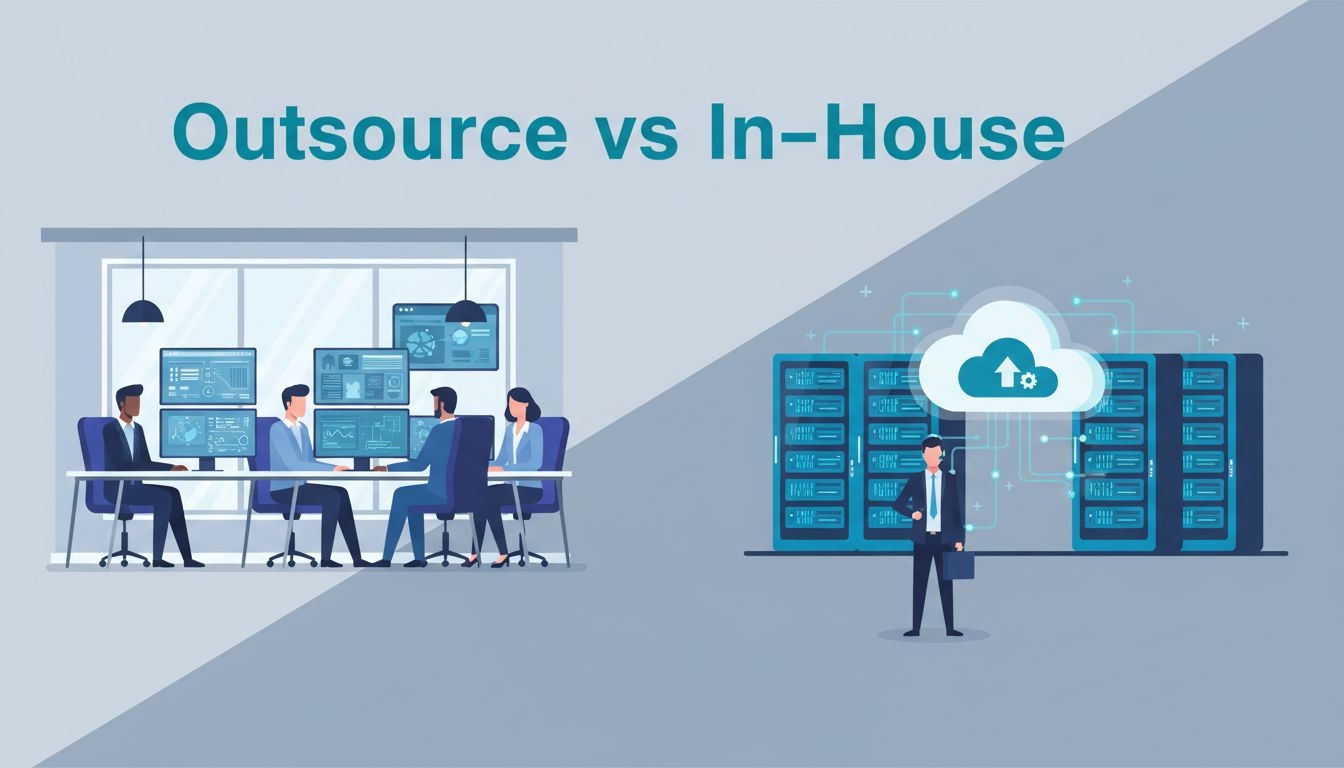
This image shows a managed team at work. They catch threats your staff might overlook.
Incident response often outsources too. Rare but intense events need specialists. Providers contain breaches faster, cutting downtime.
A tech startup example: They outsource pen tests and MDR. Internal focus stays on core dev. Breach risks drop 66% versus understaffed peers.
Side-by-Side Comparison: Outsourcing vs. In-House
Use this table to scan options quickly. It highlights six key factors across common functions.
| Factor | In-House Strengths | Outsourcing Strengths | Best For |
|---|---|---|---|
| Cost | High upfront; stable long-term | Lower entry; predictable fees | Startups (outsource); Enterprises (in-house) |
| Expertise | Builds over time | Instant access to specialists | Skills gaps (outsource) |
| Speed | Slower ramp-up | Immediate deployment | Urgent needs (outsource) |
| Control | Full ownership | Shared; needs strong contracts | Strategy (in-house) |
| Risk | Turnover exposure | Vendor liability shift | Compliance (in-house) |
| Scalability | Limited by headcount | Handles peaks easily | MDR/pen tests (outsource) |
In short, outsource where scale and skills matter most. Keep control-heavy tasks internal.
Why a Hybrid Model Fits Most Companies
Pure in-house or full outsourcing rarely wins. Hybrids blend both for balance. Internal teams own strategy. Outsiders handle monitoring and tests.
This setup scales with growth. A 200-person firm keeps a small security core. They partner for MDR and cloud audits. Talent shortages hit less hard.
Regulatory pressure favors hybrids too. Finance sectors need in-house oversight but outsource response. Budgets stretch further.
See Apex Systems’ analysis on strategic choices. It matches real-world shifts.

Partners collaborate like this. It speeds fixes while keeping you in charge.
Bud Consulting helps here. They source architects and engineers to build your core. Then pair with services for full coverage.
Simple Framework to Make Your Call
Assess your setup in four steps. First, map skills gaps. Cloud short? Outsource there.
Second, check budget. Under $500K yearly? Prioritize outsourcing MDR.
Third, gauge size and regs. Small with low pressure? Full outsource. Enterprise with HIPAA? Hybrid leans in-house.
Finally, test with pilots. Run a three-month MDR trial. Measure response times.
Apply this yearly. Threats evolve, so adjust. Most land on hybrid for 2026’s crunch.
The talent gap won’t close soon. Smart leaders mix internal control with outsourced power. Pick your path now. Book a Discovery Call with Bud Consulting to fill gaps fast.
(Word count: 982)