table of contents
Choosing a cybersecurity recruitment agency in 2026 is harder than it sounds. Plenty of firms promise reach, speed, and deep networks, but the shortlist often tells a different story.
The market still favors candidates in cloud security, GRC, IAM, AppSec, and security leadership. That means the wrong partner can waste weeks, while the right one can shorten hiring without lowering the bar.
The best way to compare vendors is with hard criteria, a weighted scorecard, and a clear view of the roles you need now.
Why 2026 makes agency comparison tougher
Hiring pressure is still high, and the gap is not small. Security teams are chasing the same people for SOC, cloud, risk, identity, and incident response work, so time-to-fill matters more than ever.
That said, speed alone can fool you. A fast shortlist is useless if the candidates cannot pass a technical interview or operate in a regulated environment.
The role also matters. Filling a SOC analyst seat looks very different from hiring a security leader. One needs strong triage skills and alert discipline. The other needs judgment, trust, and the ability to lead through noise.
If you’re scanning the market, Christian & Timbers’ 2026 agency roundup is a useful snapshot of how crowded the field is. Treat it as a map, not a verdict.
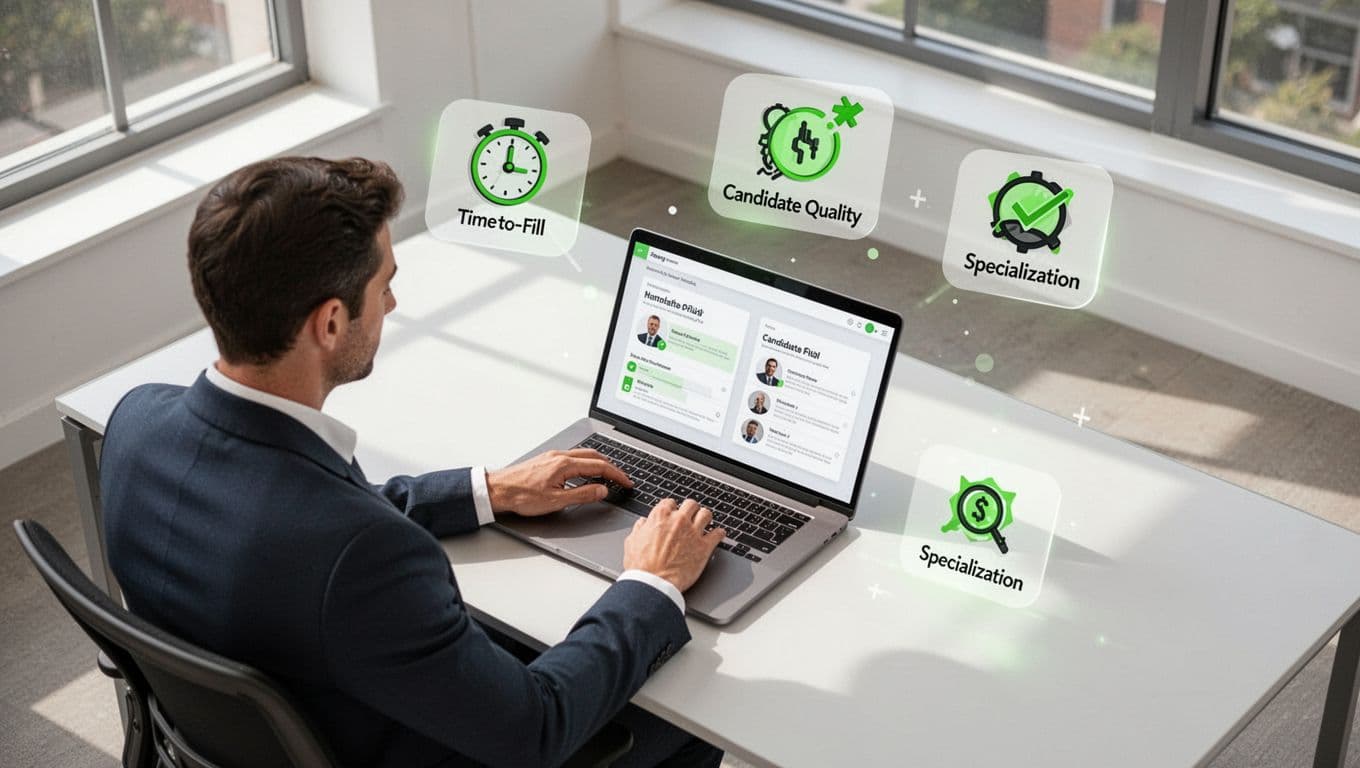
Specialization should match the roles you need
A strong cybersecurity recruitment agency should prove that it can fill the exact roles on your roadmap. That means more than saying it “does security hiring.”
Look for recent placements in roles like these:
- SOC analysts and incident responders
- Security engineers and cloud security specialists
- GRC professionals and IAM specialists
- AppSec engineers and penetration testers
- Security leaders, including directors, heads of security, and CISOs
Each of those searches has its own rhythm. A cloud security specialist needs different proof than an IAM candidate. A penetration tester needs different screening than a GRC lead.
Ask how the agency sources passive candidates too. The best people are often not applying anywhere. They need direct outreach, market context, and a clear reason to move.
Technical screening matters just as much. A recruiter should know how to test for real skill, not just keywords on a CV. If the team cannot explain its screening method, it will probably send you polished profiles with weak depth.
For a broader view of specialist firms, Talent Hero Media’s recruiter list gives a sense of how agencies position their strengths. Use that kind of list to start your research, then test every claim.

A weighted matrix keeps the decision honest
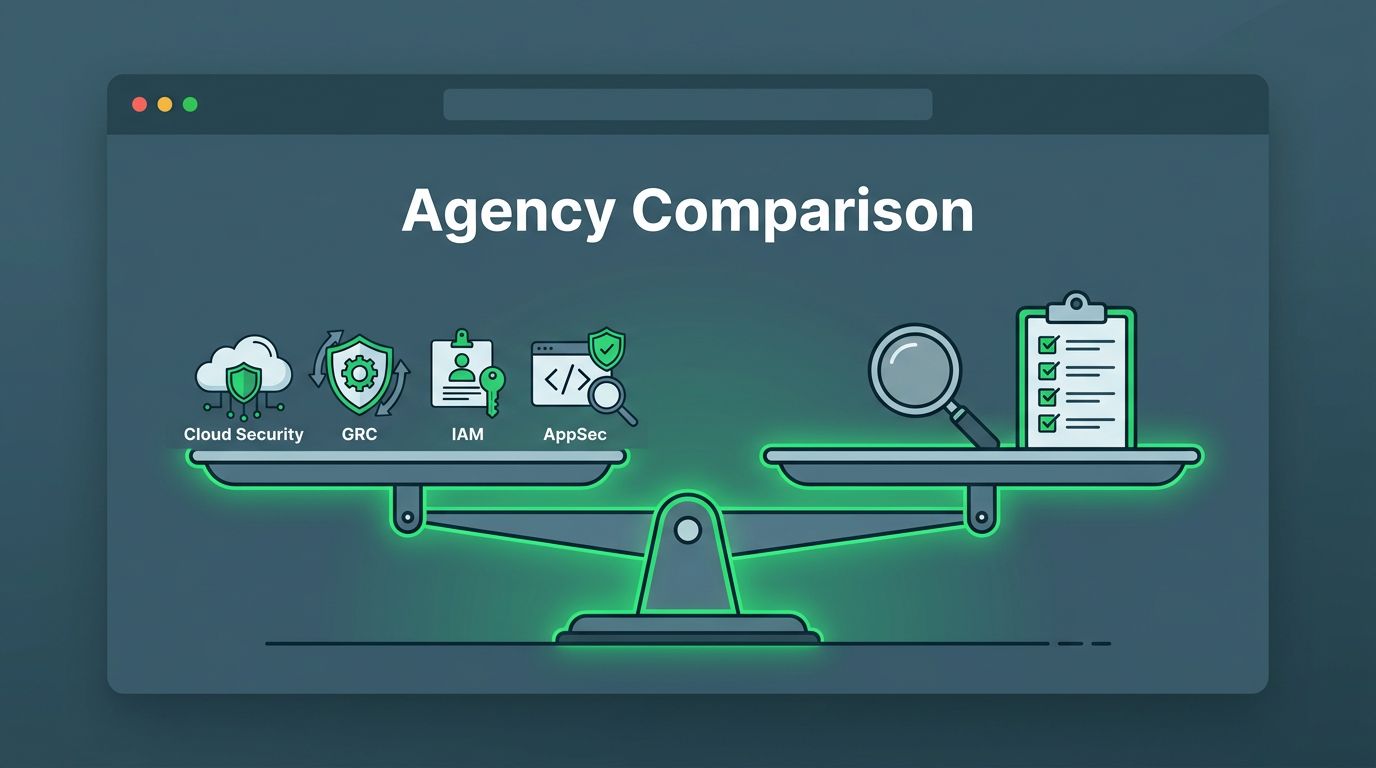
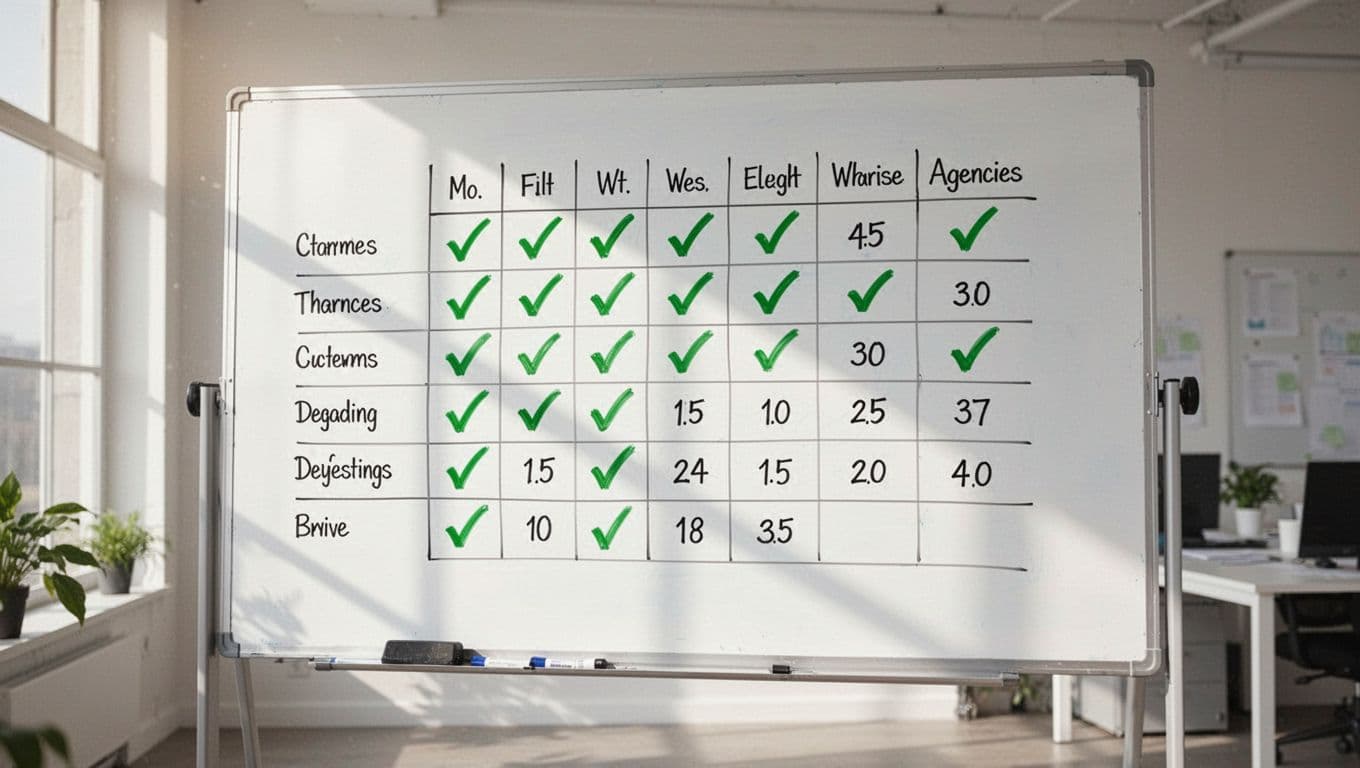
A weighted comparison matrix helps you compare agencies without getting distracted by sales talk. It keeps the focus on the criteria that matter most to your team.
| Criterion | What to look for | Weight |
|---|---|---|
| Role specialization | Recent placements in your exact security roles | 20% |
| Candidate quality | Technical screen, pass-through rate, hiring manager feedback | 20% |
| Time to fill | Role-specific speed, not generic averages | 10% |
| Clearance and compliance | Experience with regulated or cleared searches | 15% |
| Passive candidate access | Evidence of direct outreach to proven talent | 10% |
| Pricing model | Clear retained or contingency terms | 10% |
| Diversity hiring | Real sourcing plan and diverse shortlist goals | 5% |
| Post-placement success | 90-day retention and offer acceptance data | 10% |
Adjust the weights to fit the role. A CISO search may need more weight on fit and retention. A SOC build-out may care more about speed and volume.
If an agency cannot explain how it screens for IAM or AppSec skill, score that category low.
This is also where pricing transparency matters. Retained search can make sense for hard-to-fill or senior roles. Contingency can work for faster or lower-risk searches. The key is clarity. You should know what you pay, when you pay, and what happens if the hire leaves early.
A simple matrix turns “good vibes” into evidence.
Ask for proof before you sign
Before you choose a cybersecurity recruitment agency, ask for proof, not adjectives. The best firms can show how they work, not just talk about it.
Use these questions to separate strong partners from glossy sales decks:
- Which roles have you filled in the last 12 months?
- Who runs the technical screen, and what rubric do they use?
- How do you source passive candidates in my market?
- What are your retained and contingency terms?
- What do you track after placement, such as 90-day retention or hiring manager satisfaction?
- How do you support employer branding and diverse sourcing?
Compliance and clearance hiring deserve special attention. If you hire in defense, public sector, healthcare, or other regulated spaces, the agency should understand background checks, clearance timelines, and sector rules. A vague answer here is a red flag.
For a second benchmark against current market claims, GoGloby’s 2026 agency guide is helpful. Then compare every promise against your own scorecard.
If your team wants help pressure-testing a shortlist or filling hard-to-hire senior roles, Book a Discovery Call with Bud Consulting.
A good agency should help you hire faster, but it should also improve the quality of every conversation. If the shortlist gets stronger, the process gets easier.
The best choice is the one that proves its value
The strongest cybersecurity recruitment agency in 2026 is the one that can show role depth, screening quality, and clear results. When those three pieces line up, the hiring process stops feeling random.
A polished pitch may get attention. Clear evidence gets hires across the line.