table of contents
A breach often starts with one weak process, not one dramatic hack. That’s why many organizations book a cybersecurity risk assessment consultant before they face an incident.
The right consultant does more than run tools. They connect threats, controls, business impact, and likely failure points, then turn that into a clear action plan. If you’re comparing firms now, the way they work matters as much as the final report.
Why organizations bring in a consultant
Internal teams know their environment, but they also live inside it. That makes blind spots easy to miss.
A consultant brings outside structure. They can challenge assumptions, compare your controls against current practice, and translate technical issues into business risk. That matters when leaders need to decide what gets fixed first and what can wait.
A strong engagement usually gives you three things. First, a clear view of where exposure sits. Second, a prioritized list of fixes. Third, language that helps IT, compliance, and executives stay on the same page.
That’s also why the best providers don’t stop at scanning. They look at people, process, and technology together. In other words, they help you see the whole board, not one square.
What the assessment process should look like
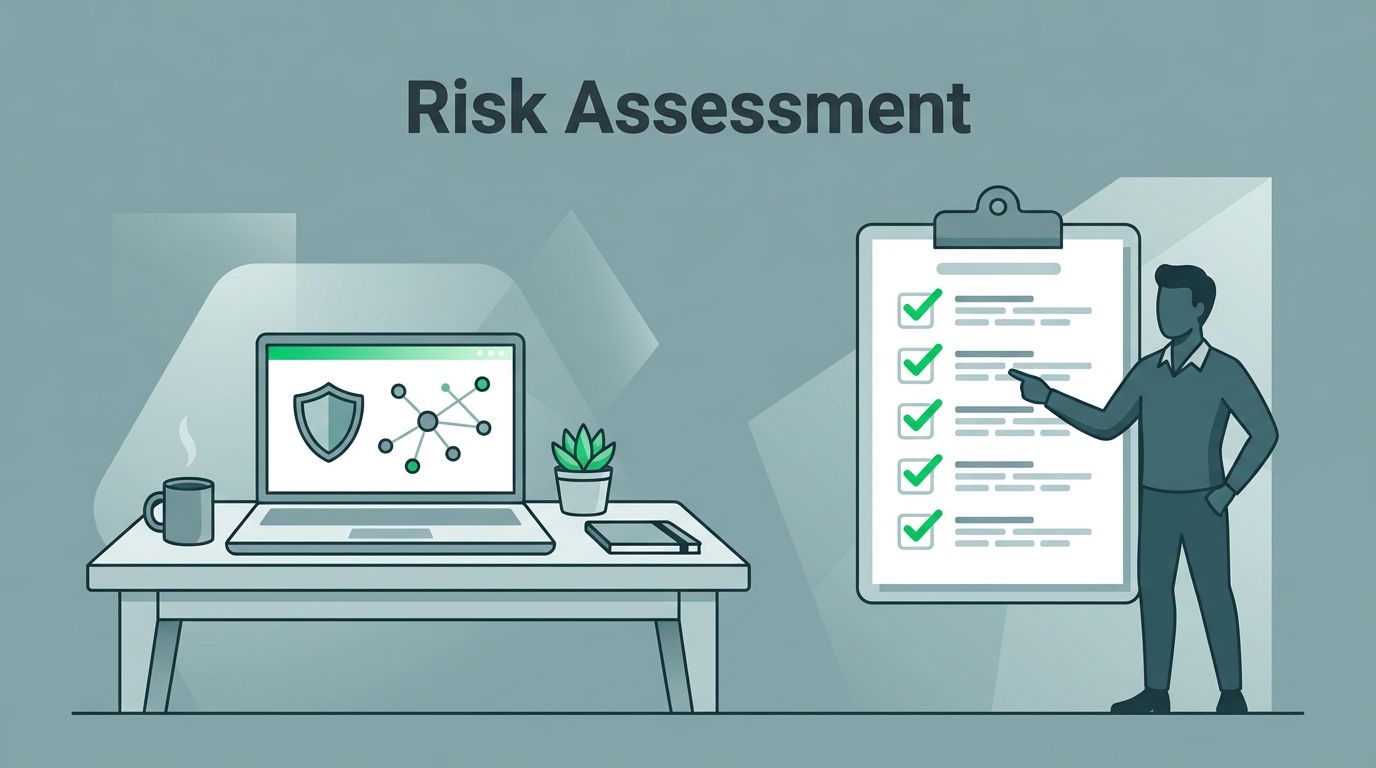
A good assessment starts with scope, not software. The consultant should define which systems, teams, locations, vendors, and cloud services are in play.
From there, the work usually moves through a few steps:
- Preparation of scope, goals, and owners
- Asset and control review across the environment
- Interviews and evidence collection with key teams
- Risk rating based on likelihood and impact
- Reporting and remediation planning
That process should feel measured, not rushed. Many consultants align it with the NIST risk assessment guide, which still gives organizations a solid model for preparing, conducting, and maintaining assessments.
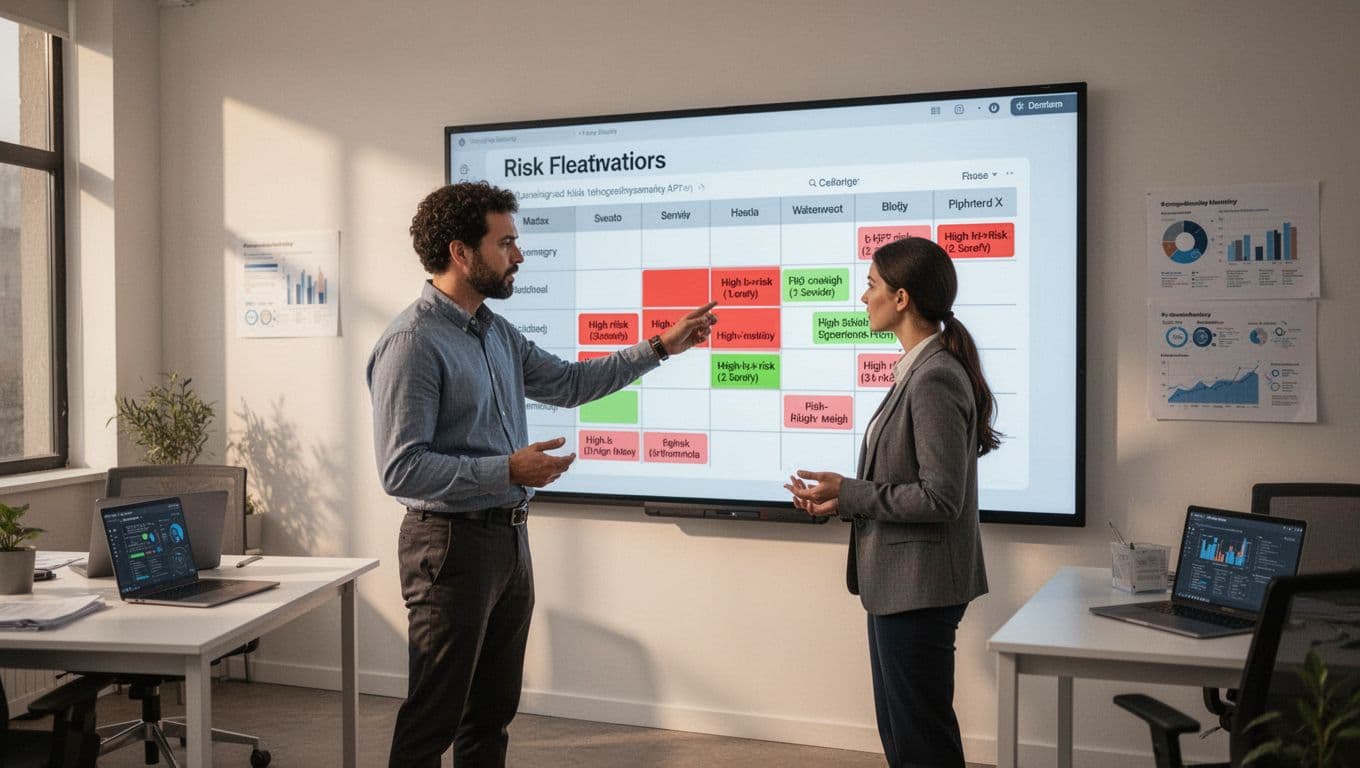
A risk assessment is only useful when the final report tells you what to fix first.
Ask for the deliverables before you sign. A useful report should include a risk register, clear evidence, and a remediation roadmap. Without those, the engagement may look busy but won’t drive decisions.
Risk assessment vs. other security services
Many buyers mix up four different services. They overlap, but they answer different questions.
A helpful risk assessment vs. vulnerability assessment comparison makes the same point, a scan is not the same as a business risk review.
| Service | What it tells you | Best use case |
|---|---|---|
| Vulnerability assessment | Known technical weaknesses in systems | You need a broad technical sweep |
| Penetration test | What an attacker can exploit in a defined scope | You want proof of exploitability |
| Audit | Whether evidence matches a control standard | You need compliance verification |
| Risk assessment | Which threats matter most to the business | You need a prioritized decision map |
A vulnerability assessment is wide but shallow. A penetration test goes deeper on selected targets. An audit checks whether controls meet a standard. A full risk assessment connects all of that to business impact.
If you need a simple rule, use this one. Scans find issues. Tests try to break things. Audits check compliance. Risk assessments help leadership choose what to do next.
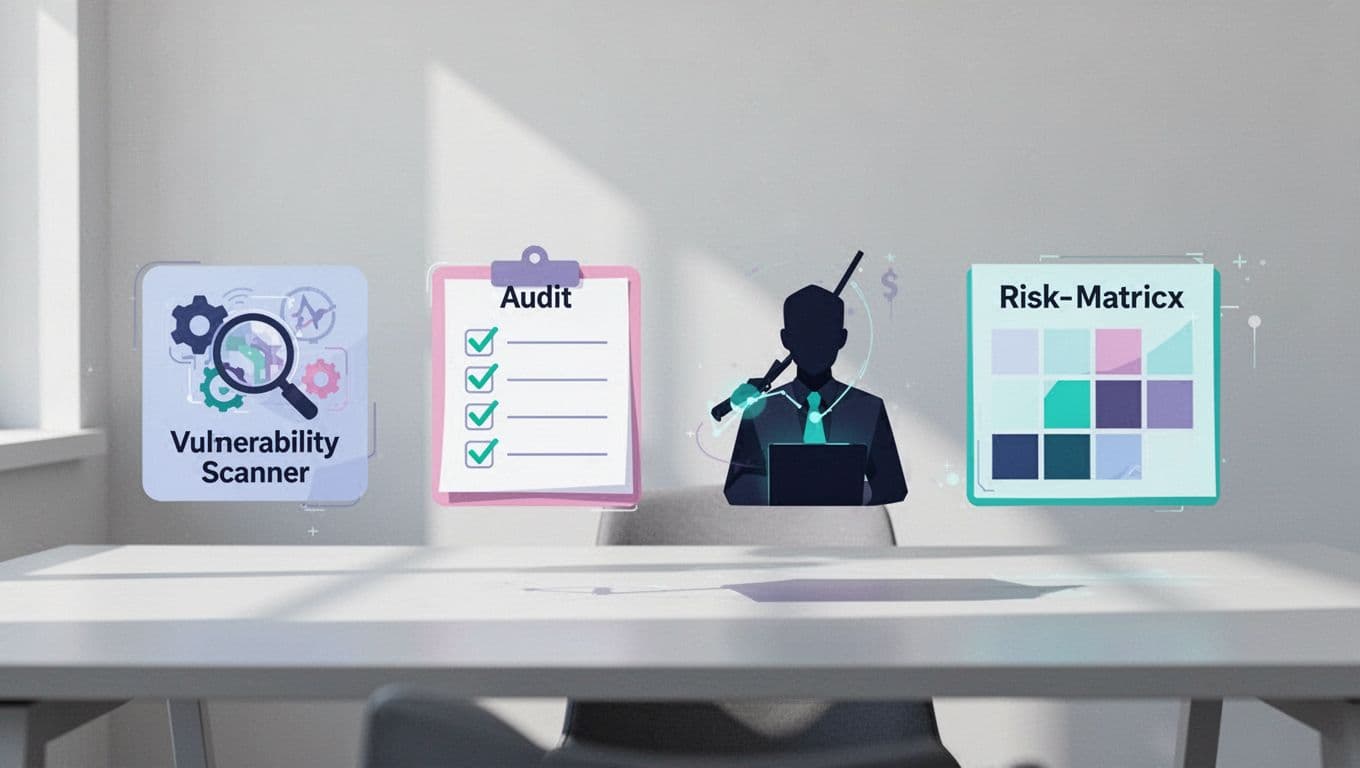
Common scope areas and realistic timelines
Scope should match your business risk. For most organizations, that means more than firewalls and laptops.
A consultant should ask about cloud services, identity and access management, backup strategy, third-party access, logging, incident response, privileged accounts, and sensitive data flows. If your workforce is hybrid, endpoint controls and remote access also matter.
Human behavior belongs in scope too. Phishing exposure, weak approvals, shadow IT, and policy drift can create real risk even when the tools look fine.
Timelines vary with size and complexity. A focused review for one business unit may take two to four weeks. Larger companies, or those with many systems and vendors, often need four to eight weeks or more.
What matters most is pace with purpose. A fast review that skips evidence usually creates rework. A slower, well-scoped engagement often saves time later.
Compliance in 2026, and why it still matters
Compliance is not the same as security, but it shapes the work. In 2026, many organizations still anchor their program to NIST Cybersecurity Framework 2.0, because it connects cybersecurity with enterprise risk and workforce planning.
That matters when the audience includes executives, auditors, and board members. A consultant should be able to map findings to the controls you already answer to, whether that’s SOC 2, ISO 27001, PCI DSS, HIPAA, or, where relevant, NIS2 and DORA.
The key test is simple. Can the consultant turn technical findings into evidence your stakeholders can use? If they can’t, the report may be accurate but still hard to act on.
Red flags that should make you pause
A weak proposal usually shows itself early.

Watch for these warning signs:
- Vague scope: If they can’t explain what’s included, the final bill may surprise you.
- No methodology: A solid consultant should describe how they assess risk and score it.
- Weak credentials or references: Experience with your size, sector, and systems matters.
- No remediation path: Findings without next steps leave your team with more noise, not more control.
A few more signs stand out. If the consultant promises a one-size-fits-all package, keep looking. If they won’t explain how they handle evidence, testing limits, or confidentiality, that’s a problem too.
Choosing the right partner for the work
Booking a consultant should feel like buying clarity, not buying a pile of slides. The best fit understands your business, speaks plainly, and leaves you with decisions you can act on.
That’s the real value of a cybersecurity risk assessment consultant. They help you see which risks matter now, which ones can wait, and where your budget will do the most good.
If your team is ready to compare scope, timelines, and fit, Book a Discovery Call with Bud Consulting.