table of contents
Cybersecurity teams face a 4.8 million global talent shortage this year. You know the drill: breaches cost understaffed firms an extra $1.76 million on average. Skills gaps hit 90% of teams, especially in cloud and AI security.
Budgets tighten, yet threats grow. You need reliable protection without breaking the bank or burning out staff. This comparison breaks down cybersecurity staffing models so you pick what matches your risks, size, and goals.
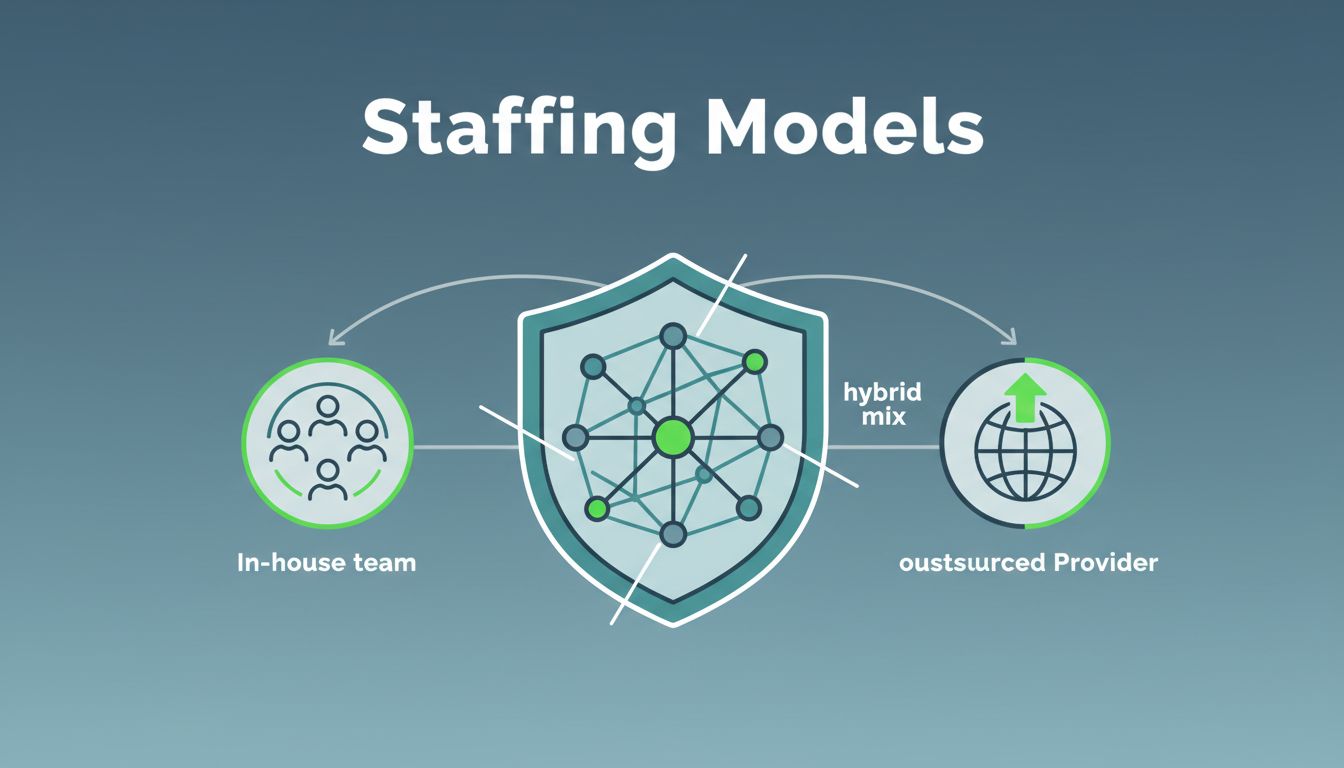
Main Cybersecurity Staffing Models
In-house teams build everything internally. You hire full-time analysts, engineers, and a CISO. They handle monitoring, response, and strategy from your office or remote setup.
Outsourced models shift work to a third-party provider. They manage your SOC operations entirely. You pay for their experts instead of recruiting yourself.
Hybrid setups mix both. Keep core staff for sensitive tasks; outsource routine monitoring or overflow. This balances control with flexibility.
MSSP, or Managed Security Service Providers, offer broad services like firewalls, endpoint protection, and compliance checks. They run 24/7 centers with your data feeds.
MDR focuses on detection and response. Providers hunt threats, triage alerts, and contain attacks fast. It’s targeted, not full-stack.
Fractional staffing brings part-time experts, like a CISO for 10 hours weekly. Ideal for guidance without full hires.
These options suit different needs. A grid view helps spot differences at a glance.
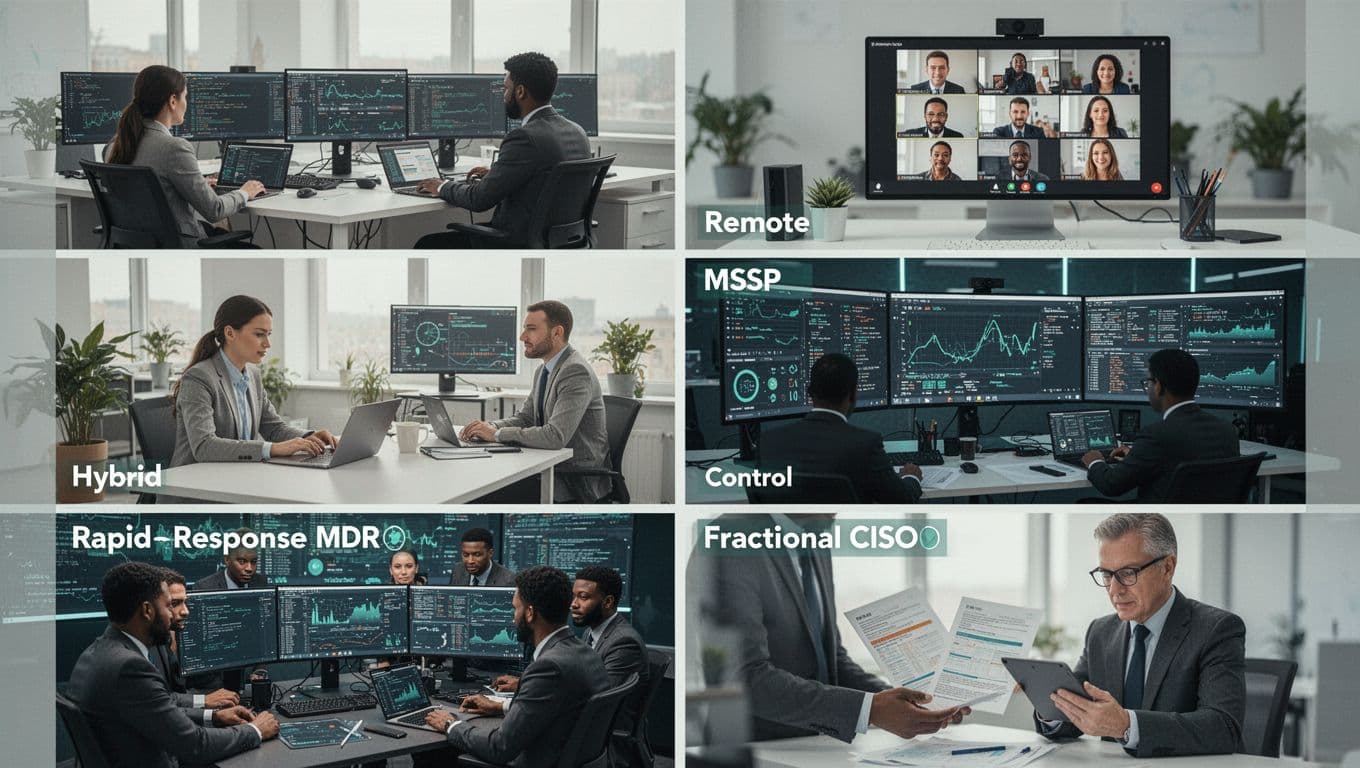
Startups often pick fractional CISOs for strategy bursts. Enterprises lean toward MSSPs for scale.
Pros and Cons of In-House Teams
Full control tops the list for in-house. Your staff knows your systems inside out. They align security with business needs perfectly.
Customization shines too. Tailor tools and processes without vendor limits. Response stays quick during incidents.
Costs add up fast, however. A basic SOC runs $2.5 million yearly, per recent cost guides. Turnover drains knowledge; 90% of teams lack AI skills.
Hiring takes months amid shortages. Burnout hits hard with 24/7 shifts.
Best fit: Regulated industries like finance. You need ownership over data. A mid-sized bank kept threats low this way, despite high upfront spend.
Outsourcing scales easily. Providers handle volume spikes without your payroll growth. Access global talent pools immediately.
Expertise comes built-in. No training ramps needed. Costs predict better than in-house variables.
You lose some control, though. Integration hiccups arise. Vendor lock-in hides fees for exits.
Best fit: SMBs with lean IT. A retailer outsourced monitoring and cut breach response time by half.
Side-by-Side Comparison of Cybersecurity Staffing Models
Trade-offs vary by model. This visual sets the stage before numbers.
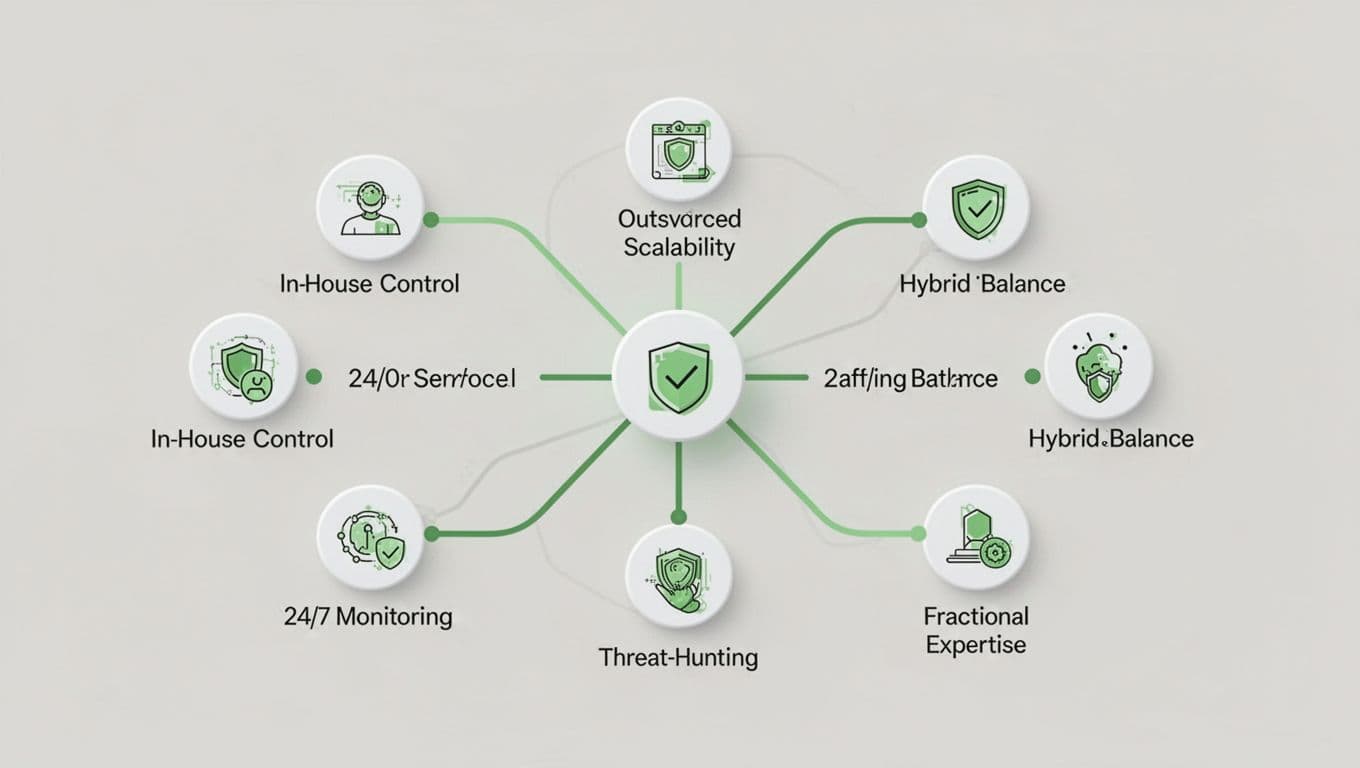
Key metrics stack up like this:
| Model | Annual Cost Range | Control Level | Scalability | 24/7 Coverage | Best For |
|---|---|---|---|---|---|
| In-House | $2M+ | High | Low | If staffed | High-regulation firms |
| Outsourced | $500K-$2M | Medium | High | Yes | SMBs, cost control |
| Hybrid | $1M-$3M | High | Medium | Partial | Growing enterprises |
| MSSP | $300K-$1.5M | Low | High | Yes | Compliance-heavy ops |
| MDR | $150K-$800K | Medium | High | Yes | Threat-focused teams |
| Fractional | $100K-$500K | High (targeted) | Low | No | Startups, advisory needs |
Costs draw from 2026 analyses, like SOC outsourcing benchmarks. In-house leads in control but lags scalability. MDR wins on quick threat hunts.
Hybrid often balances best. Firms report 30% faster scaling this way.
Decision Framework for B2B Leaders
Assess your gaps first. Count current staff versus needs. With 4.8 million shortages, check cloud and AI skills.
Next, weigh risks. High breach history? Prioritize MDR’s response speed. Compliance rules? MSSP fits.
Budget matters most. Factor hidden costs: training for in-house, SLAs for outsourced. Test scalability for growth.
Map responsibilities clearly. Who leads incidents? Blurry lines cause delays.
Your checklist:
- Skills audit: Do gaps block progress?
- Threat profile: Active hunters or steady monitoring?
- Timeline: Need experts tomorrow?
- Exit clauses: Avoid lock-in.
A tech firm used this to switch hybrid. They cut costs 25% while keeping CISO oversight.
Common Pitfalls and How to Dodge Them
Hidden costs surprise many. In-house ignores turnover; outsourced skips data migration fees. Always model total ownership.
Vendor lock-in traps you. Contracts hide ramp-down charges. Negotiate 90-day outs.
Skill gaps persist across models. MSSPs vary quality; vet certifications. Fractional hires need clear scopes.
Turnover risks internal teams. Offer equity or paths to retain. Incidents expose unclear roles. Define playbooks upfront.
Budget cuts now outpace talent woes. Yet 66% face higher risks from shortages. Start small: pilot MDR for alerts.
SOC-as-a-Service cost guides warn of these traps.
You control the outcome with due diligence.
That 4.8 million gap won’t close soon. Pick the cybersecurity staffing model that plugs your holes now. Hybrid or MDR often wins for balance.
Ready to assess your setup? Book a Discovery Call with Bud Consulting for tailored advice. What’s your top staffing headache?