table of contents
Companies face a stark reality in 2026. About 4.8 million cybersecurity jobs sit empty worldwide. This shortage leaves teams exposed to breaches and delays key projects.
You know the drill. Your internal recruiters post jobs, but responses flood in from mismatched candidates. Time drags on, risks build, and budgets strain. Cybersecurity talent sourcing changes that. It targets hidden experts who match your exact needs, like cloud security pros or incident responders.
Let’s break down how these services work and why they beat standard hiring.
Why the Talent Shortage Hits Harder in 2026
Cyber threats explode as AI and cloud adoption surge. Yet, skilled workers can’t keep up. In the US alone, over 700,000 spots remain open. Globally, teams need an 87% workforce boost just to match demand.
Budget freezes worsen it. Many firms cut hiring after layoffs. As a result, 67% of security groups stay short-staffed. Asia-Pacific feels the pinch most, with 3.4 million gaps.
Remote work adds twists. You want pros who handle distributed teams and zero-trust models. But finding them means looking beyond job boards.
Check cybersecurity talent shortage stats for the latest numbers. They show why quick action matters. Firms with understaffed teams pay $1.76 million more per breach.
In short, delays cost more than ever. Talent sourcing builds pipelines before crises hit.
Talent Sourcing, Recruiting, Executive Search: Know the Differences
People mix up these terms. Each serves a unique spot in cybersecurity hiring.
Talent sourcing starts early. Specialists hunt passive candidates through networks, conferences, and niche communities. They engage security architects or GRC experts not job-hunting. This proactive step fills pipelines with vetted matches.
Recruiting kicks in next. It screens applicants, runs interviews, and closes offers. Think of it as the evaluation phase. Your TA team often handles this, but sourcing feeds them quality leads.
Executive search targets CISO or VP roles. Firms use deep research for confidential placements. They map competitors’ leaders and pitch discreetly. Speed matters less; fit rules.
For details on talent sourcing vs recruiting, see this breakdown. Executive search stands apart because stakes run high.
Choose based on need. Sourcing suits volume roles like SOC analysts. Search fits leadership. Mix them for full coverage.
Top Roles You Need to Fill Fast
Demand spikes for hands-on experts. SOC analysts top the list. They monitor alerts 24/7 and triage threats.
Security engineers build firewalls and endpoint tools. Cloud security specialists secure AWS or Azure setups. As firms shift hybrid, these pros prevent misconfigs.
GRC professionals handle compliance like NIST or GDPR. Penetration testers simulate attacks to expose flaws. Incident responders contain breaches fast. Security architects design overall defenses.
Certifications seal the deal. Employers seek CISSP for architects, CCSP for cloud, or CEH for testers. No long tenure required; skills plus certs open doors.

This image captures the teamwork in action. Roles like these stay vacant longest. Sourcing taps global pools, including remote-ready talent.
What Good Talent Sourcing Delivers
Quality services speed access to fits. You get candidates aligned with tools like Splunk or Terraform.
Risk drops because pros vet skills upfront. They check hands-on tests, not resumes. Pipelines strengthen for repeats, like ongoing pen tester needs.
Remote hiring thrives too. Sourcing finds pros in low-cost regions who work US hours.
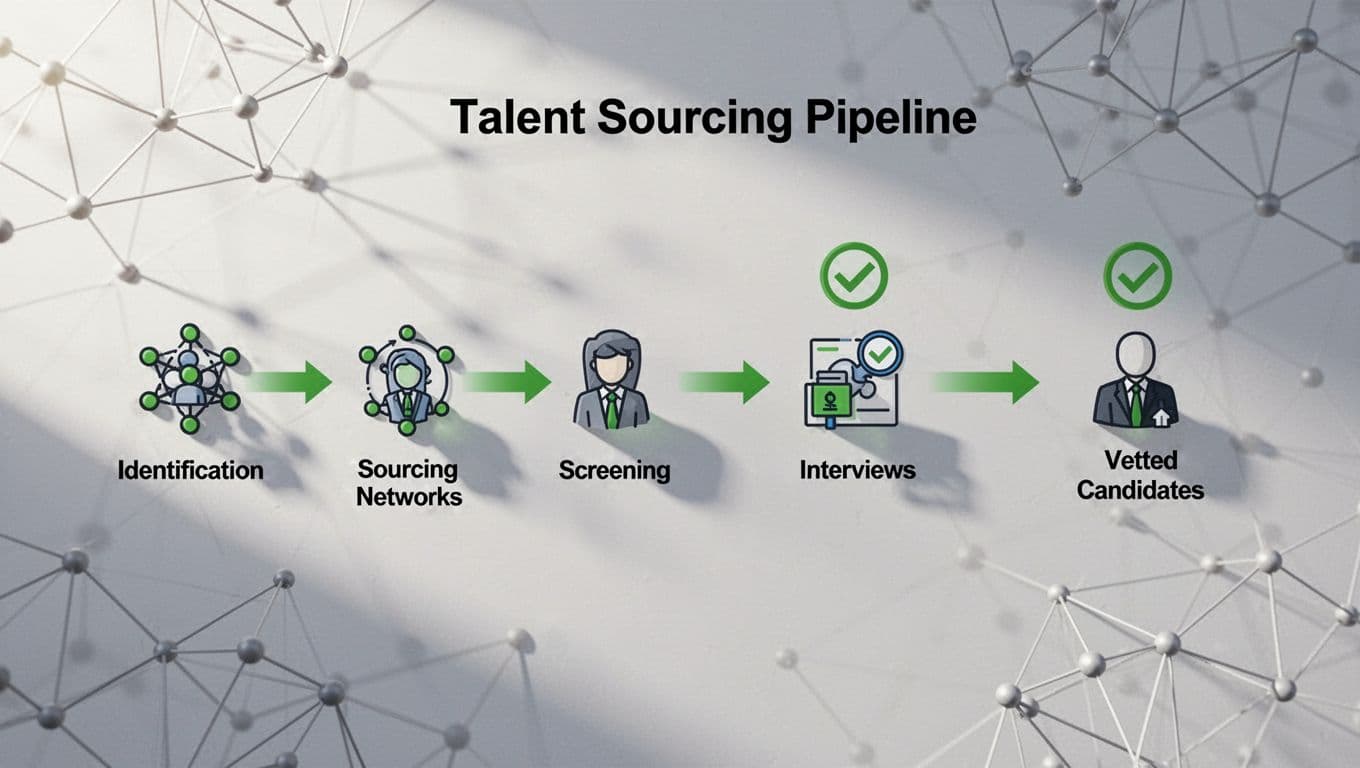
The process flows smooth, as this shows. Firms like Code Red Partners prove it with startup teams.
Outcomes beat DIY. Faster fills cut exposure. Better matches boost defenses.
Pick the Right Partner for Lasting Results
Start with specialists in cybersecurity. They know certs like CompTIA Security+ or OSCP matter most.
Assess their networks. Do they reach IAM experts or DevSecOps leads? Ask for case studies on cloud roles.
Remote considerations count. Partners handle time zones and culture fits.
The 4.8 million gap won’t close soon. Act now.
Book a Discovery Call with Bud Consulting to map your gaps. Strong teams protect your future. What’s your toughest role to fill?