table of contents
Phishing now comes with cleaner language, cloned voices, and faster bait. A generic awareness course won’t keep up for long.
That is why many teams hire a cybersecurity training consultant instead of buying another slide deck. The right partner builds behavior change, role-based lessons, and proof for audits.
If your inbox has become the weakest point in the chain, the next hire needs a clear brief. Start with the business outcomes you want, then compare providers against them.
Why your business needs a cybersecurity training consultant now
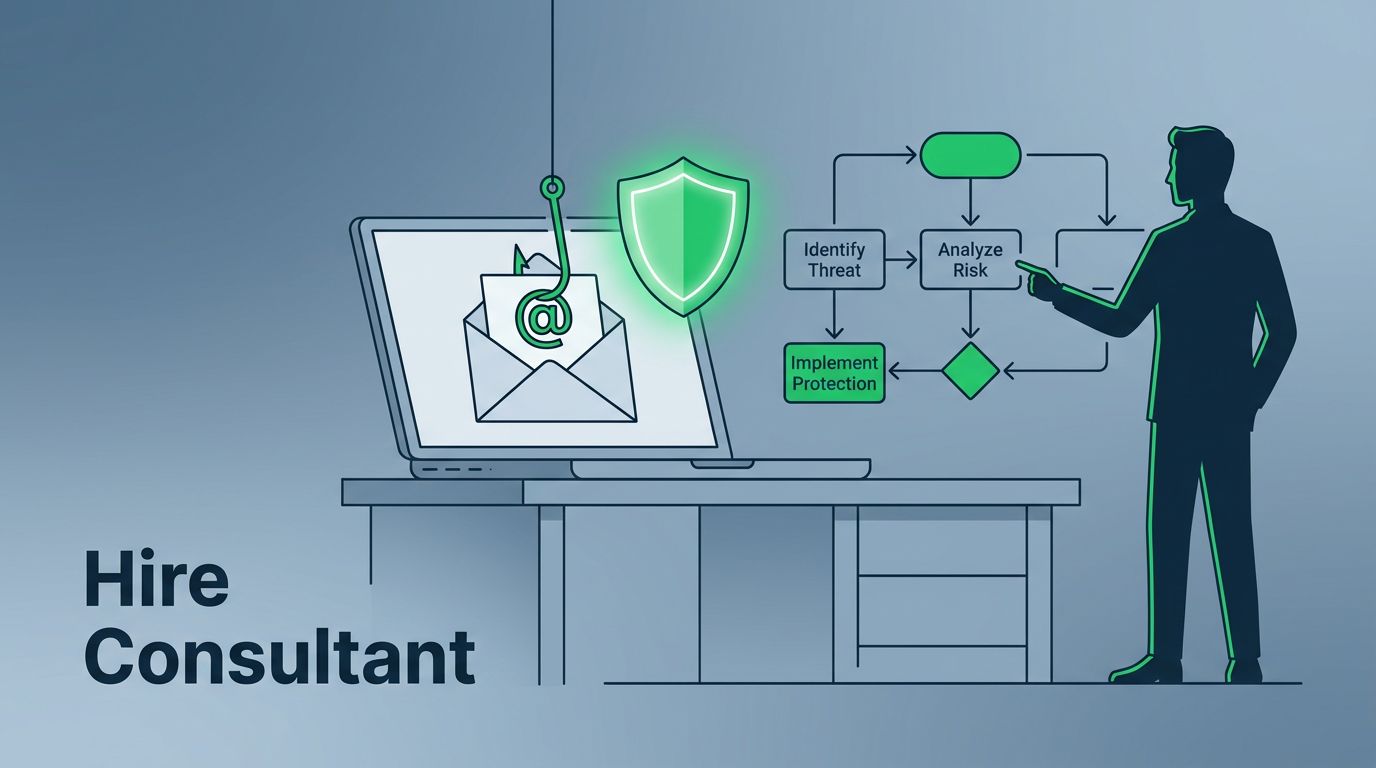
In 2026, attackers do not need loud or sloppy tricks. They use AI-written lures, fake voice notes, QR bait, and social messages that sound like a real vendor or executive. A single click can expose credentials, finance data, or customer records.
That is why training has to move past annual awareness videos. A strong consultant helps you turn risk into a plan. Security teams often need short simulations for phishing, targeted sessions for high-risk roles, and manager coaching for incident reporting.
Public programs keep shifting too. For a useful snapshot of how fast training formats are changing, see the 2026 cyber workforce trends summary from SANS.
The best outside help also brings focus. A consultant can spot where policy, culture, and job duties clash. Then they shape training around the habits that matter most, such as verifying payment changes, protecting sensitive files, and reporting a suspicious login fast.

What a strong consultant should deliver
You should expect more than a slide deck and a quiz. A useful consultant delivers training that fits your workforce and gives leadership something real to measure.
A strong package usually includes:
- A baseline review that shows where people struggle now.
- Role-based modules for executives, HR, finance, IT, and frontline staff.
- Phishing and social engineering simulations with follow-up coaching.
- A reporting path that teaches staff how to escalate suspicious messages.
- Dashboards that track click rate, report rate, and repeat risk.
If your company needs compliance support, the consultant should map the program to the rules that apply to you, whether that’s SOC 2, ISO 27001, HIPAA, PCI DSS, or internal policy. That makes the training useful for audits, not just onboarding.
Attendance is a weak metric. Reporting speed, click rates, and repeat mistakes tell a better story.

The best deliverables are easy to review. If a consultant can’t show sample modules, reporting templates, and a 90-day rollout plan, the offer is too thin.
How to compare providers before you sign
Once the scope is clear, compare providers with a scorecard. A guide to vetting security consulting firms can help you pressure-test the claims, but your final choice should still match your risk profile.
Use this quick comparison table during vendor calls:
| What to check | Strong answer sounds like | Why it matters |
|---|---|---|
| Role fit | They separate training by job family and risk level | One message won’t fit every team |
| Threat realism | They cover phishing, AI voice scams, QR traps, and vendor fraud | 2026 attacks look polished |
| Measurement | They track clicks, reports, and repeat errors | You need proof of change |
| Delivery | They mix live sessions, simulations, and manager follow-up | People remember practice |
| Reporting | They give clear outputs for audits and leadership | Decisions need data |
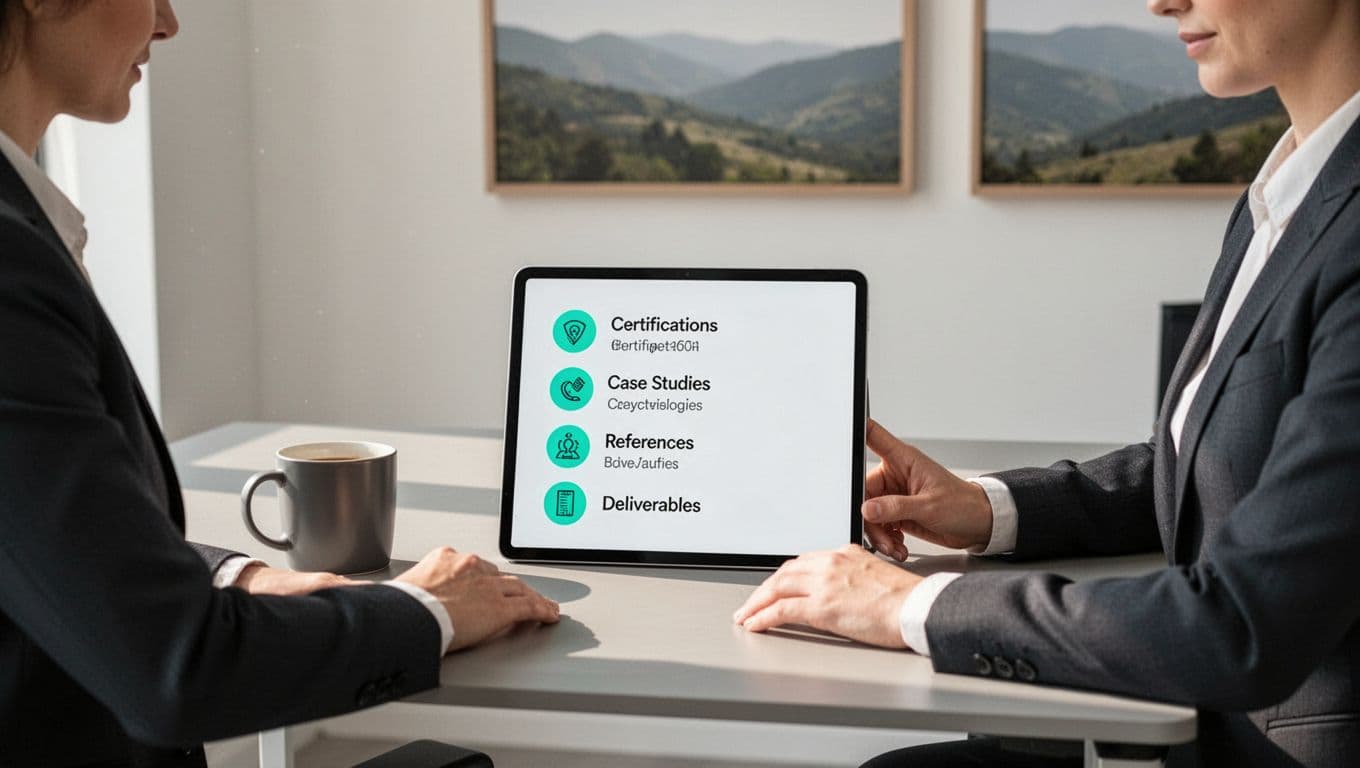
If you want help turning those criteria into a short vendor process, Book a Discovery Call with Bud Consulting.
Questions that expose a weak proposal
A polished proposal can hide gaps. Use the first meeting to ask direct questions about your workforce, your industry, and how the consultant measures change.
Ask how they tailor training for different roles. Ask what the first 90 days look like. Ask how they update content for AI phishing and deepfake voice scams. Also ask what results they report after each cycle.
Vague answers usually mean the vendor relies on generic content. Clear answers show a real method.
Red flags that should end the search
Some signals are enough to walk away. A consultant who promises perfect protection, hides the reporting model, or refuses to discuss role-based content is selling theater, not training.
Watch for these signs:
- Every client gets the same program.
- There is no plan for phishing simulations.
- The team can’t explain compliance mapping.
- Case studies are missing or impossible to verify.
If the proposal sounds broad but not specific, keep looking. Good training feels tailored because it is.
Hiring a cybersecurity training consultant is really a decision about behavior, not content. You want people who spot trouble faster, report it sooner, and make fewer mistakes under pressure.
When the consultant shows a clear method, role-based training, and measurable results, you’re looking at more than awareness. You’re building a security habit that can hold up when the next fake email, phone call, or login prompt shows up.