table of contents
A data breach hits your company. Your legal team scrambles to figure out notification deadlines. Miss one, and fines pile up fast.
You face tight timelines that vary by jurisdiction. California’s new 30-day rule kicks in this year. GDPR demands action in 72 hours. Your team needs clear training to spot when the clock starts and hit every deadline.
This guide gives you actionable steps. It covers training your group to assess laws, coordinate responses, and document everything right.
When Does the Clock Start?
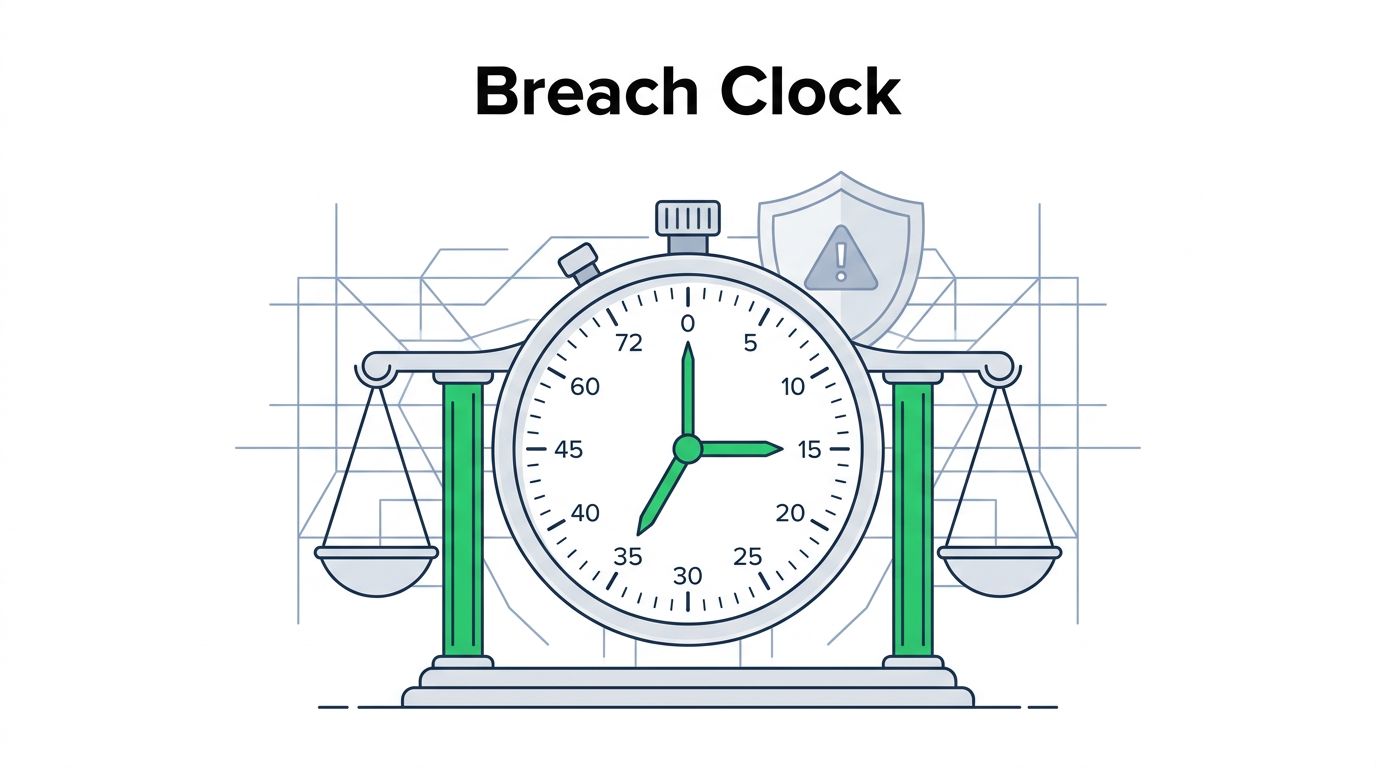
The clock for data breach notifications begins at “discovery.” That’s when your team knows or should know about the breach. Staff spot unusual access logs. Or IT flags suspicious activity. Awareness triggers the countdown.
Different laws define this moment slightly. HIPAA starts the timer when you learn of the breach. GDPR uses “becoming aware.” States like California tie it to discovery or notification of the incident.
Why does this matter? Teams often debate if a phishing alert counts as discovery. Train them to log every incident report. That creates a clear start time.
Picture a mid-sized firm in May 2026. An employee reports a suspicious email. IT confirms data exfiltration two days later. The clock starts then, not on the first report. Early training drills this distinction.
Delays happen if law enforcement asks to pause. Document that request right away. Otherwise, you risk penalties.
Train with scenarios. Role-play a vendor breach alert. Have teams pinpoint the exact discovery hour. This builds speed and accuracy.
Most breaches involve multiple clocks. One for individuals. Another for regulators. Your training must cover both.
Key Notification Timelines by Jurisdiction
Timelines differ sharply. Know them cold to avoid compliance slips.
In the US, HIPAA sets 60 days for patient notices after discovery. Report to HHS in 60 days for big breaches. Smaller ones go annual by March 1.
California tightened rules with SB 446, effective January 2026. Notify residents in 30 calendar days. For 500-plus affected, send the AG a sample notice in 15 days after individual alerts. Check the California Department of Justice reporting page for forms.
New York requires 30 days to residents. Other states range from 30 to 60 days. See the Privacy Rights Clearinghouse 50-state survey for details.
GDPR hits hardest. Alert supervisory authorities in 72 hours of awareness. Notify people without undue delay if high risk.

A software company serves EU and California users. Hackers steal customer data on a Tuesday. By Friday, they notify GDPR authorities. California residents get word by the following Wednesday. Training maps these overlaps.
Exceptions apply. Good-faith efforts to fix the breach can extend times. Law enforcement holds can pause clocks too.
Your team must assess data types first. Health info? HIPAA. EU residents? GDPR. Multi-jurisdiction breaches demand a matrix.
Build a Training Framework Step by Step
Start with quarterly sessions. Dedicate two hours to breach timelines. Use real cases, not slides.
First, map your risks. List jurisdictions where you operate. Note data types you hold. California? GDPR? HIPAA? Tailor content.
Next, teach assessment. Teams learn to classify breaches. Does it involve personal info? Encrypted data often skips notices.
Role-plays work best. Simulate a ransomware hit. Teams decide: When does discovery occur? Which laws apply? Draft notices.
Incorporate 2026 updates. California’s 30-day hard deadline changed everything. Oklahoma expanded “personal info” too. Pull from sources like this JD Supra update.
Document training. Track attendance. Quiz on timelines. Retest every six months.
Scale for size. Big teams add tabletop exercises. Small ones use online modules with quizzes.
Measure success. Run mock breaches. Time responses. Aim for decisions in hours, notices in days.
One firm cut response time 40% after framework rollout. They now meet deadlines consistently.
Coordinate with Internal Stakeholders
Legal can’t go solo. Pull in IT, PR, and execs early.
IT provides breach scope. When did it happen? What data? Legal assesses timelines from there.
Set up a response team. Meet within hours of discovery. Assign roles: Legal owns notices. IT handles forensics.
Use shared tools. A dashboard tracks clocks. Everyone sees countdowns.
Communicate clearly. Daily briefs until resolved. Escalate risks to counsel.
Example: Vendor breach affects New York customers. IT confirms scope day one. Legal coordinates PR for notices by day 25.
Document every call. Emails confirm decisions. This shields against audits.
Train cross-team. Joint sessions build trust. Everyone knows their part.
Stumbles happen without this. PR blasts notices too soon. Fines follow.
Assess Applicable Laws Quickly
Jurisdictions overlap. Start with where data sits and who owns it.
US states lead for most firms. 20 now have 30-60 day deadlines. Others say “reasonable time,” often 45 days.
Federal rules layer on. HIPAA for health. GLBA exemptions in some states.
Global? GDPR applies to EU data anywhere. 72 hours to authorities.
Build a decision tree. Ask: Resident locations? Data types? Breach size?
Train on tools. Flowcharts speed choices. One firm uses it to pick laws in minutes.
Update yearly. 2026 brought California and Oklahoma shifts. Recording Law details California’s rules.
Practice multi-state scenarios. Florida 30 days. Texas 60. Hit all.
Document Decisions Thoroughly
Paper trails save you. Log discovery time. Note law choices. Track notices sent.
Use templates. One for assessments. Another for notices.
Timestamp everything. Emails work. Tools like incident platforms help.
Audits demand proof. Regulators check if you met timelines.
Example: GDPR breach. Log awareness at 10 AM Monday. Notify by Wednesday 9:59 AM. Proof closes the loop.
Train to avoid gaps. Review old incidents in sessions.
Best Practices Checklist
Follow this to stay compliant. Review it in every training.
- Log discovery precisely with timestamps.
- Classify data and jurisdictions fast.
- Build a timeline matrix for overlaps.
- Role-play quarterly.
- Document all steps.
- Test with mocks.
- Update for law changes.

Short checklist keeps focus. Pin it company-wide.
Conclusion
Data breach notification timelines demand precision. Train your team to nail discovery moments, pick right laws, and coordinate smoothly.
Key is practice. Mock runs and checklists build habits. Hit 30 days in California. 72 hours under GDPR. Stay ahead.
Verify laws yourself. They shift. Strong training cuts risks and fines.
Ready to strengthen your program? Book a Discovery Call with Bud Consulting for tailored advice.
(Word count: 1487)