table of contents
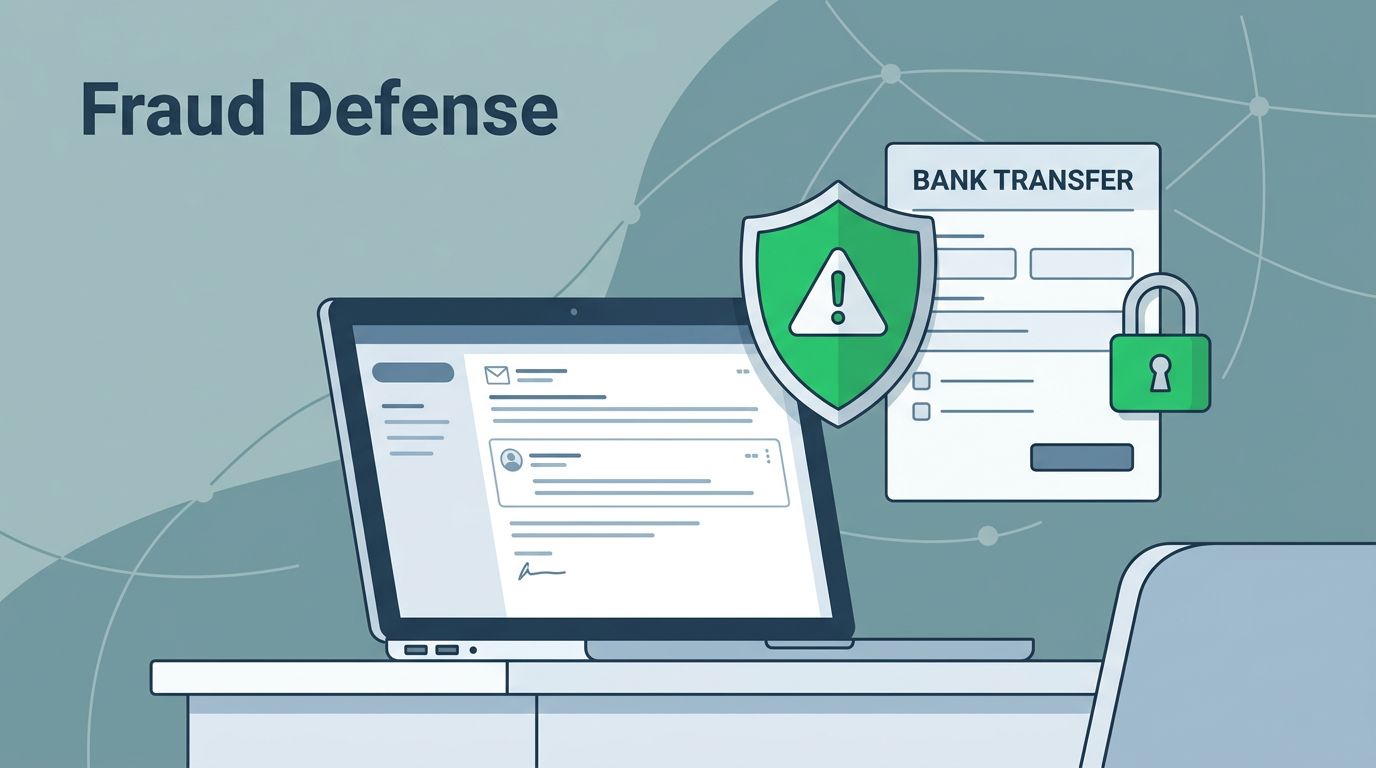
Direct deposit fraud often starts with a message that looks routine. A payroll specialist sees an urgent bank-change request, a spoofed executive email, or a login alert that feels harmless.
Within minutes, money can be sent to the wrong account, and the cleanup can take days. The best defense is training that teaches payroll teams to slow down, verify, and document every change.
Recent payments fraud data shows the pressure is still high in 2026, and payroll sits right in the middle of it. The fix is not more noise, it is a tighter process that people can follow under pressure.
Start with the scams payroll teams actually see
Payroll fraud rarely looks dramatic at first. It often begins with phishing, a fake CEO email, or a note that says a direct deposit needs to change before noon.
Attackers use urgency because it works. Payroll teams want to help, and a rushed request can sound normal when it arrives during a busy run. Compromised employee self-service accounts create another opening. Once an attacker gets into a portal, they can change bank details without sending a fresh email.
Spoofed executive emails are especially risky. A message that appears to come from the CFO or CEO can push staff to skip a step. Urgent bank-change requests create the same pressure. The request may come through email, text, or voicemail, but the goal is the same, get payroll to move fast.
For a practical view of these tactics, the payroll direct deposit fraud prevention playbook is a useful reference, and payroll security and fraud prevention best practices gives a broader control checklist.

Put verification before speed
A strong process gives payroll staff a safe way to say, “not yet.” The goal is to make every change pass through the same checks, even when the request sounds urgent.
Use controls that slow fraud without slowing legitimate work too much:
- Call the employee using trusted contact data from HR records, not the number in the email.
- Split duties so one person receives the request, another approves it, and a third enters it.
- Require MFA for payroll systems and employee self-service portals.
- Freeze bank changes 24 to 48 hours before payroll runs.
- Keep an audit trail with the request, approver, timestamp, and final change.
These steps work because they add friction at the right moment. Fraudsters hate friction. A real employee can wait for a callback. A scammer usually cannot.
If a payroll change cannot survive a callback, it should not survive payroll.
Training should explain why each step matters. When staff understand the reason behind the rule, they are less likely to skip it for a “small” request.
Train each role for the part it plays
Role-based training works better than one broad session for everyone. A payroll specialist handles different risks than a controller, and both face different pressure than an HR partner.
The payroll team needs scenario drills that mirror daily work. Use examples that include a spoofed executive email, a locked employee portal account, and a rush request right before close. Ask staff to show the proof they would need before they touch the record. Then walk through the exact callback process.
Managers and HR partners need separate guidance. They should know they never send a bank-change request on behalf of a worker without proper proof. They also need to understand that “helping” by forwarding an email is not enough. If they receive a request from a worker, they should route it through the same approved process every time.
Finance leaders and controllers need visibility into exceptions. They should review who approved the change, whether the freeze window was used, and whether MFA was active. That makes it easier to spot weak points before a scam lands.

If your team needs help shaping training around human risk and control gaps, Book a Discovery Call with Bud Consulting.
Practice the response before a real incident
Even strong teams will miss one bad request sooner or later. The response plan should say who stops the payroll run, who contacts the bank, and who checks logs first.
Preserve every useful record. Save email headers, login history, MFA prompts, and approval notes. If the request came through a compromised self-service account, reset credentials fast and review other changes made from that account. Also tell HR and finance what happened so they can check for duplicate payments or employee impact.
A short incident drill helps a lot. Test whether staff can identify a bad request, find the right callback number, and escalate in time. Measure how long each step takes. If the process breaks during a drill, it will break under real pressure too.
Recent fraud trends show why this matters. Bank transfers move fast, and once money lands in the wrong place, recovery gets harder. Training should prepare payroll teams to act before the deposit leaves the building.
Payroll fraud succeeds when people move faster than the controls around them. Good training changes that. It teaches teams to verify with trusted data, separate duties, and keep a clean trail for every change.
When the pressure rises, the safest move is often the slowest one. That pause can protect a paycheck, a process, and the trust payroll depends on.