table of contents
Ecommerce sites pull in revenue around the clock. But so do attackers. Recent breaches hit hard: Salesfloor lost 4TB of customer data in January 2026, while Booking.com and Rituals Cosmetics exposed millions of user records by April. These incidents stole names, emails, and order details, fueling phishing waves.
You run an online store or platform. Customer trust hangs by a thread when security slips. A solid ecommerce security roadmap protects revenue, meets regulations like PCI DSS 4.0, and supports growth. It turns threats into manageable steps.
This guide breaks down threats, core elements, and phased plans tailored to your business size. You’ll get prioritization tips and a sample framework to start today.
Why Ecommerce Platforms Face Rising Security Pressures in 2026
Online sales hit new highs this year. Threats keep pace. Retail saw 152% more AI-driven attacks from 2023 to 2025, per Kaspersky reports. Deepfakes now trick users into fake deals or account takeovers.
Small shops suffer most. Over 6.7 million phishing hits targeted payments last year. Half aimed at stores. Cyber insurance often skips coverage without basics like MFA or backups.
Business growth amplifies risks. More traffic means bigger attack surfaces. Cloud shifts add complexity; 14% of retail faced web threats in 2025. Regulations tighten too. Faster breach alerts come standard under new U.S. rules.
You need a plan that aligns security with operations. It protects data, cuts downtime, and builds loyalty. Start by mapping your current setup. Then prioritize fixes that match your scale.
Recent examples show the cost. Coupang’s leak hit 34 million users; their CEO resigned. Ledger’s supply chain slip via Global-e sparked scams. These remind teams: delays hurt revenue and reputation.
Key Threats Facing Ecommerce Platforms in 2026
Attackers target weak spots daily. Credential stuffing tops the list. Bots test stolen passwords across sites. One breach leaks creds; thousands follow.
Account takeovers follow close. Hackers buy access on dark web markets. They drain carts or pivot to ransomware. Payment fraud spikes with AI tools generating fake cards. Losses mount fast.
Ransomware locks checkout pages. Demands hit six figures. Supply chain compromises sneak in via plugins. A vulnerable app exposes your whole stack.
API abuse grows with headless commerce. Exposed endpoints leak orders or profiles. Recent stats show 22% of retail hit by malware on devices.
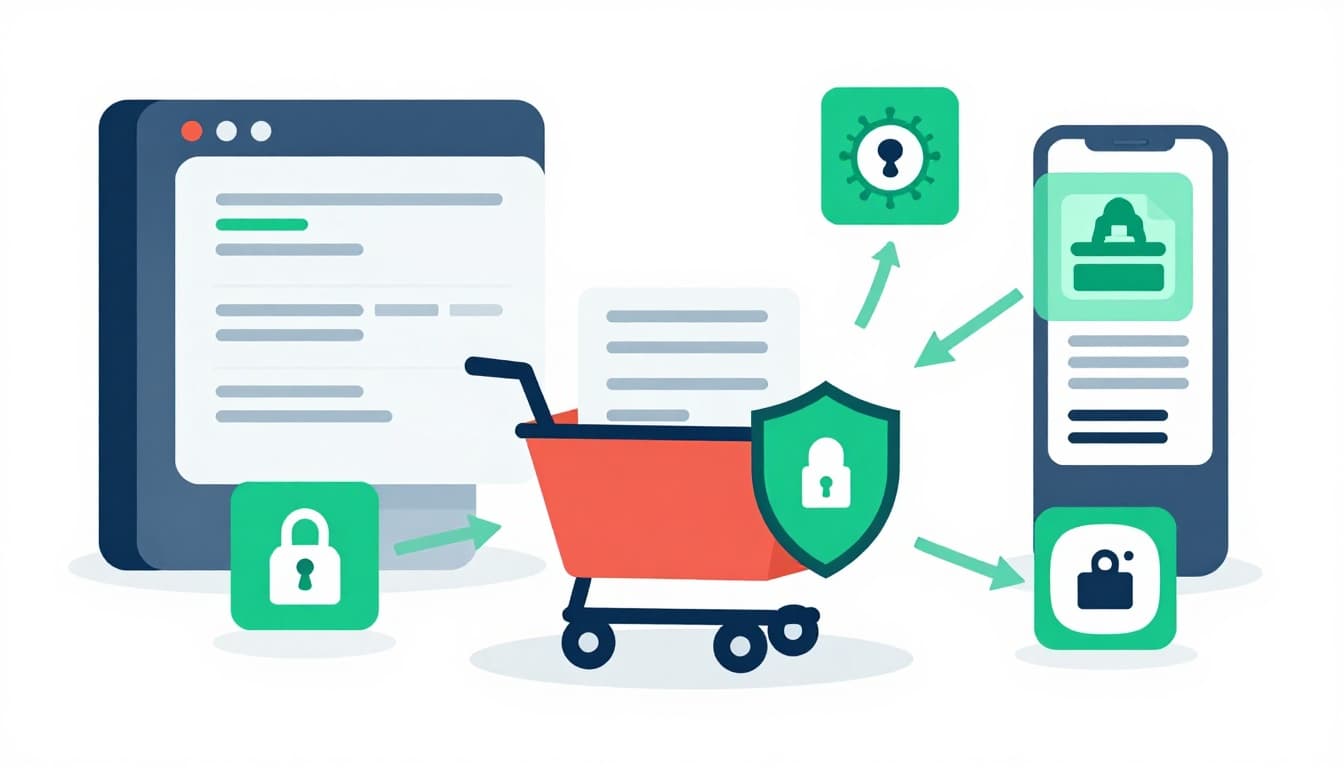
For context, check nFlo’s 2026 e-commerce security checklist, which rates these by impact.
Prioritize based on your setup. Small sites fix logins first. Enterprises tackle APIs. All face AI phishing; train teams to spot deepfake calls or voices.
Zero trust helps here. Assume no user or device is safe. Continuous checks block most moves. Combine with WAAP tools for web and API shields.
Core Components of an Ecommerce Security Roadmap
Every roadmap starts with assessment. Scan your stack for holes. Tools like automated scanners map attack surfaces.
Basics come next: HTTPS everywhere, MFA on admin panels, and security headers. PCI DSS 4.0 demands script monitoring on payment pages. See SecurityMetrics’ PCI DSS v4 guidance for details.
Advanced layers add WAF rules, endpoint detection, and vendor audits. Monitor logs for anomalies. AI tools flag odd traffic patterns in real time.
Ongoing work seals it. Quarterly pentests, tabletop drills, and patch cadences keep defenses sharp.
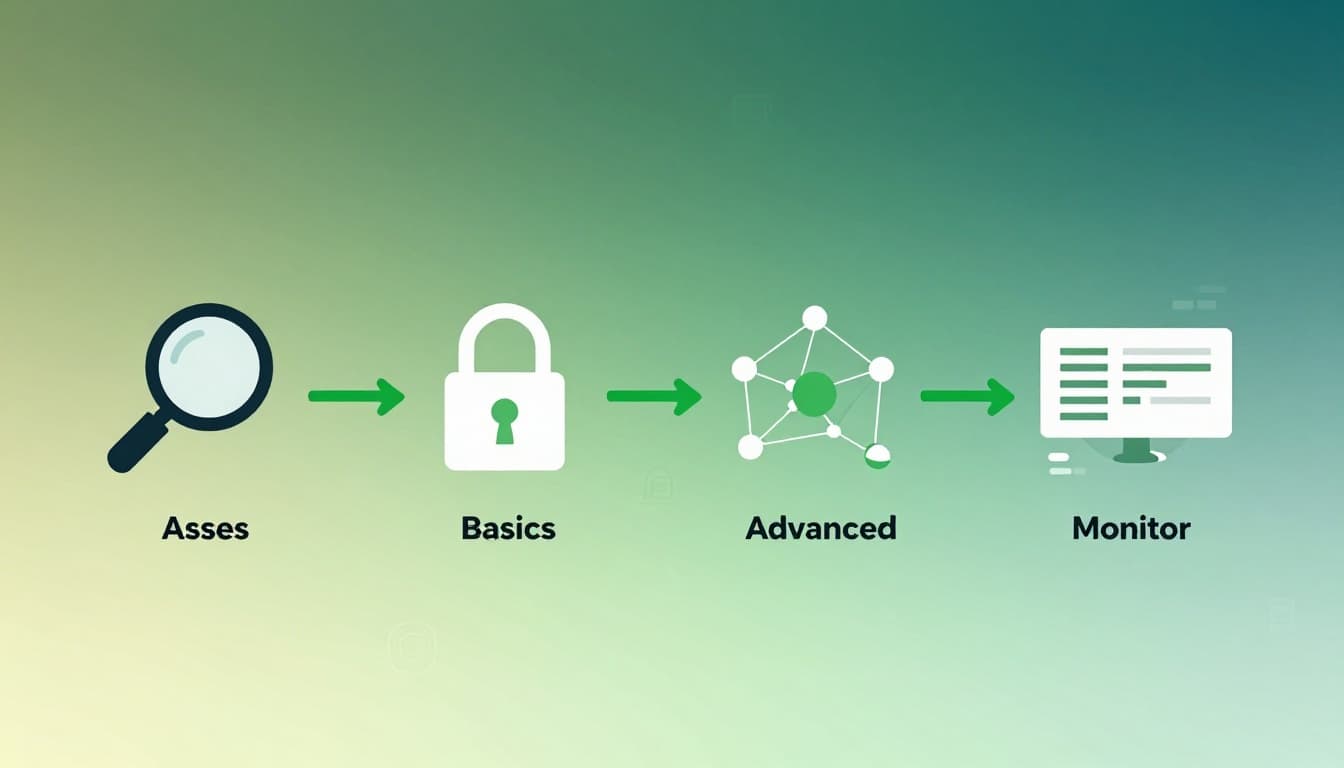
Build yours in phases. This matches resources to risks. Revenue protection follows: block fraud at checkout, segment data to limit blast radius.
Compliance fits naturally. GDPR and PCI overlap with best practices. Meet them; gain trust.
Phased Implementation for Different Business Sizes
Small teams lack bandwidth. Focus on quick wins. Phase 1: Enforce MFA, HTTPS, and session timeouts. Use managed WAFs like Cloudflare.
Mid-market scales faster. Add API gateways and fraud detection after basics. Integrate Have I Been Pwned checks.
Enterprises go deep. Zero trust networks, AI monitoring, and supply chain scans top the list.
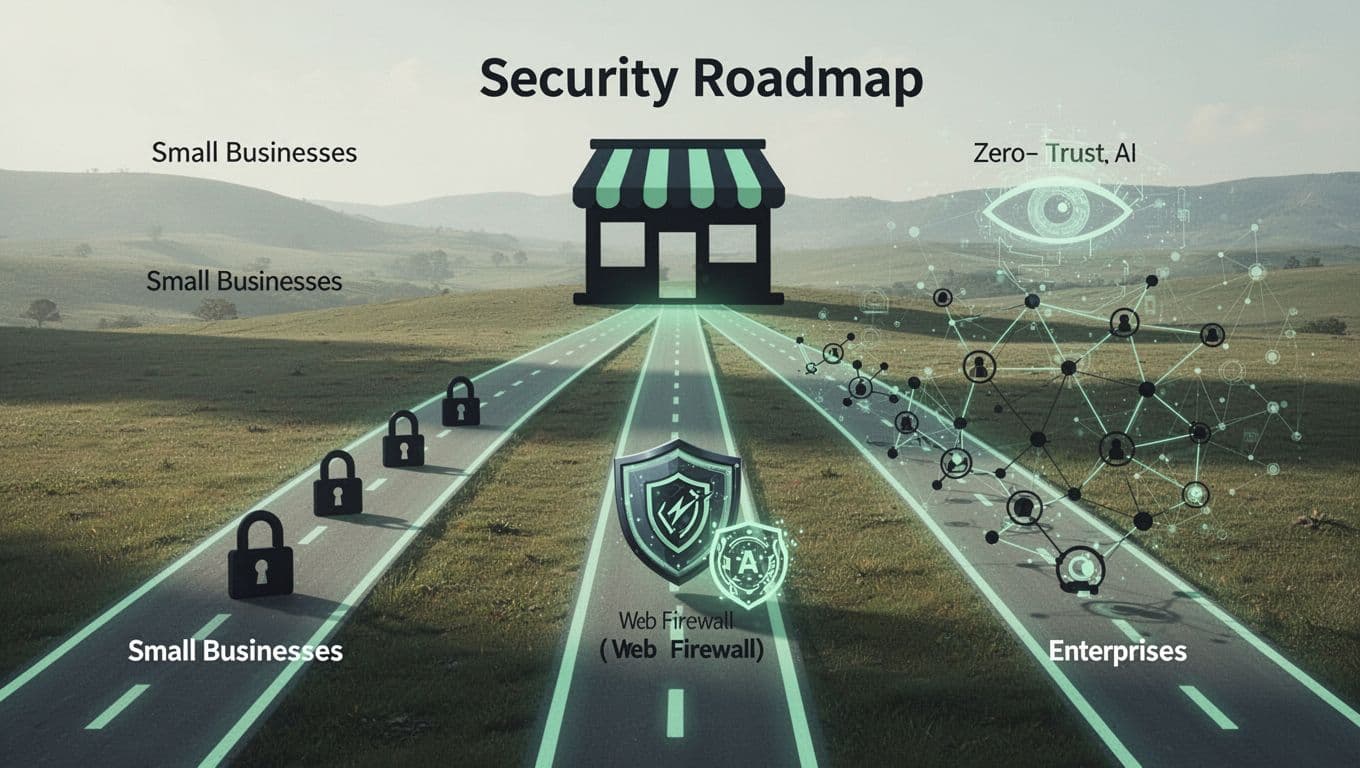
Here’s a simple prioritization table:
| Business Size | Phase 1 (0-3 Months) | Phase 2 (3-6 Months) | Phase 3 (6+ Months) |
|---|---|---|---|
| Small | MFA, HTTPS, backups | WAF, log monitoring | Pentests, training |
| Mid-Market | Above + API keys | Fraud tools, audits | Zero trust, AI |
| Enterprise | Full assessment | Advanced WAF, IAM | Continuous testing |
This table shows high-impact steps first. Small ops see 80% coverage fast. Larger ones layer complexity.
Tailor to growth. As traffic doubles, upgrade monitoring. Track metrics like block rates.
Aligning Your Security Roadmap with Business Growth and Regulations
Security boosts bottom lines. Secure sites retain 20% more customers. Fraud blocks protect margins.
Tie roadmaps to goals. Expanding to EU? Prioritize GDPR data mapping. High-volume sales demand real-time fraud AI.
PCI DSS 4.0 enforces change detection on payment forms. All merchants need weekly scans by now. ECOSIRE’s 2026 guide outlines audits.
Regulations evolve. U.S. breach laws speed notifications. Cloud rules push constant validation.
Balance with culture. Train ops teams on phishing. Behavioral tools cut human errors.
Growth means talent gaps. DevSecOps experts integrate security early. If you need help sourcing them, book a discovery call with Bud Consulting.
Sample Roadmap Framework and Actionable Checklists
Use this framework. Customize phases to your stack.
Phase 1: Foundation (Immediate)
- Enable MFA everywhere.
- Deploy WAF with OWASP rules.
- Rotate credentials quarterly.
Phase 2: Detection (Next Quarter)
- Set up SIEM for alerts.
- Scan plugins for vulns.
- Test APIs weekly.
Phase 3: Response (Ongoing)
- Run drills twice yearly.
- Backup offsite daily.
- Audit vendors annually.
| Checklist Item | Priority | Owner |
|---|---|---|
| MFA on all accounts | Critical | IT Lead |
| Payment page monitoring | Critical | Security |
| Staff phishing training | Important | HR |
Follow this; cut risks 70% in year one. Tools like Shopify’s modernization tips help enterprises. Shopify’s enterprise roadmap prioritizes customer systems.
Measure success. Track downtime, fraud rates, compliance scores. Adjust as threats shift.
Conclusion
A strong ecommerce security roadmap starts with threats like credential stuffing and API abuse. It builds through phases tailored to your size, aligning with PCI DSS 4.0 and growth plans.
Focus on foundations first. They block most attacks and build trust. Scale from there with monitoring and tests.
Your platform thrives when secure. Act now; revenue and customers depend on it.