table of contents
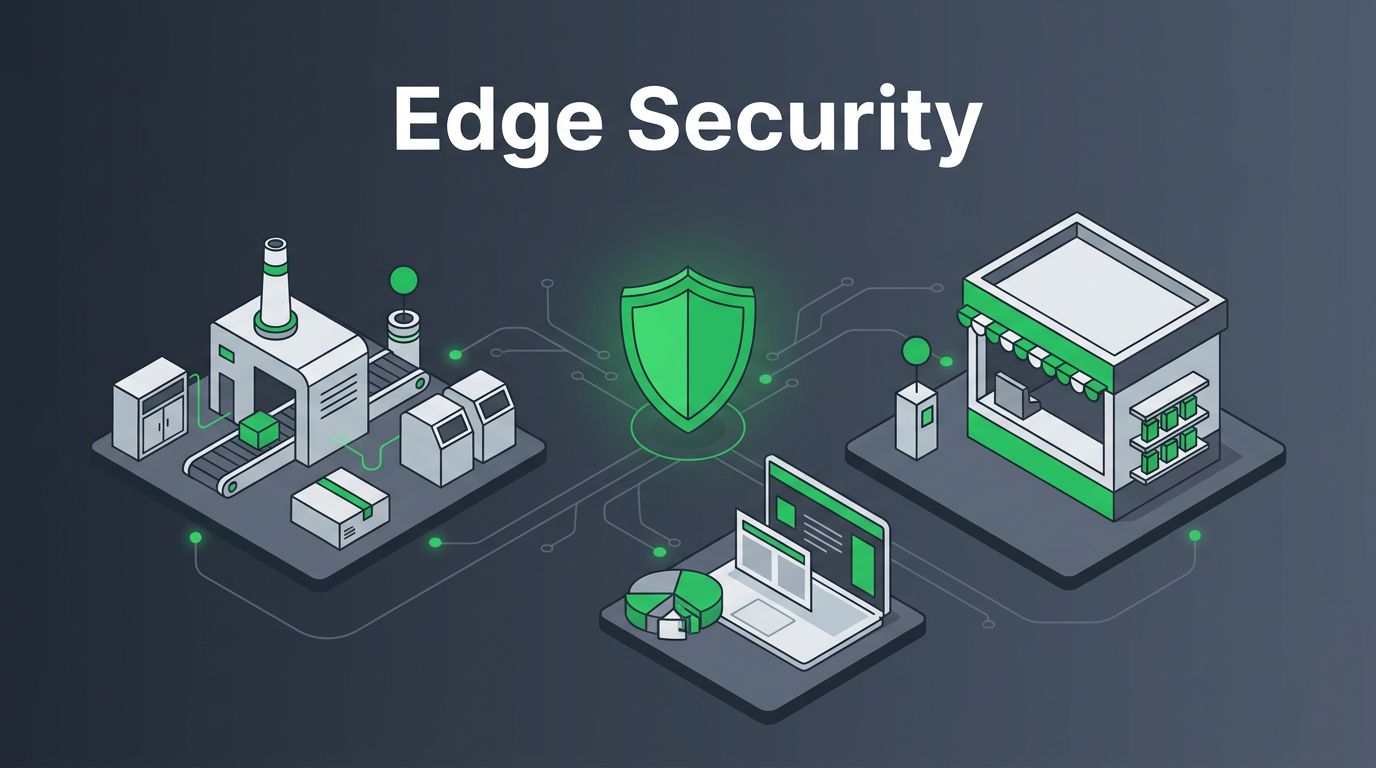
Edge devices in factories handle real-time processing of sensor data. Retail kiosks manage customer transactions on site. These setups cut latency but expose a vast attack surface to physical access or remote exploits. You need solid defenses for edge computing security because while traditional cloud computing offers robust defenses, its reach is limited at the edge; it does not cover every edge node.
Security teams face scattered assets across branch offices, healthcare clinics, and telecom towers. One breach can cascade through your network. These playbooks give you step-by-step actions to lock down deployments.
Start with the basics that anchor everything else.
Key Takeaways
- Build secure foundations by inventorying edge nodes, classifying data sensitivity, and enforcing physical access policies with central management platforms.
- Harden hardware as the first line of defense using TPM 2.0, secure boot, tamper-evident seals, and remote attestation to block physical and supply chain threats.
- Implement zero trust at the edge with micro-segmentation, mutual TLS, identity-bound hardware roots, and policy engines evaluating full context.
- Enforce tight identity controls via central IAM, MFA, RBAC, and ephemeral credentials, paired with network segmentation and TLS 1.3 encryption.
- Automate lifecycle management with OTA patching, staged rollouts, AI-driven monitoring, and predefined incident response plays for scalable defenses.
Foundations for Distributed Security
Edge computing’s distributed architecture spreads workloads to locations close to data sources. Factories run AI models on local servers to process sensor information. Telecom edges host 5G slicing. This setup helps manage bandwidth utilization compared to sending all data to cloud computing environments. Edge security starts here because poor foundations let threats slip in.
Build a secure-by-design approach from day one. Assess risks specific to your sites. In manufacturing, focus on OT protocols like Modbus. Retail needs PCI compliance for payment data. Map assets first: list every IoT device, server, its location, and data flows.
Use these steps to set up:
- Inventory all edge nodes with tools that scan hardware and software.
- Classify data by sensitivity; encrypt high-value items at rest and in transit.
- Define policies for physical access, like locked cabinets in stores.
Central management platforms help. They push configs and collect logs from thousands of sites. Without this, you chase shadows during incidents.

This image shows secure edge nodes in a network. It captures the distributed nature you manage.
Test your setup with red-team exercises. Simulate attacks on a healthcare edge site running patient monitors. Check if alerts fire fast. Adjust based on gaps.
For deeper details on architecture, check edge computing security architecture best practices. They outline hardware roots that tie into your playbook.
Hardware as the First Line of Defense
Edge devices sit in open areas. Factory floors expose servers to dust and physical tampering. Retail stores let staff or customers get close. This physical exposure increases the attack surface, unlike in centralized data centers. Hardware security stops threats before software loads.
Require Trusted Platform Modules (TPM 2.0) on every edge node. TPM stores keys and measures boot integrity. Pair it with secure boot: the firmware checks each stage against known good values. If tampered, the device bricks or alerts.
In healthcare, use secure enclaves in smart devices like patient monitors or sensors for patient data processing. These isolate code from the OS. Attackers with physical access cannot extract secrets.
Follow this playbook:
- Mandate TPM or equivalent in procurement specs.
- Enable secure boot and measured boot.
- Set up tamper-evident seals; trigger wipes on breach detection.
Remote attestation proves edge node health to your central system. Before updates deploy, verify the boot chain. NIST guidelines back this for distributed setups.

The image highlights a hardened device core. It represents trust anchors in tough environments.
Supply chain risks hit hardware too. Vet vendors for firmware signing. In telecom edges, block unsigned code. This prevents backdoors from the factory.
Physical hardening adds layers. Use enclosures with intrusion sensors. In remote locations like branch offices or distant towers, mount devices high or in cages. Test responses: does an open case isolate the node?
Zero Trust Implementation at the Edge
Zero trust means verify every request, no exceptions. Edge nodes talk to cloud computing resources, peers, and users from remote sites, unlike traditional flows to centralized data centers. Assume compromise anywhere.
Apply it with micro-segmentation. Split networks into zones per workload. A factory robot cannot reach the billing server. Use software-defined overlays for this.
ZTNA provides edge security at the perimeter, giving access to apps, not full networks. Users in remote sites connect via identity checks.
Here’s your zero trust playbook:
- Bind identities to hardware roots like TPM.
- Enforce security protocols such as mutual TLS for all traffic.
- Policy engines evaluate security posture using context: device health, user role, time.
In retail, segment POS systems from inventory cams. Telecom edges use it for MEC slicing.

This diagram illustrates secure flows in zero trust. Paths show verified connections only.
Scale with SASE or SSE platforms. They proxy traffic and inspect everywhere. For details on hybrid setups, see Zero Trust for hybrid cloud and edge.
Monitor drifts: audit policies weekly. Simulate failures to ensure no implicit trusts remain.
Identity and Access Controls in Edge Environments
Weak identities open doors. Edge security demands tight controls for users ranging from field techs to automated scripts.
Require multi-factor authentication everywhere, including devices, for field techs and users. Hardware-bound keys beat passwords. RBAC limits scopes based on the principle of least privilege: a clinic nurse accesses only local vitals, protecting personally identifiable information and ensuring data privacy.
Service accounts need rotation and scoping. In factories, OT devices get short-lived certs.
Playbook steps:
- Central IAM with edge agents for enforcement.
- Quarterly audits of access control policies to enforce the principle of least privilege.
- Ephemeral credentials for sessions.
Remote attestation ties identity to device state. If firmware fails check, revoke access.
For IoT-heavy sites like telecom, layer profiles by capability. See edge and IoT authorization best practices.
Log every auth event. Correlate with threats. This catches insiders or stolen creds fast.
Network Segmentation and Encryption Strategies
Unsegmented networks enable lateral movement and risk data breaches. Encrypt to protect data in motion.
In distributed architecture, east-west traffic between edges needs TLS 1.3 minimum as one of the key encryption techniques. Hardware acceleration maintains low network latency even with high encryption overhead.
Segment with eBPF or next-gen firewalls at edges. In manufacturing, isolate PLCs from IT.
Encryption playbook:
- Mandate end-to-end crypto with proven encryption techniques; no plaintext protocols.
- Rotate keys via HSMs.
- Inspect decrypted traffic for threats.
Healthcare edges encrypt PHI streams to ensure data privacy. Retail uses it for inventory syncs.
DDoS hits distributed setups hard. Spread loads and use edge scrubbing for optimal bandwidth utilization. SASE helps here too.
Test with chaos engineering. Inject faults; confirm segments hold.
Managing Lifecycle and Patch Management at Scale
Smart devices fail or vuln up. OTA patch management fixes this without trucks.
Inventory drives schedules. Prioritize by risk score.
Playbook for lifecycle:
- Automate scans with agents.
- Staged rollouts: test group first.
- Rollback on attestation fail.
Secure boot blocks bad patches. In branch offices, schedule off-peak. Fog computing helps orchestrate updates across clusters.

The gear shows patch management cycles. Green marks secure updates in action.
Software supply chain security scans images pre-deploy, including firmware signing from vendors. Factories wrap legacy OT in gateways.
Unlike patching in cloud computing nodes, edge patch management handles distributed smart devices with resilient OTA strategies.
Audit compliance centrally. Non-compliant nodes quarantine.
Monitoring, Response, and Incident Handling
Blind spots kill defenses. Unified visibility across edges, cloud, on-prem, unlike telemetry typically sent to cloud computing dashboards.
Edge agents enable automated monitoring by sending telemetry from IoT devices. AI flags anomalies like unusual OT traffic from IoT devices through real-time processing.
Response playbook:
- Define plays for common incidents: ransomware, lateral move.
- Automate isolation; air-gap suspects.
- Forensics with immutable logs powered by blockchain technology.
In telecom, low-latency detection blocks attacks before cloud pings.
Practice with tabletop drills. Healthcare sites simulate data exfil.
Integrate threat intel feeds. Patch gaps from CVEs fast.
Frequently Asked Questions
What are the core foundations for edge computing security?
Start with a full inventory of edge nodes using scanning tools, classify data by sensitivity for encryption at rest and in transit, and define physical access policies like locked cabinets. Central management platforms push configurations and collect logs across sites. Test setups with red-team exercises to identify gaps early.
Why prioritize hardware security like TPM 2.0 at the edge?
Edge devices face physical exposure in factories or retail, unlike secure data centers, so TPM stores keys and measures boot integrity while secure boot prevents tampered loads. Pair with tamper-evident seals and remote attestation to verify node health before updates. This stops threats before software even runs, backed by NIST guidelines.
How do you implement zero trust in distributed edge environments?
Use micro-segmentation to isolate workloads, bind identities to hardware roots like TPM, and enforce mutual TLS for all traffic with policy engines checking device health and context. ZTNA grants app access without network exposure, ideal for retail POS or telecom slicing. Scale with SASE platforms and audit for drifts regularly.
What strategies handle patching and monitoring at edge scale?
Automate OTA scans and staged rollouts prioritizing risk scores, with secure boot blocking bad patches and rollback on attestation failures. Deploy edge agents for telemetry and AI anomaly detection across IoT devices. Define response plays for incidents like ransomware, integrating threat intel for fast forensics.
How does network segmentation protect against lateral movement?
Apply eBPF or next-gen firewalls to isolate zones like PLCs from IT, mandating end-to-end TLS 1.3 encryption with hardware acceleration to maintain low latency. Rotate keys via HSMs and inspect decrypted traffic for threats. Test with chaos engineering to ensure segments hold under DDoS or faults.
Conclusion
Secure edge deployments with these edge security playbooks: hardware roots, zero trust, tight identities, segments, patching, and monitoring. Start small in one site like a factory, then scale.
You now have concrete steps for 2026 risks, including auditing access control policies. Factory sensors stay safe. Retail data flows clean while protecting data privacy and maintaining real-time processing capabilities. Localized defenses reduce network latency and keep everything secure.
Book a Discovery Call with Bud Consulting to assess your gaps.
Your edges hold up because you built them right.