table of contents
Speed is easy to buy. Ownership isn’t. When pressure builds, many teams call it an external agency need and move on.
That can work, but it can also hide the real issue. You may need extra hands, one sharp specialist, or stronger internal ownership. That’s why so many agency engagements feel busy but not clear. The right answer starts with the work itself.
Why an external agency looks attractive at first
Agencies appeal because they look simple. One contract can cover strategy, execution, design, recruiting, or security testing. That feels safe when deadlines slip and teams feel thin.
They also bring range. A good agency has seen launch issues, hiring gaps, and weak handoffs across many clients. As a result, it may spot mistakes your team can’t see yet. That outside view has real value when your team is too close to the work.
Still, outside help has limits. Work that touches your product, culture, or risk every day needs context. An agency can learn that context, but it won’t absorb it as deeply as people inside your business.
Cost gets framed badly too. Many leaders compare a salary to a retainer and stop there. However, the real math includes ramp time, meeting load, revisions, and the cost of slow approvals.
Here’s a common example. A startup hires an agency because pipeline is flat. Three months later, the root issue turns out to be weak product positioning and no internal owner for follow-up. The agency produced assets, but nobody owned the system behind them.
So the better question is narrower. Are you short on capacity, short on skill, or short on accountability?
If the gap is temporary, an agency may be more than you need. If the work needs one expert, a freelancer may fit better. If the work never stops, building in-house often gives you more control and better long-term value.
That difference matters in cybersecurity. A one-time external test or hiring sprint can live outside. Daily access reviews, incident calls, and team coaching usually need an internal owner.
Agency, freelancer, and in-house compared side by side
This choice gets clearer when you compare how each model behaves in practice.
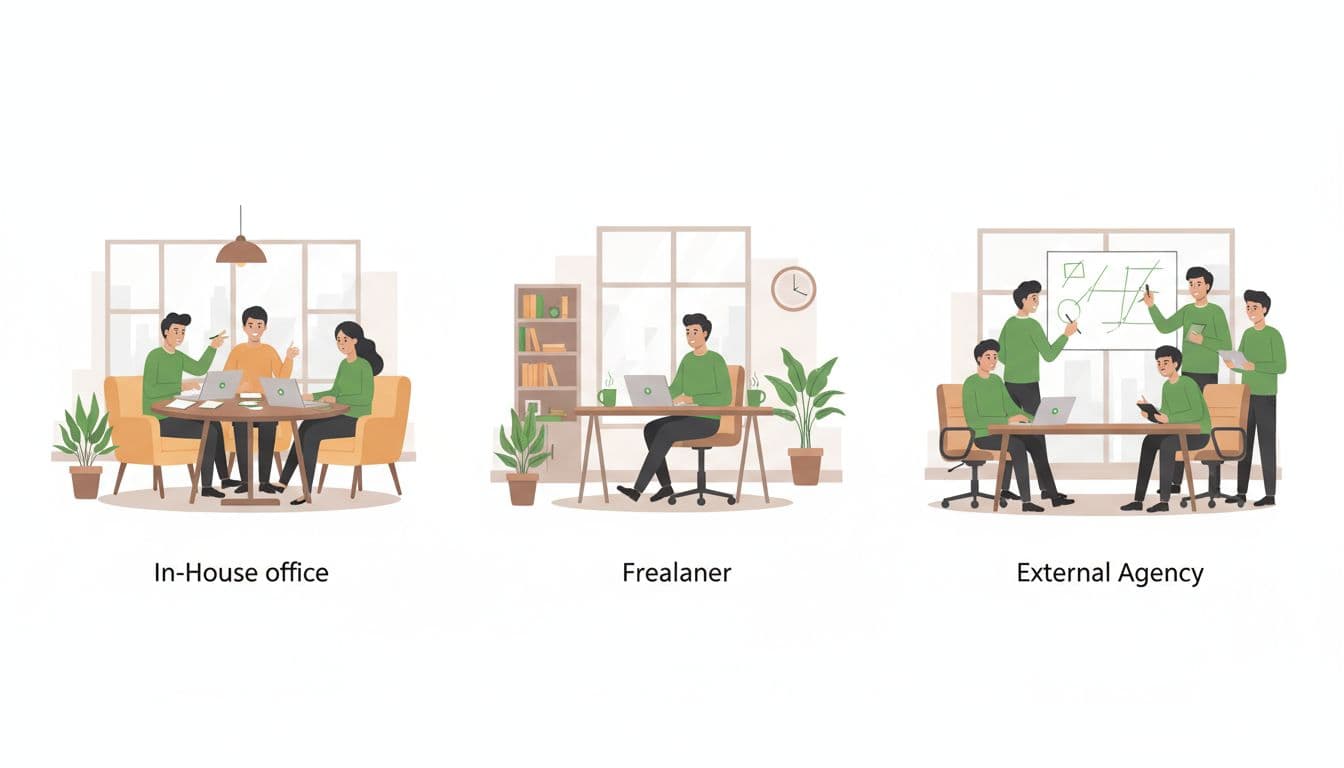
A quick side-by-side view makes the trade-offs easier to see.
| Option | Best fit | Main strength | Main risk |
|---|---|---|---|
| Agency | Multi-skill projects, short sprints | Bench depth and backup coverage | Higher cost, less daily context |
| Freelancer | Narrow expert work, flexible support | Direct access and speed | Single point of failure |
| In-house | Ongoing work tied to the business | Ownership and shared context | Slower hiring, fixed overhead |
| Blended | Core owner plus outside specialists | Control with expert support | Needs clear role boundaries |
The takeaway is simple: no option wins every time.
An agency makes sense when the job needs several skills at once. Think of a site rebuild, a product launch, a compliance push, or a short-term security assessment. You get bench depth, backup coverage, and a defined process. The catch is that agencies often add layers. You may get smart people, but also extra meetings, handoffs, and broader scopes than you planned.
A freelancer works best when the scope is tight. You might need a paid media expert for two months, a contract recruiter for one security architect, or a writer for a launch. Because communication is direct, decisions often move faster.
In-house teams win when the same decisions come up every week. Marketing ops, customer onboarding, finance systems, and security engineering all benefit from daily access and shared context. Over time, that knowledge compounds.
For many firms, the strongest model is mixed. One internal owner sets priorities. Outside specialists support the work that spikes, stalls, or needs rare expertise. That keeps control close, while avoiding full-time hires before the workload justifies them.
Use these filters before you sign anything
The best choice usually comes from four filters: time horizon, business risk, need for context, and who will own the result.
Start with duration. Short projects can sit outside. Repeat work wants a home. If you’re clearing a backlog or launching in a new market, outside support may fit. If you’re building a function, hire for it.
Then look at risk. High-risk work needs clear ownership. In cybersecurity, for example, outside testing helps expose blind spots. Yet access control, incident calls, and staff coaching usually need an internal lead.
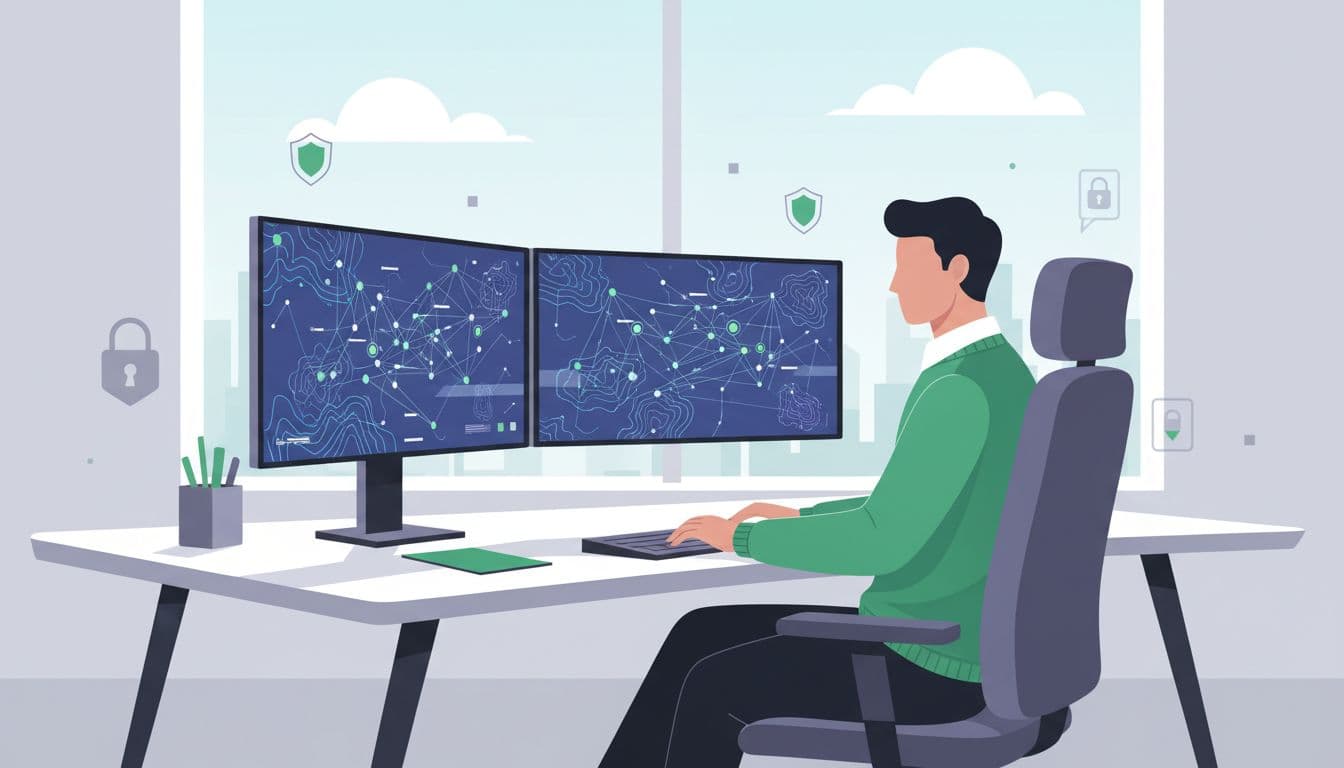
If the work touches core systems every week, ownership matters more than outside speed.
Next, check management bandwidth. Agencies and freelancers still need direction. A weak brief leads to weak output, no matter who does the work. If nobody inside can review the work well, outside help won’t fix the root problem.
Also think about knowledge loss. Every handoff leaks context. When a freelancer or agency leaves, what stays behind? If the answer is a folder of slides and a few saved chats, you paid for motion, not lasting capability. That matters even more when the work affects compliance, customer trust, or hiring plans. You need continuity, not constant re-learning.
Before you sign anything, write a one-page brief. Define the scope, timeline, owner, and success measure. Then ask whether the work is temporary, specialized, or ongoing. That simple test will tell you more than any pitch deck.
Hiring outside help isn’t a mistake. Treating it as the default answer is.
Match the model to the job. Choose an agency for burst capacity and range, a freelancer for focused expert work, and in-house for tasks that need ownership.
Before you commit, ask one hard question: will this partner close a gap, or hide one? That’s the decision most teams wish they’d made earlier.