
table of contents
Banks and insurers face pressure to migrate workloads to the cloud. Yet security gaps can lead to fines or breaches. You need a clear path that meets 2026 regulations like NYDFS and DORA.
Finance firms now require finance cloud security plans that support compliance and resilience. These roadmaps help CISOs align migrations with board expectations. They reduce risks while enabling faster innovation.
This guide outlines a phased approach. It includes actionable steps for banks, credit unions, and fintechs.
Key Regulations Shaping Finance Cloud Security
Regulations drive cloud security in finance. NYDFS Part 500 demands universal MFA for all logins, including cloud apps. Firms must certify asset inventories by April each year. Enforcement started in Q2 2026, with fines over $250,000 per violation.
SEC rules require 4-day incident reporting for public companies. This covers cloud disruptions that affect operations. PCI DSS 4.0, fully enforced now, mandates quarterly scans and automated controls for payments.
DORA impacts global banks with EU ties. It requires real-time risk monitoring and third-party tests. In the US, GLBA updates push stronger data safeguards in cloud storage.
NIST Cybersecurity Framework 2.0 guides migrations. It maps risks across govern, identify, protect, detect, respond, and recover functions. The CRI Profile extends this for finance clouds.

Check the NYDFS cybersecurity requirements for asset tracking details. These rules vary by jurisdiction, so consult local experts.
Zero Trust becomes core. Verify every access, even inside networks. Use customer-controlled encryption keys for data at rest and in transit.
Compliance starts early. Build roadmaps that embed these controls. This ensures audit readiness from day one.
Building Your Cloud Security Roadmap
Start with a high-level plan. Map phases to your migration goals. Focus on operational resilience and board reporting.
A typical roadmap spans 12-24 months. It covers assessment, design, implementation, and ongoing monitoring. Tie each phase to metrics like mean time to detect threats.
For banks, prioritize payment systems. Insurers focus on claims data. Fintechs secure APIs first.
Set milestones. Complete assessment in 3 months. Design in 6. Migrate core workloads by year-end.
Align with NIST CSF. Use its profiles to scope financial systems. This supports CRI Cloud Extension for providers.
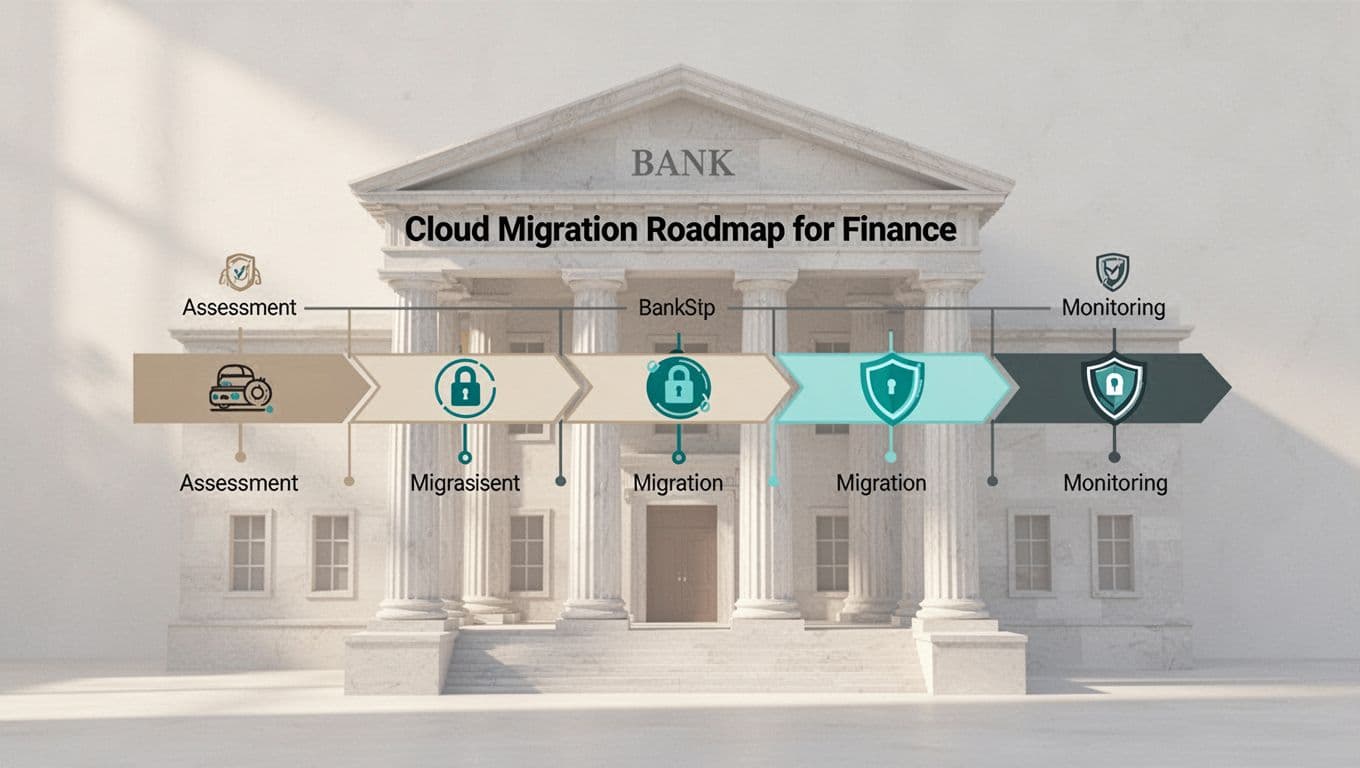
Review this cybersecurity checklist for financial sector 2026 quarterly with your CISO team. It rates controls as implemented or missing.
Board buy-in matters. Present risks in dollar terms. Show how cloud security cuts breach costs.
Budget 20% of migration spend for security. Hire specialists if gaps exist. This builds long-term posture.
Phase 1 – Assessment
Assess current state first. Inventory all assets, on-prem and cloud. Classify data by sensitivity: public, internal, confidential PII, restricted payments.
Map risks. Identify misconfigurations, weak IAM, and vendor exposures. Use tools like CSPM for scans.
Conduct gap analysis against regs. Does MFA cover all cloud logins? Are logs retained for audits?
Engage stakeholders. IT, compliance, and legal review findings. Prioritize high-risk workloads.
Set baselines. Measure patch rates and access reviews. Aim for 99% compliance.

For banks, follow FS-ISAC principles for cloud resilience. They link to NIST areas like govern and protect.
Document outputs. Create a risk register. This feeds design phase.
Finish in 90 days. Validate with external audit. Requirements differ, so tailor to your ops.
Phase 2 – Design and Architecture
Design secure foundations next. Adopt layered controls: identity, network, data, and app security.
Implement Zero Trust. Enforce least privilege IAM. Rotate credentials automatically.
Segment networks. Use micro-segmentation for east-west traffic. Encrypt everything.
Choose hybrid models. Keep ledgers private; run apps public. This meets residency rules.
Build resilience. Plan for outages with multi-region setups. Test failover quarterly.
Incorporate CNAPP. Protect runtime apps with behavioral analysis.
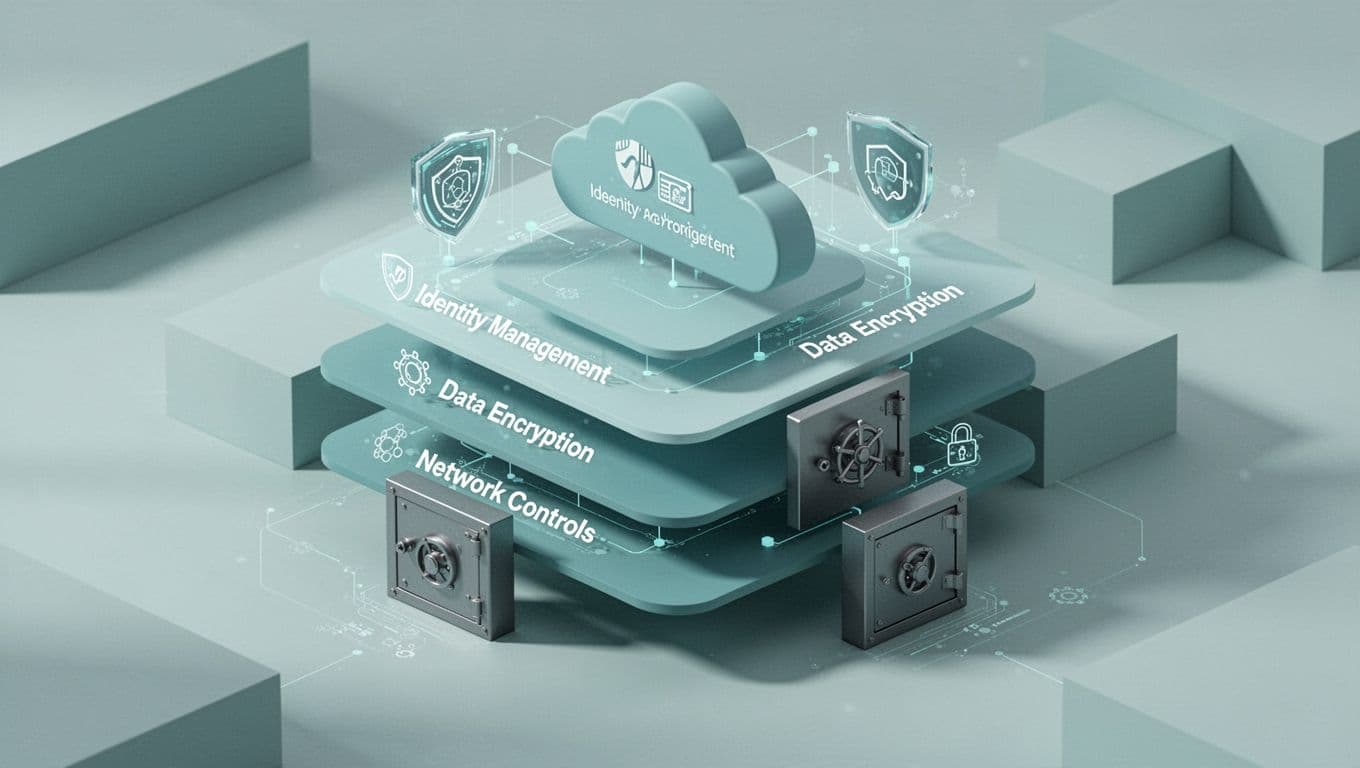
See the cloud security blueprint for financial institutions for unified controls. It stresses real-time protection.
Review with architects. Simulate attacks. Adjust for compliance.
Document designs. This aids audits and handovers.
Phase 3 – Implementation and Migration
Migrate in waves. Start with low-risk apps. Use pipelines for safe data transfer.
Encrypt flows. Tokenize PII during transit. Validate integrity post-move.
Automate deployments. Integrate security in CI/CD. Scan code and configs.
Train teams. Run tabletop exercises for incidents. Update playbooks.
Monitor progress. Track against milestones. Adjust for issues.
For credit unions, prioritize member data. Fintechs focus on APIs.

Follow NIST CSF 2.0 guidance for risk management. It fits enterprise profiles.
Cutover with minimal downtime. Test end-to-end. Certify compliance.
Phase 4 – Monitoring and Optimization
Go live, then monitor continuously. Deploy SIEM for logs. Set alerts for anomalies.
Use dashboards for visibility. Track threats in real-time. Automate responses.
Optimize quarterly. Remediate drifts. Update policies for new regs.
Conduct pen tests. Audit vendors. Measure maturity.
Scale with AI. Detect fraud faster. Integrate with AML tools.

Adopt CSPM best practices for banks. They include IAM governance and logging.
Report to board monthly. Show metrics like detection time. This proves value.
Real-World Examples Across Finance Sectors
Banks like those under OCC use hybrid clouds. They secure ledgers with private instances. Public clouds handle analytics.
Insurers apply ISO 27017. They protect claims data with immutable backups. MFA covers 96% of access.
Fintechs refactor APIs. Zero Trust blocks identity attacks. They cut breach risks 50%.
Asset managers tokenize portfolios. This meets SEC reporting. Vendor audits prevent supply chain hits.
Credit unions migrate core banking. They test resilience against outages.

Review top cybersecurity trends for 2026. Cloud-native tools like CNAPP shine here.
These cases show roadmaps work. Adapt to your scale.
If skills gaps slow you, Book a Discovery Call with Bud Consulting. They place cloud security experts.
Aligning Roadmaps with Board and Compliance
Boards demand risk views. Translate tech into business impacts. Use heat maps for threats.
Link to resilience. Show how migrations cut downtime costs.
Prepare audits. Automate evidence collection. Meet 36-hour reporting for banks.
Governance committees oversee. Assign owners per phase.
This alignment boosts approval. It ties security to growth.
Conclusion
Phased roadmaps secure finance cloud migrations. They meet NYDFS MFA, DORA monitoring, and NIST standards.
Start with assessment. Build Zero Trust designs. Monitor forever.
Finance cloud security now enables resilience. Boards see lower risks and faster ops.
Your next step? Review assets today. Build the plan that fits your firm.

