table of contents
Fintech breaches hit hard in early 2026. LoanDepot lost data on 17 million customers to ransomware. Revolut exposed details for 50,000 users via phishing. These incidents cost millions and eroded trust fast.
You run a lean team. You ship features weekly to grab market share. Yet regulators demand proof of security, and customers check your controls before wiring money. A fintech security roadmap keeps you compliant without slowing growth.
This guide shows you how to build one. It fits startup stages and avoids overkill. Let’s map phases that match your pace.
Why Fintech Startups Need Security Roadmaps in 2026
Threats evolve quick. AI powers attacks that dodge old defenses, like deepfakes fooling biometrics or bots testing logins at scale. Banks now require SOC 2 reports or PCI attestations before partnerships.
Regulations tightened too. DORA mandates resilience testing for EU ops since 2025. US states like North Dakota added data security rules for nonbanks. Startups ignore this at their peril; fines hit 4% of revenue under GDPR.
A roadmap aligns security with business goals. It sequences tasks so you fix basics first, like identity controls, before chasing badges. Early focus on logging and backups pays off across frameworks.
Recent data shows breaches average $6 million each. One third of users ditch firms post-hack. Your roadmap builds trust that wins deals.
Define Phases for Your Fintech Security Roadmap
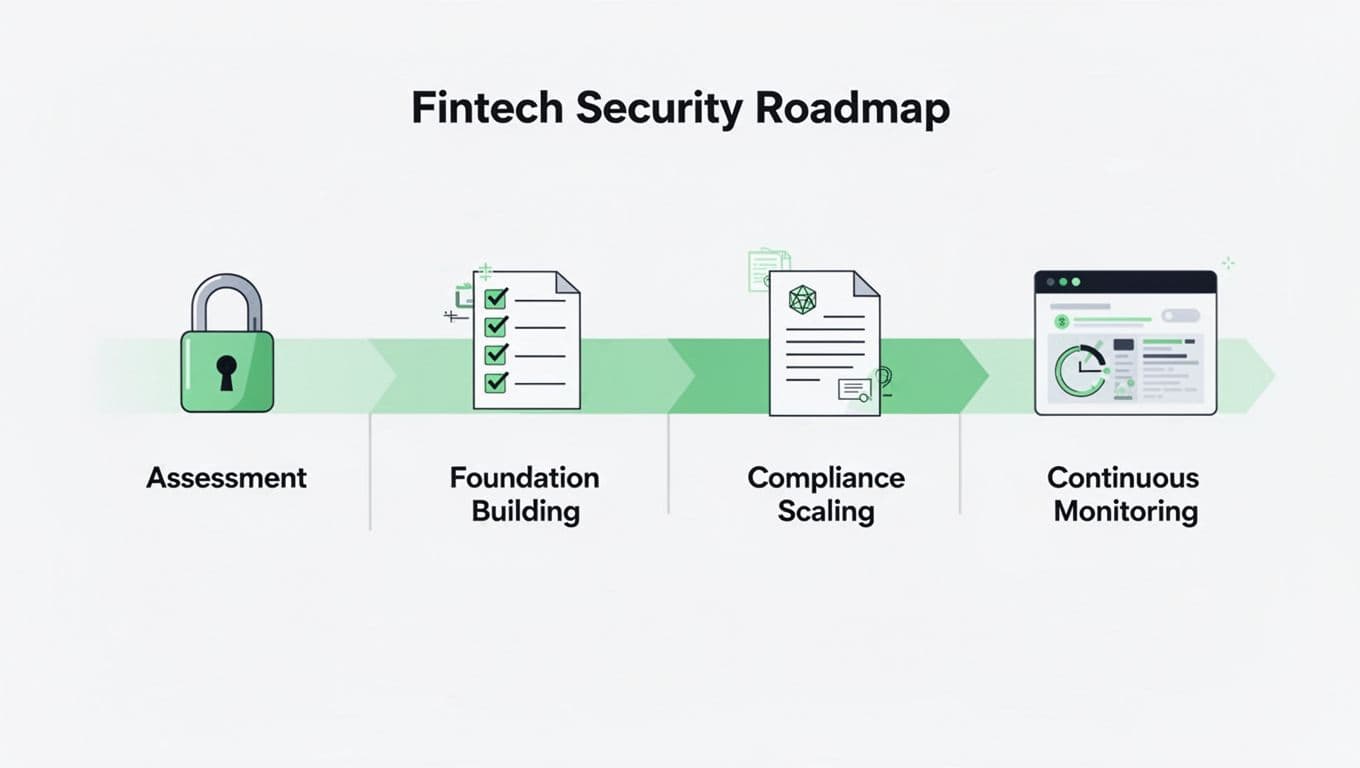
Start simple. Divide your roadmap into four phases: assess risks, build foundations, scale for compliance, and monitor ongoing. This order matches limited resources.
First, assess. Map your attack surface. List APIs, third-party integrations, and data flows. Run a quick threat model. Tools like OWASP help spot gaps without big spends.
Next, foundations. Secure identity with MFA and role-based access. Encrypt data in transit and at rest. Set up centralized logging. These block 80% of breaches.
Then scale compliance. Target SOC 2 Type I if revenue hinges on it. Prep PCI SAQ for payments. Document controls once to cover multiple rules, as this 2026 fintech compliance roadmap outlines.
Finally, monitor. Deploy automated scans and AI alerts for anomalies. Test incident response quarterly.
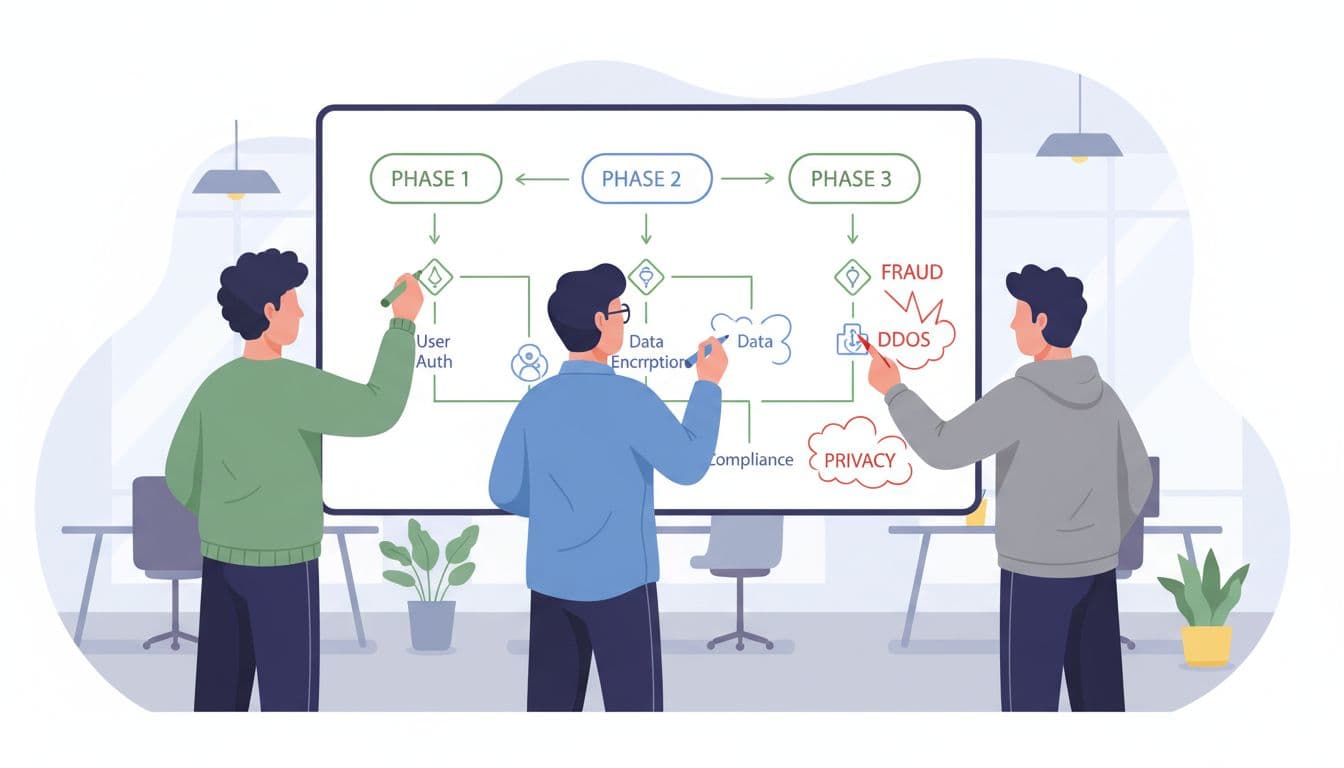
Your team can own this. Founders lead assessment. CTOs handle foundations. Hire a fractional CISO for compliance if needed.
Phases prevent scatter. You ship fast but stay secure.
Key Milestones by Startup Stage
Tailor milestones to your stage. Early teams prioritize survival basics. Growth firms chase audits.
Pre-seed or seed: Focus on core hygiene. Enable MFA everywhere. Classify data and encrypt sensitive fields. Scan code weekly with free tools like Snyk. Milestone: Zero standing privileges.
Series A: Add backups and logging. Test APIs for rate limits and auth. Run your first pen test. Milestone: Pass internal audit with evidence.
Series B+: Pursue certifications. Get SOC 2 Type II. Align with DORA if EU-bound. Build real-time fraud detection. Milestone: Third-party attestation.
Here’s a quick view:
| Stage | Priority Focus | Key Milestone |
|---|---|---|
| Seed | Identity, encryption | MFA enforced, data classified |
| Series A | Logging, API security | First pen test complete |
| Series B+ | Audits, monitoring | SOC 2 Type II report |
This table shows progression. Early wins build habits. Later ones unlock partnerships.
Adjust based on product. Payments need PCI early. Lending firms stress KYC.
Common Mistakes Fintech Startups Make
Many teams bolt on security late. They chase shiny AI tools before basics. Result? Exposed APIs lead to breaches like Navia’s 2.7 million record leak.
Don’t silo compliance. SOC 2, PCI, and GDPR overlap on encryption and access. Map controls once, as best practices for 2026 suggest.
Skip overengineering. Full-time hires drain runway. Use automation and freelancers first.
Ignore third parties. Check vendor security postures. Weak links caused half of 2026 incidents.
Finally, forget culture. Train staff on phishing. One click undid Revolut.
Avoid these pitfalls. Your roadmap stays lean.
Simple Checklist for Your Roadmap
Use this checklist quarterly. Rate items: done, partial, or gap.
- Identity: MFA on all accounts? Least privilege enforced?
- Data: Encryption for PII? Tokenization for payments?
- Monitoring: Logs centralized? Alerts for anomalies?
- Testing: Code scans weekly? Pen tests yearly?
- Compliance: Audit trail ready? Reg gaps identified?
- Response: Playbook tested? Backups verified?
Teams review together. Assign owners. Track progress in shared docs.
For details, see this 2026 cybersecurity checklist.
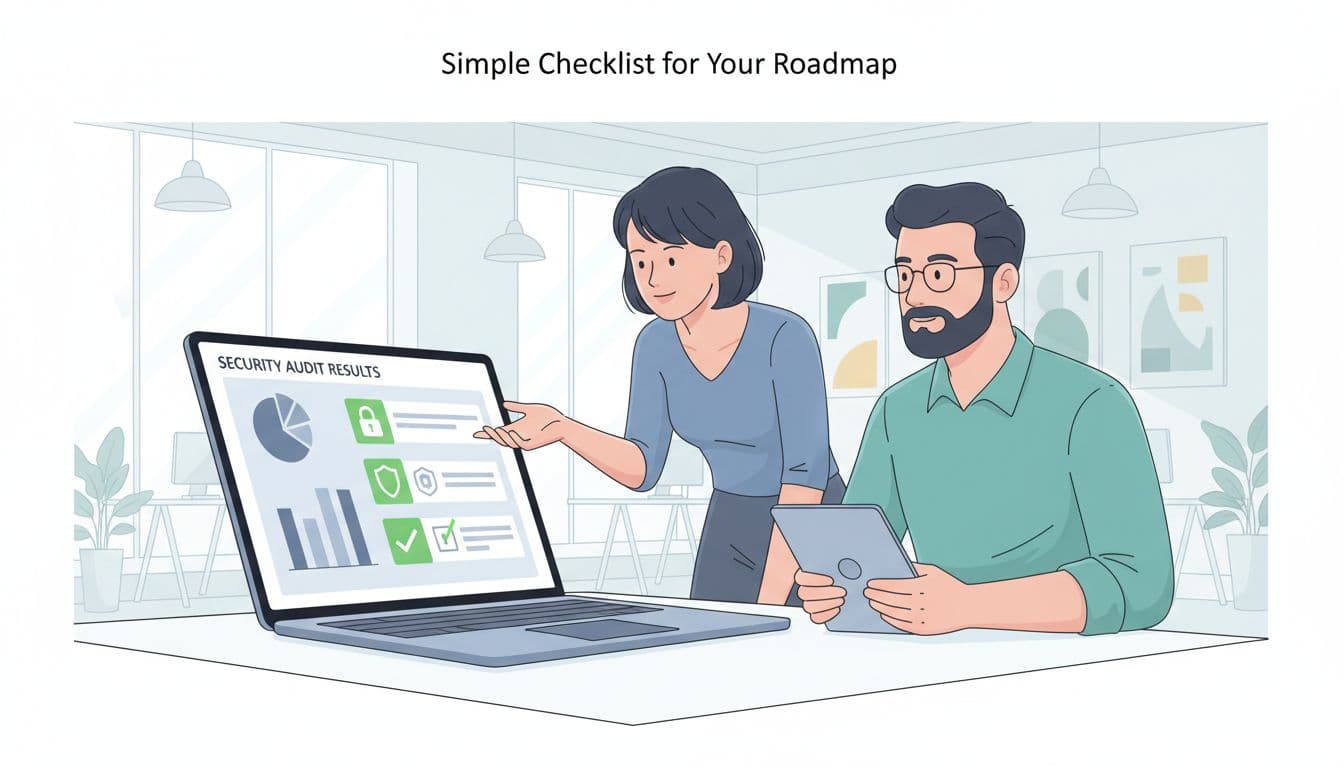
It fits one meeting. Gaps become next sprint tasks.
Key Takeaways
A phased fintech security roadmap secures your startup without halting speed. Start with assessment and foundations. Hit milestones by stage. Dodge common traps like late fixes.
You now have a plan that scales. Customers trust secure firms. Regulators approve compliant ones.
Book a Discovery Call with Bud Consulting to vet security talent for your team.