table of contents
Startups hit a wall when enterprise buyers demand SOC 2 reports or AI risk proofs. You lack a security team, yet threats like cloud misconfigs and prompt injections loom large. In April 2026, cybersecurity jobs grow 33% through 2034, with 4.8 million unfilled spots worldwide.
Your first security hire sets the tone. It focuses on business risks, customer needs, and engineering speed, not checklists. This guide shows you how to choose, hire, and scale security from zero.
Assess Risks Before You Hire
Map your real exposures first. Cloud-native stacks mean IAM gaps or SaaS sprawl top the list. Enterprise clients scrutinize vendor risks; ignore them, and deals stall.
Ask key questions. Does your Series A stage need compliance for sales? Or does AI integration demand threat modeling? Startups often chase buzzwords, but prioritize what blocks growth.
Use a quick audit. List top assets like customer data in AWS or GCP. Check for weak spots via free tools or NIST for startups. This grounds your hire in facts.
In short, align security with revenue. That attracts the right talent.
Choose Full-Time, Fractional, or Outsource
Pick based on stage and budget. Early bootstraps suit fractional CISOs; scaling teams need full-timers. Outsourcing fits niche gaps like pen tests.
Here’s a side-by-side view of options:
| Option | Best For | Cost (Annual) | Speed to Value | Scalability |
|---|---|---|---|---|
| Full-Time | 50+ engineers, enterprise sales | $200K-$300K + equity | 3-6 months | High, builds team |
| Fractional CISO | Pre-Series B, compliance push | $60K-$180K | 2-4 weeks | Flexible hours |
| Outsource | One-off audits, AI risks | $50K-$100K/project | Immediate | Task-specific |
Full-timers embed in DevSecOps; fractionals strategize board reports. Outsource for quick wins like cloud hardening. For details on fractional benefits, see this comparison.
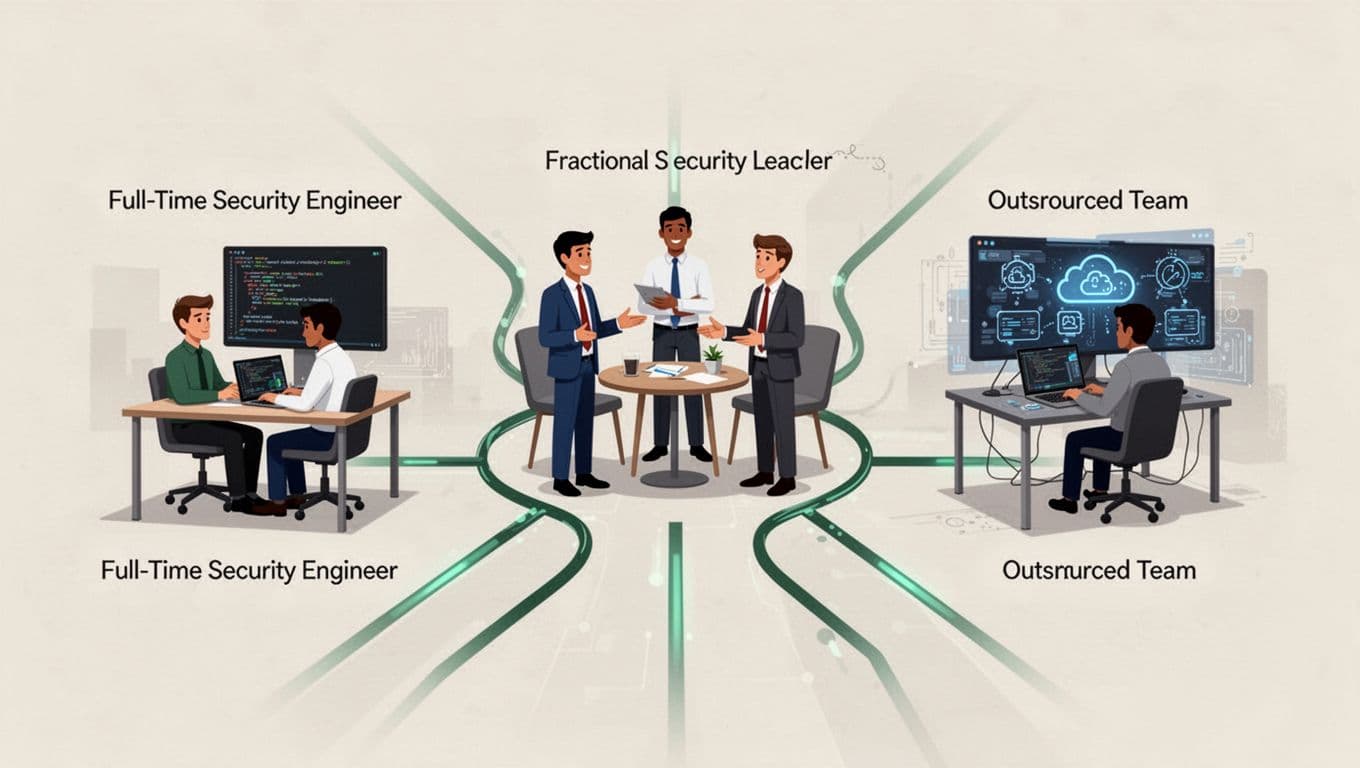
Fractionals shine in 2026’s talent crunch. They bring AI security know-how without full commitment.
Select the Right First Role
Match the role to needs. Pre-seed? Grab a cloud security engineer for IAM and Zero Trust. Series A with SaaS? Hire a GRC specialist for SOC 2.
Common starters include:
- AppSec Engineer: Threat models code, integrates SAST/DAST.
- Cloud Architect: Hardens AWS/GCP, manages vendor risks.
- Threat Intel Lead: Tracks AI exploits, enterprise threats.
Your stage dictates. Bootstraps pick builders who enable engineers. Growth firms need compliance pros. Check Vanta’s startup guide for role breakdowns.
Avoid generalists claiming everything. Focus on 2-3 skills that unblock sales.
Define Responsibilities Clearly
Your first hire builds foundations, not empires. They assess risks, train teams, and automate basics. No 24/7 SOC yet.
Core duties:
- Audit cloud/IAM setups.
- Embed security in CI/CD pipelines.
- Handle customer security questionnaires.
Skip ops like firewall tweaks; engineers cover those. Don’t expect solo incident response. Instead, they enable devs with tools and policies.
This keeps them strategic. As a result, engineering moves faster.
Evaluate Candidates Without Security Experts
No in-house pros? Use structured talks. Start with business fit: “How would you secure our AI features for enterprise buyers?”
Test practical skills. Share a mock cloud config; ask for fixes. Probe AI risks like prompt injection.
Video interviews work well. Gauge teaching ability; they must upskill your team.

Reference checks matter. Ask past bosses about outcomes, not certs. CISSP helps, but results count more.
Book a Discovery Call with Bud Consulting if vetting feels overwhelming.
Budget Smart and Expect Real Outcomes
Allocate 1-2% of ARR for security. Full-time runs $250K total comp; fractionals cut that 50-70%.
Tradeoffs show value:
| Budget Level | Hire Type | Outcomes Expected |
|---|---|---|
| Low (<$100K) | Outsource/Fractional | Audits done, basic policies set |
| Medium ($150K) | Full-Time Engineer | Pipelines secured, SOC 2 progress |
| High (>$250K) | Leader + Tools | Enterprise deals closed, AI safe |
Outcomes tie to risks reduced. Track via metrics like vulnerability fixes or questionnaire response time.
Spot Red Flags and Follow a Maturity Path
Watch for mis-hires. Red flags include cert-only resumes, no engineering empathy, or “do-it-all” promises. Anti-pattern: Hiring ops-focused folks for strategy.
Instead, use a phased model:
- Basics: Lock cloud/IAM (1-3 months).
- Integrate: Add DevSecOps, AI checks (3-6 months).
- Scale: Compliance dashboards, monitoring (6+ months).

This builds steadily. See IronOrbit’s model for small biz tweaks.
Startups thrive by hiring enablement pros first. Your first security hire turns risks into revenue drivers. Act on your audit today; growth waits for no one.