table of contents
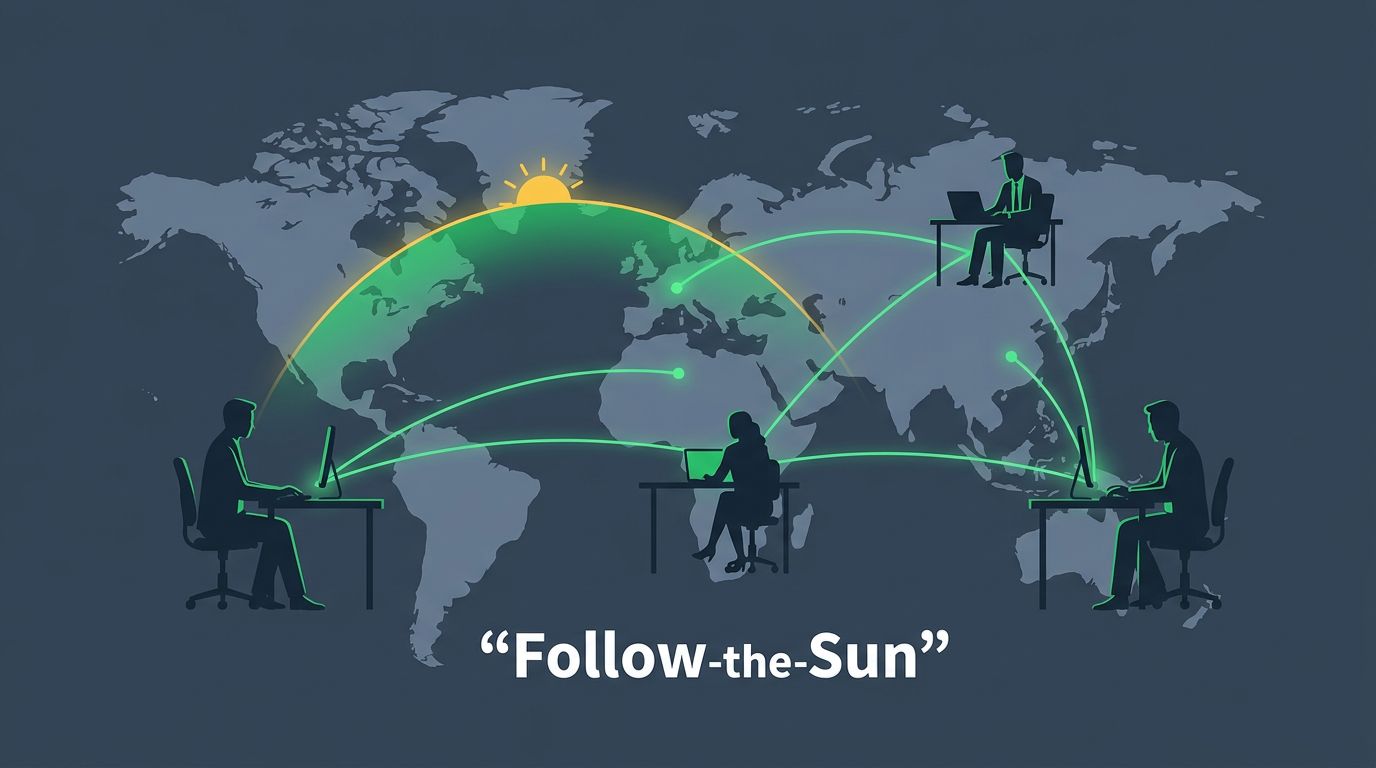
Round-the-clock security can fail at the handoff. A strong follow-the-sun security analyst keeps alerts moving across time zones without losing context or pace.
That matters even more in 2026, when AI handles more routine alert work and human analysts spend more time on judgment, escalation, and coordination. The hiring mistake is simple: filling a shift instead of building a process.
Define the role before you post it
Start with the work, not the title. Does this person triage Tier 1 alerts, enrich suspicious activity, coordinate with incident response, or cover all three during off-hours? The answer changes the profile.
Write down what success looks like in plain terms. Good metrics include time to triage, handoff quality, reopen rate, and escalation accuracy. If you skip that step, every candidate sounds close enough.
Also define the boundaries. A night-shift analyst should not become the catch-all for every noisy ticket. If you expect them to support multiple regions, say which ones and which languages matter. Coverage for LATAM, EMEA, or APAC often needs more than time zone overlap, it needs clear communication in the moment.
Choose the operating model that fits your coverage
The right structure depends on your budget, maturity, and tolerance for risk. A simple comparison helps leaders avoid a bad mix of ambition and staffing.
| Model | Best when | Strength | Watch-out |
|---|---|---|---|
| In-house | You need deep internal context | Strong ownership and fast learning | Harder to staff nights and holidays |
| Remote | You want a wider talent pool | Broader hiring reach and flexible coverage | Needs strong process and trust |
| Hybrid | You have a core SOC plus regional shifts | Senior oversight stays close | Handoffs can get messy |
| MSSP | You need 24/7 coverage fast | Coverage is ready sooner | Less control over tuning and context |
| Outsourced | You need a narrow, defined function | Fills gaps quickly | Quality varies without tight SLAs |
For many teams, remote or hybrid works best. The key is consistency. The same playbooks, same case notes, and same escalation rules need to travel with the ticket.
For a good primer on the model itself, see Salesforce’s follow-the-sun model guide. It shows why coverage only works when handoffs are deliberate.
A 24/7 SOC breaks when every shift uses a different judgment standard. Keep the playbooks shared and the escalation path visible.

Look for analysts who can hand off cleanly
Alert volume matters, but handoff skill matters more. A strong candidate can explain what happened, what they checked, what still needs attention, and who owns the next step.
Look for incident triage speed, SIEM and EDR familiarity, and real threat-detection judgment. In 2026, that often includes cloud-native tools and more automated workflows. Microsoft’s agentic SOC article reflects that shift well. The analyst should be able to validate machine output, not blindly accept it.
Communication is just as important. A good follow-the-sun analyst can brief another region in a few sentences, with no loose ends. They document evidence, note timestamps, and leave enough context for the next shift to act fast.

Ask interview questions that reveal real shift readiness
Resume keywords are easy to copy. Handing off a live incident under pressure is harder. That is why interviews should test judgment, not only tool names.
Questions worth asking
- “Walk through the last noisy alert you closed. What evidence made you rule it in or out?”
- “A ticket arrives with missing context and an active endpoint. What do you ask for first?”
- “Tell me about a handoff that failed. What changed after that?”
- “How do you brief a teammate in another time zone so they can act without a second call?”
- “What do you document before your shift ends?”
- “How do you use SIEM and EDR together when the alert story is incomplete?”
Good answers are specific. They name evidence, sequence, and ownership. Weak answers stay vague or drift into buzzwords. If a candidate cannot explain their thought process, they may struggle when the queue gets busy.

Build the first 30 days around process
Onboarding should test the operating model, not just the person. Start with a live runbook, a named escalation tree, and a handoff template that every shift uses the same way.
A quick hiring checklist helps keep the process tight:
- Shift coverage map is written and approved.
- Escalation contacts are named by region and time zone.
- Handoff template includes status, evidence, next action, and owner.
- SIEM, EDR, ticketing, and chat access are ready on day one.
- Regional language needs are documented.
- Holiday and leave coverage are planned before the start date.
- One cross-region shadow shift is built into onboarding.
If you need help defining the role or sourcing across regions, Book a Discovery Call with Bud Consulting.
Conclusion
The best follow-the-sun security analyst is not the fastest clicker in the queue. The best one keeps context alive across shifts and leaves no one guessing.
When you define the role clearly, choose the right operating model, and test handoffs early, 24/7 coverage becomes sustainable. That is how you protect the SOC without burning out the people behind it.