table of contents
Table of Contents
- What a Fractional CISO Does
- Full-Time CISO vs. Fractional CISO
- Key Factors to Decide
- Scenarios Where Each Fits Best
- Quick Hiring Summary
- Conclusion
- FAQ
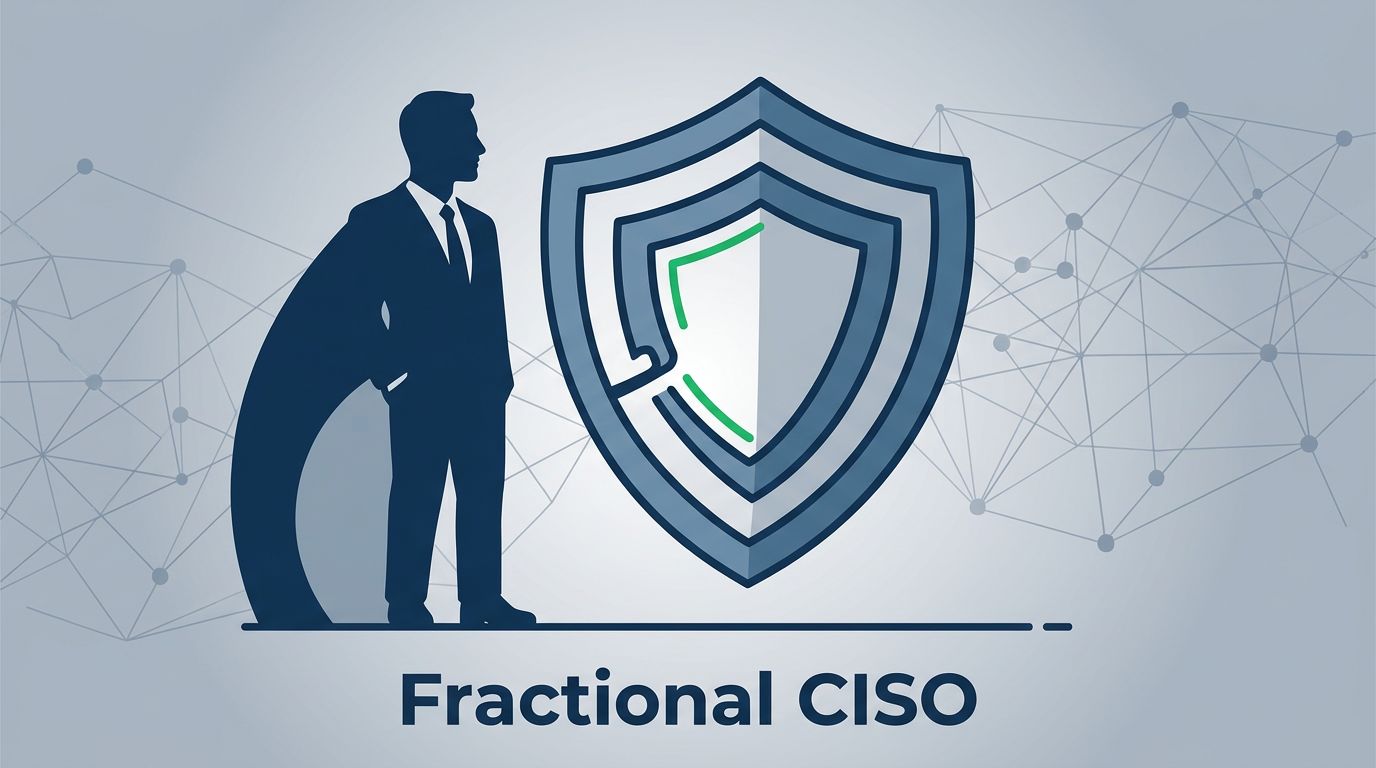
Cyber threats hit businesses every day. You run a growing company, but a full-time Chief Information Security Officer costs $250,000 or more each year. A fractional CISO steps in part-time at a fraction of that price.
This hire brings executive expertise without the full commitment. You get strategy, compliance help, and board reports. Full-time makes sense only later. Let’s break down when to pick each so you avoid overpaying or underprotecting.
What a Fractional CISO Does
A fractional CISO works 10 to 20 hours a week. They focus on high-level tasks. Think risk assessments, policy setup, and vendor reviews.
They join your leadership team. You report to them on security metrics. They guide your IT staff on fixes. No daily operations drain their time.
Costs run $5,000 to $25,000 monthly. That’s 60% less than full-time. They scale hours as needs change. Startups love this flexibility.
Full-time CISOs handle teams and 24/7 alerts. Fractionals skip that. They advise on big decisions. Your engineers execute the rest.
This model suits SMBs. You gain experience from leaders who served enterprises. They spot gaps fast because they see patterns across clients.
Full-Time CISO vs. Fractional CISO
Compare the two side by side. Costs differ most. Time to hire varies too. See the table below for quick facts.
| Factor | Fractional CISO | Full-Time CISO |
|---|---|---|
| Annual Cost | $60K-$300K | $250K-$450K+ (salary + benefits) |
| Time to Start | 2-4 weeks | 3-6 months |
| Commitment | Flexible hours, scale as needed | 40+ hours/week, fixed |
| Focus | Strategy, compliance, advising | Operations, team management |
| Best For | SMBs, startups, growth stage | Enterprises, high regulation |
| Expertise | Broad from multiple industries | Deep in your specific business |
Fractionals shine in strategy. They build programs from scratch. Full-time leads large SOCs.

Data from providers like iomergent’s comparison guide matches this. Full-time suits complex ops. Fractionals cut costs while covering essentials.
Key Factors to Decide
Your choice hinges on a few basics. Check these bullets first.
- Company size: Under 500 employees? Go fractional. Over 1,000 needs full-time depth.
- Budget: Security spend below $300K yearly favors fractional. It saves 60-75%.
- Maturity level: Early program? Fractional builds foundations. Mature ops demand full-time oversight.
- Regulatory needs: Light compliance picks fractional. Heavy rules like HIPAA push full-time.
- Growth stage: Pre-IPO or post-funding? Fractional scales fast. Stable enterprises lock in full-time.
Use this flowchart to map your situation.
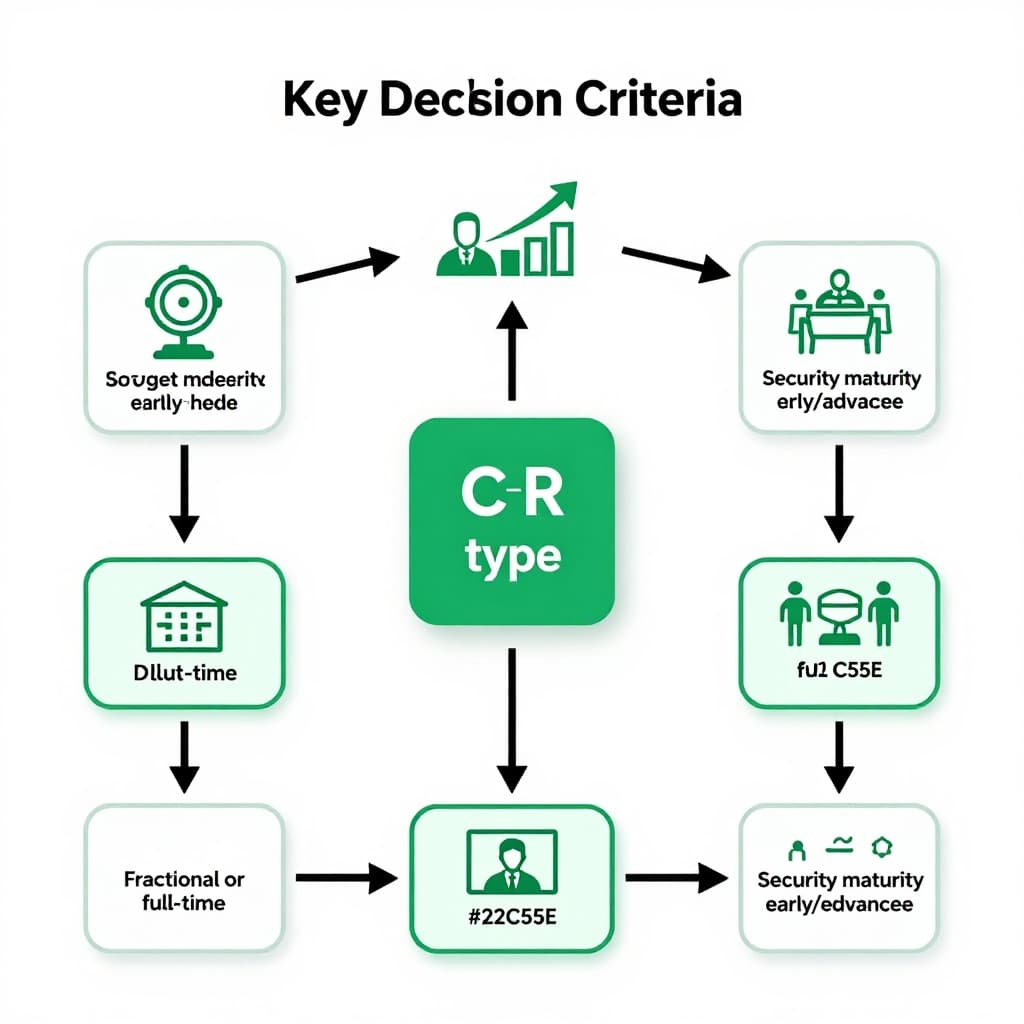
Zynet’s decision framework aligns here. Small teams need direction, not a full manager. Match your reality to save time and cash.
Scenarios Where Each Fits Best
Real examples show the fit. Pick based on your spot.
Startups bootstrap security. A seed-stage firm lacks policies. They hire a fractional CISO for 10 hours weekly. This leader drafts roadmaps and preps investor due diligence. Full-time waits until Series B. As 10x.team notes for startups, it builds trust cheap.
Growing SaaS firms chase enterprise deals. Customers demand SOC 2 proof. A Series B SaaS taps fractional help for compliance roadmaps. They align DevSecOps without a $300K hire. Illicus details this for B2B SaaS. Full-time comes after 100+ customers.
Regulated companies face audits. Fintechs hit HIPAA walls. Fractional CISOs own the process. They run gap assessments and mock audits. Every client passes, per parttimeciso.com’s track record. Switch to full-time post-compliance.
Audit or sales prep fits fractional best. You gear for enterprise RFPs. A breach response needs quick strategy. Fractional jumps in for 3 months. They report to boards and fix gaps. Full-time overkills short bursts.

These cases prove flexibility wins early.
Quick Hiring Summary
Hire fractional CISO now if you lead a startup, SaaS under 500 people, or face audits. It covers strategy at low cost. Go full-time for 1,000+ staff, heavy ops, or constant threats.
Fractional fits 80% of SMBs. Full-time serves the rest. Assess your size, budget, and risks. That picks the winner.
Conclusion
Fractional CISOs deliver leadership without overhead. They protect your business at the right scale.
You now know when each works. Match your needs and move fast. Cyber risks don’t pause.
FAQ
What’s the average cost of a fractional CISO?
Expect $5,000 to $25,000 per month. Hours flex from 10 to 80. This beats full-time salaries every time.
Can a fractional CISO handle incidents?
Yes. They guide responses and report to boards. Your team executes tactics under their plan.
How long until a fractional CISO starts?
Most onboard in 2-4 weeks. No long searches needed.
Do fractional CISOs work for regulated industries?
They do. Experts pass SOC 2, HIPAA, and ISO audits. See Help Net Security’s take.
When should I switch to full-time?
After 1,000 employees or complex SOCs. Scale up as maturity grows.
Ready to match your risks? Book a Discovery Call with Bud Consulting.