table of contents
Suspected fraud moves fast, and confusion moves faster. If your team does not know who to call, what to log, and when to escalate, a small warning sign can turn into a much bigger loss.
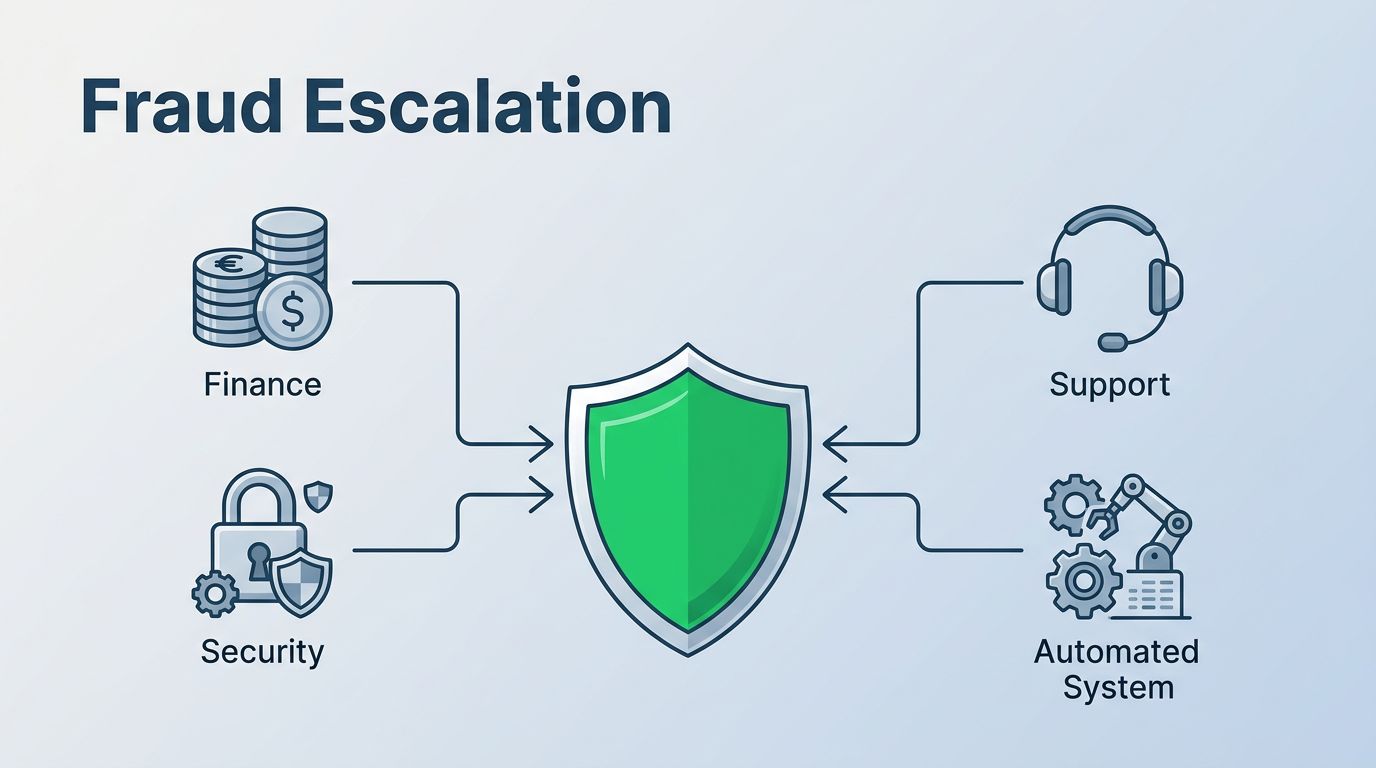
A strong fraud escalation path gives every team the same route, whether the alert starts in finance, security, customer support, or an automated system. The best version is simple, tested, and tied to your legal, regulatory, and internal policy requirements.
Start with triggers that should open a case
Begin with clear triggers, not gut feel. A good path starts when the signal is strong enough to deserve action.
Common escalation triggers include unusual transaction size, repeat login failures, sudden bank detail changes, new payee setup, device or location mismatches, refund spikes, and complaints from staff or customers. One signal may be harmless. Two or three together are harder to ignore.
Set thresholds for each channel. A single failed login may stay in review. A failed login, a password reset, and a payout request can move straight into escalation.
The point is to define when a case stays routine and when it enters the fraud escalation path. That line should be written down, shared, and reviewed often.

Name one owner for each stage
Every stage needs a single owner. That does not mean one team does all the work. It means one person or role moves the case forward and records each decision.
A common split is front-line detection, fraud or security triage, compliance review, and executive or legal notification for high-risk cases. Finance may freeze a payment, IT may isolate an account, and legal may advise on notice or evidence retention. The key is that handoffs are explicit.
Do not let the same person detect, approve, and close the case. Separation of duties protects both the review and the record.
If your team is struggling with unclear handoffs or weak role ownership, Book a Discovery Call with Bud Consulting to review where the gaps are.
If nobody can name the owner in 30 seconds, the path is too vague.

Set response times before the incident starts
Without timelines, escalation stalls. Define what happens immediately, within 30 minutes, within 2 hours, and by the end of the day. Then adjust those clocks to the risk.
A suspected account takeover should move faster than a low-value refund anomaly. A vendor bank change may need finance and legal review before any payment goes out. A chargeback cluster may need fraud, support, and operations in the same day.
Use a simple matrix so people do not guess under pressure.
| Severity | Example trigger | Lead owner | Target time | Action |
|---|---|---|---|---|
| High | Account takeover, payment reroute, clear fraud pattern | Security + fraud lead | 15 to 30 minutes | Contain activity, preserve logs, notify compliance and legal |
| Medium | Unusual vendor change, high-value refund, suspicious login pattern | Fraud operations | Within 2 hours | Hold action, collect evidence, review account history |
| Low | Single outlier transaction or customer dispute | Case analyst | Same business day | Document, monitor, close or reclassify if needed |
This keeps the team from treating every alert the same. It also helps you align with reporting duties and internal approval rules.
Protect evidence before you send the alert
A strong security escalation path depends on clean records. Once a case opens, save the facts first.
Keep timestamps, user IDs, device data, transaction details, screenshots, call notes, and approval logs. Limit edits to the case file. If your tools allow it, lock or tag evidence so later reviewers can trust the trail.
This matters because fraud cases often cross teams. Finance may need transaction history. Security may need access logs. Compliance may need reporting records. Without a clean file, each team rebuilds the same story from scratch.
Also define who can contact customers, vendors, or banks. A rushed call can tip off a bad actor or damage a valid relationship. That rule should sit inside the escalation path, not outside it.
Test the path before the first real incident
A fraud escalation path fails when it lives only in a policy document. Run tabletop exercises, sample case reviews, and after-action reviews after real incidents.
Use realistic scenarios, such as payroll diversion, invoice fraud, or account takeover. Time the response. Watch the handoffs. See where people wait for permission or search for the right form.
After each test, fix the slowest step first. Maybe legal gets involved too late. Maybe the analyst knows what to do, but the manager cannot find the log. Small fixes matter because they remove friction when pressure is high.
Update the process when products change, teams change, or fraud patterns shift. Also review it when laws, regulations, or internal controls change. A path that worked last quarter may miss today’s risks.
A fraud path should be simple enough to use
The best fraud escalation path is clear before the alert arrives. It tells people what should trigger action, who owns each step, how fast they need to move, and how to protect the record.
When the path is simple, tested, and aligned with policy, teams respond faster and document better. That is what keeps a suspected incident under control.