table of contents
Hiring a cloud security architect is easy to get wrong. Many teams chase certifications, brand-name employers, or a long tool list. None of that proves the person can reduce risk in a live cloud estate.
If you need to hire a cloud security architect, look for someone who can design, persuade, and ship. The right hire will tighten identity controls, reduce misconfigurations, support engineering speed, and give leaders a clear risk picture.
To hire a cloud security architect, start with outcomes
Write the role around business results, not vague ownership. Do you need a builder for a new AWS landing zone, or a senior architect to fix a messy hybrid estate? Those are different hires.
Set the span of control early. Will this person own reference architecture, security standards, and platform guardrails? Or will they advise while others build? If you don’t draw that line, strong candidates walk away and weaker ones overpromise.
In March 2026, many US cloud security architect roles land around $170,000 to $210,000 in total pay. Multi-cloud and AI security depth can push that higher. Therefore, a fuzzy brief gets expensive fast.
A useful benchmark for scope is the cloud security architect role overview from SANS. General recruiters can also borrow process ideas from this job-description-to-interview guide, then add a security-focused scorecard.
Use this simple hiring frame:
| Outcome you need | Evidence to ask for |
|---|---|
| Secure cloud foundation | Landing zones, guardrails, logging, segmentation |
| Identity-first access | SSO, MFA, least privilege, privileged access design |
| Safer delivery pipeline | IaC scanning, policy-as-code, secrets controls |
| Risk reduction | Fewer high-risk findings, faster remediation, audit support |
Ask candidates to show where they changed one of those outcomes. If they can’t point to a result, they may be more adviser than operator. Certifications can help, but they shouldn’t outweigh proof of shipped patterns, reduced exceptions, or better audit results.
The 2026 skills that matter most
A strong architect sees the whole system, not just a control list. In 2026, that means multi-cloud and hybrid design, zero trust, identity-first security, and cloud-native tooling that works across teams.
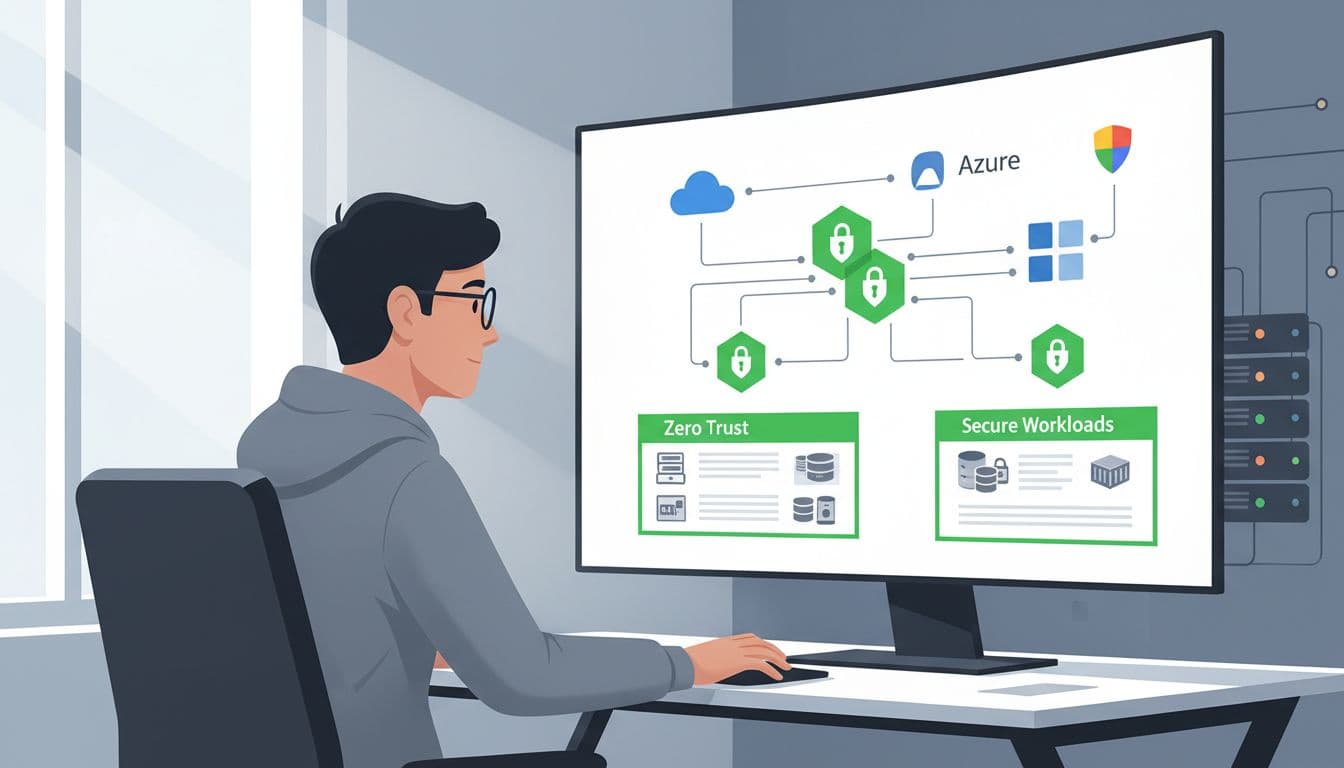
Look for practical experience with CNAPP, CSPM, and CWPP, but don’t stop at product names. The candidate should explain when posture management is enough, and when you need workload, identity, or runtime coverage. This CNAPP vs. CSPM breakdown is a useful refresher for hiring teams.
Also look for depth in four areas. First, IaC security, including Terraform, drift control, policy gates, and secret handling. Next, AI workload security, such as model access, data isolation, artifact integrity, and GPU workload protection. Then, compliance alignment, because SOC 2, ISO 27001, HIPAA, PCI DSS v4, or regional data rules often shape the architecture. Finally, communication, because the job fails when platform, engineering, and GRC hear different stories.
On the resume, look for verbs that show change: built, standardized, reduced, migrated, automated. Be careful with candidates who list every cloud and every framework but can’t explain depth in any of them. The best architects also know when not to add another tool. In 2026, many teams want fewer consoles, more context, and tighter identity telemetry.
If a candidate can’t explain trade-offs in plain English, adoption will stall.
Interview questions that reveal delivery ability
Good interviews should feel like design reviews, not trivia contests. Put a real problem in front of the candidate and watch how they reason.
Keep the panel small. One security leader, one platform engineer, and one engineering manager usually gives enough range. Long panels reward polish over substance.
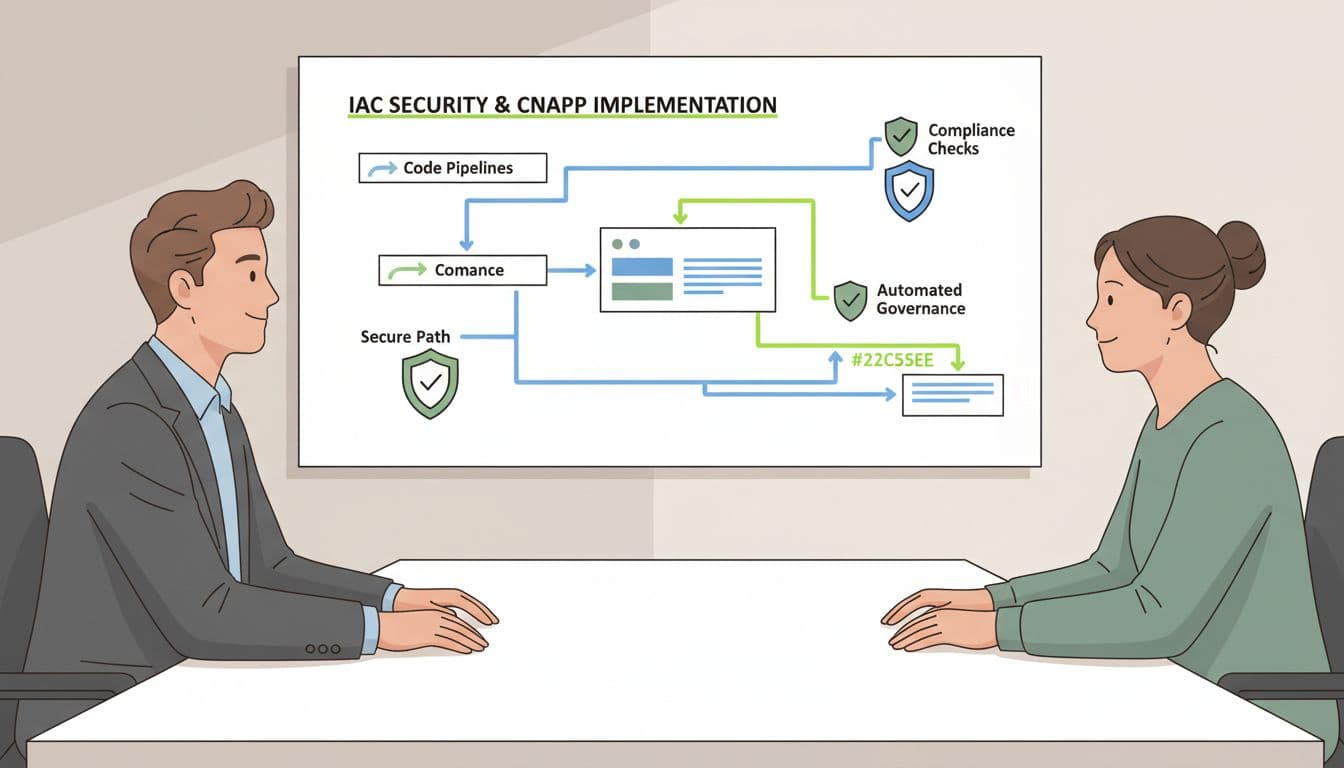
Use prompts like these:
- Multi-cloud risk cleanup: “You inherit AWS, Azure, and GCP with 500 high findings. What happens first?”
Strong answer: maps crown-jewel assets, identity exposure, internet paths, exploitability, and owners. Weak answer: promises to “close all alerts” without prioritizing. - Zero trust design: “How would you move from network trust to identity-first controls?”
Strong answer: starts with identities, device trust, workload auth, segmentation, and phased rollout. Weak answer: names a ZTNA product and stops. - IaC security: “How do you prevent bad Terraform from reaching prod?”
Strong answer: uses pull request checks, policy-as-code, secret scanning, module standards, and drift alerts. Weak answer: relies on manual review. - AI workload security: “What changes when the company deploys internal GenAI services?”
Strong answer: covers training data access, model registry controls, prompt injection risk, secrets, and runtime monitoring. Weak answer: says, “treat it like any other app.”
Listen for trade-offs. A strong architect talks about cost, speed, developer friction, and rollback plans. They also admit what they would test first. That honesty matters more than a perfect script. Certifications are fine tie-breakers. They are not proof that someone can win support from platform teams or clean up a noisy estate.
Use a scorecard before you make the offer
Without a scorecard, the loudest interviewer wins. That’s how weak hires slip through.
Keep the evaluation simple and shared across security, platform, and engineering:
| Area | What good looks like | Red flag |
|---|---|---|
| Architecture depth | Clear patterns, trade-offs, reference designs | Talks only at tool level |
| Delivery history | Measurable outcomes and adoption | No ownership beyond advice |
| Cross-team influence | Can align engineers and leaders | Blames other teams |
| Modern coverage | Zero trust, IaC, CNAPP, AI workloads | Stuck in old perimeter thinking |
For the live scenario, send a one-page brief 24 hours ahead. Ask for a 15-minute walkthrough and 15 minutes of trade-off questions. Short, realistic exercises beat unpaid projects.
Add one peer interview and one reference call. In references, ask what changed because this person was there. Good answers mention fewer incidents, faster audits, or standards that teams still use. If your environment is hybrid or heavily regulated, tie the case study to your actual stack.
Conclusion
A great cloud security architect is more than a smart adviser. They reduce risk, speed up delivery, and help teams make better choices under pressure. Focus on outcomes, use scenario-based interviews, and score real delivery, not just credentials. The best hire won’t just know cloud security, they’ll make it work inside your company.