table of contents
The wrong hire can leave your SOC buried in noise for months. If you need to hire detection engineer talent in 2026, define the outcomes first, not the tool list.
A strong detection engineer turns raw telemetry into high-confidence detections, trims false positives, and helps analysts move faster. That starts with role clarity.
Table of Contents
- Before you hire a detection engineer, define the role
- What to look for when you hire a detection engineer
- Build a hiring process that tests real work
- FAQ
- Make the role fit the problem
Before you hire a detection engineer, define the role
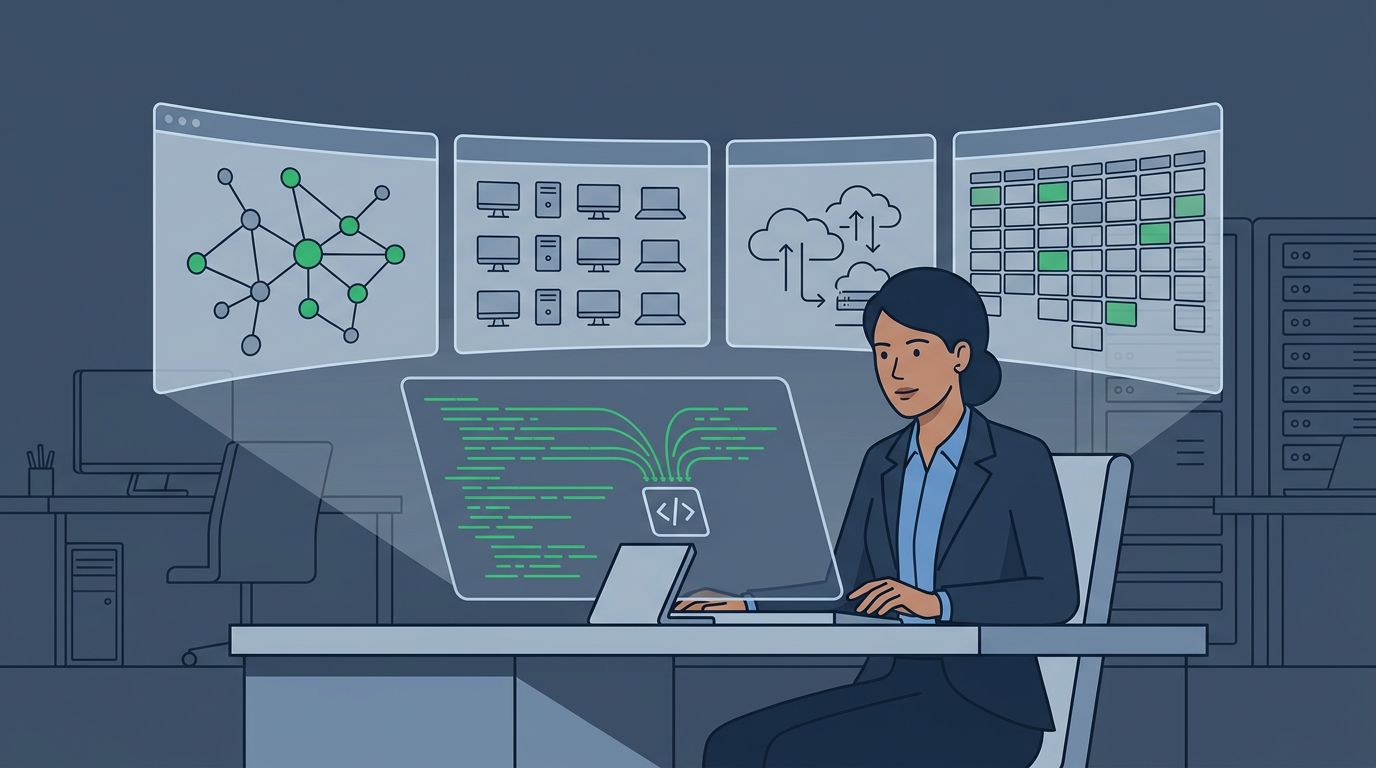
A detection engineer is not a general SOC analyst, and not a SIEM admin with a new title. This person builds, tests, tunes, and maintains the logic that catches attacker behavior across endpoint, identity, network, SaaS, and cloud data.
In 2026, that job often includes detection-as-code, ATT&CK mapping, purple-team validation, and close work with automation. Splunk’s 2026 overview of detection engineering and CyberDefenders’ comparison of detection logic and detection engineering both frame the role around signal quality, not alert volume.
This quick comparison helps hiring managers avoid a common mistake.
| Role | Main goal | Owns |
|---|---|---|
| Detection engineer | Catch attacker behavior with reliable detections | Rules, queries, ATT&CK coverage, tuning, validation |
| SOC analyst | Investigate and respond to alerts | Triage, case handling, incident steps |
| SIEM engineer | Keep data flowing and searchable | Data onboarding, parsers, routing, platform health |
If your biggest pain is noisy alerts, missing cloud coverage, or weak ATT&CK alignment, the gap is usually detection engineering.
Hire for detection quality, not for platform administration.
What to look for when you hire a detection engineer
Don’t write a wishlist full of vendor names. Write a role built around work the person must ship in the first 90 days. That usually means new detections for cloud and identity abuse, better tuning on high-volume rules, and cleaner handoffs to analysts.
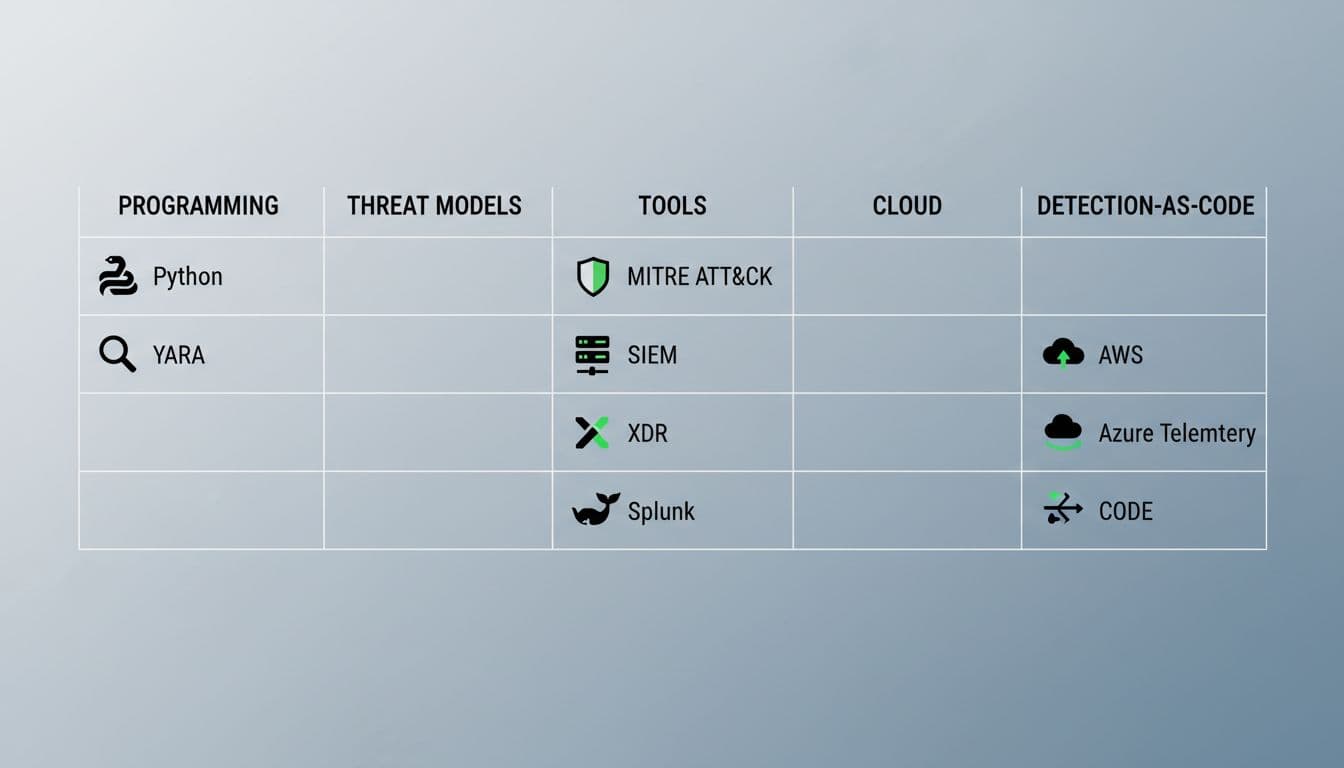
The strongest candidates usually show five traits:
- Behavior-first thinking: They map attacker actions to MITRE ATT&CK and don’t rely on simple IOC matching.
- Telemetry judgment: They know what logs matter, what’s missing, and how cloud, identity, endpoint, and SaaS signals fit together.
- Query and code skill: They can write and tune KQL, SPL, Sigma, YARA, or Python, then store detections in Git.
- Testing habits: They validate rules with replayed attacks, purple-team work, or adversary emulation.
- SOC partnership: They listen to analysts, cut false positives, and explain tradeoffs in plain language.
In a modern job description, sample responsibilities include building detections for identity abuse, cloud persistence, and lateral movement; tuning existing rules; mapping gaps to ATT&CK; and working with threat hunting or purple-team exercises.
Look for proof, not claims. Strong candidates can walk through a detection they wrote, show a redacted query or rule, explain why they killed a noisy alert, and describe how they tracked false positives over time. If they only talk about alert triage, they’re likely closer to a SOC analyst than a detection engineer.
Because modern SOCs automate more triage, the role now leans hard on case quality and automation feedback. Prophet Security’s view of the AI-driven SOC and the SANS state of detection engineering in 2026 webinar point to the same shift. In the US, many teams now budget roughly $150,000 to $220,000 base, with senior total comp climbing past $250,000.
Build a hiring process that tests real work
A fast, fair process beats six rounds of trivia. Focus on how the candidate thinks, what they ship, and whether they can improve signal without breaking analyst workflow.
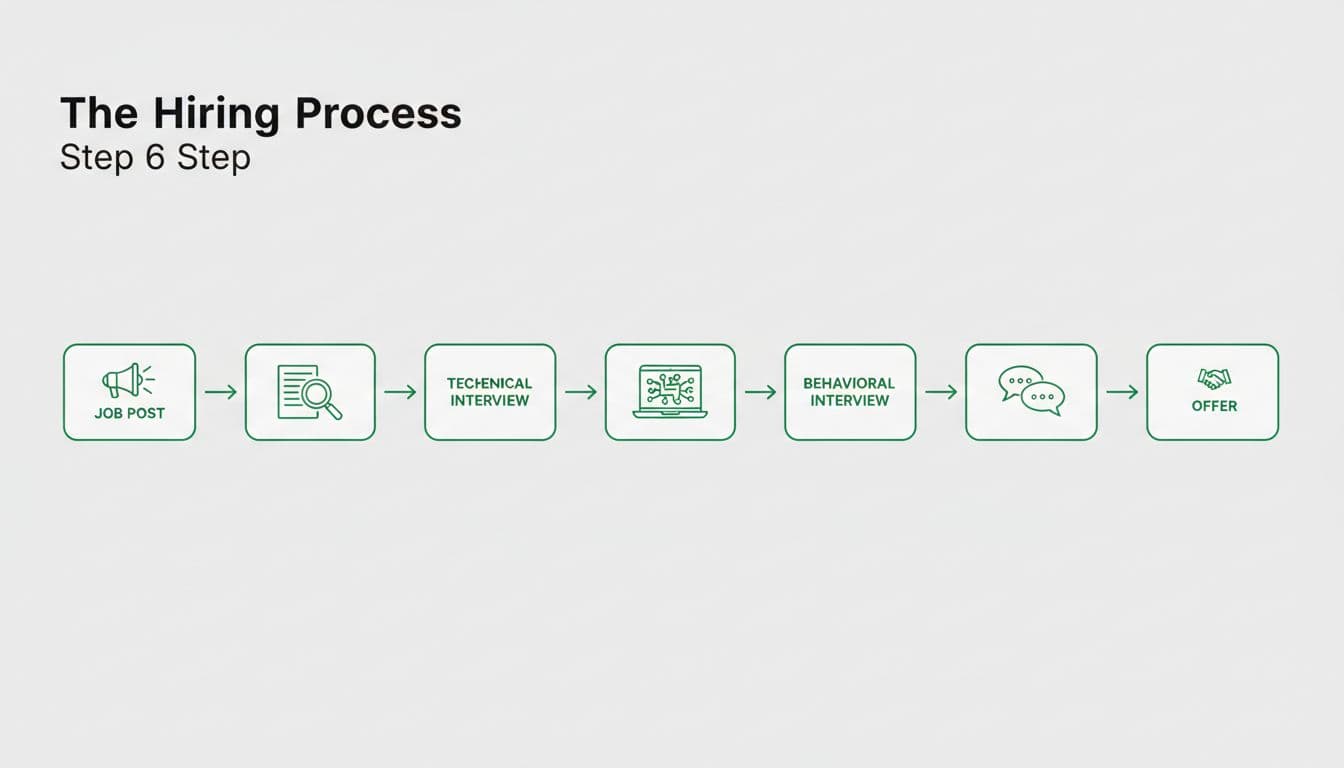
Use four stages:
- Recruiter or manager screen: Confirm scope, pay, written communication, and why the candidate wants a detection role.
- Technical deep dive: Walk through one real detection the candidate built, tuned, or retired. Ask what data they used, what failed, and how they measured success.
- Practical assessment: Give a small log sample or attack story. Ask for detection logic, ATT&CK mapping, tuning ideas, and any missing telemetry.
- Panel interview: Include SOC, IR, and cloud or platform peers. Test collaboration, not culture slogans.
Keep the assessment short, around 60 to 90 minutes. A strong prompt beats a giant take-home. For example, give a cloud credential theft scenario and ask the candidate to design a detection, explain false-positive risks, and describe how they’d validate it.
Score candidates on signal quality, telemetry reasoning, testing mindset, and communication. Avoid whiteboard puzzles, vendor trivia, or vague “how would you secure our company” questions. Also avoid hiring only from one product stack. Good detection engineers can often move between Splunk, Sentinel, Elastic, Panther, or XDR tools because they think in behaviors first.
Common hiring misses are easy to spot. Teams turn the role into a grab-bag of SIEM admin tasks, skip the practical exercise, or reject anyone who learned on a different stack. Others underpay the role, then wonder why senior candidates vanish after round one.
FAQ
How much experience should I ask for?
Ask for ownership, not years alone. Three to seven years is often enough if the person has built detections end to end and can explain outcomes.
Does the candidate need your exact SIEM or XDR?
No. Platform fluency helps, yet ATT&CK mapping, telemetry judgment, and tuning skill transfer well across tools.
What makes a good technical assessment?
Keep it realistic and time-boxed. The best tests use small log sets, clear scoring, and work the hire would face in week one.
What salary range is realistic in 2026?
In the US, mid-to-senior detection engineers often land between $150,000 and $220,000 base. Senior total pay can go higher with bonus or equity.
Make the role fit the problem
The best detection hires don’t brag about alert volume. They talk about coverage gaps, detection quality, and how they test their work.
If your job brief, interview loop, and scorecard all measure those things, you’ll hire faster and make the SOC quieter. Start with the outcomes you need on day one, then hire for signal quality.