table of contents
If your team ships every week, the wrong security hire becomes a brake pedal. The right DevSecOps engineer does the opposite. They tighten the path from pull request to production, cut surprise risk, and help developers keep moving.
That matters more in 2026. Product teams ship cloud-native apps, depend on open-source packages, and review more AI-assisted code than ever. If you need to hire devsecops engineer talent, hire for secure delivery, sound judgment, and team fit, not for the longest tool list.
Start with the outcomes, not the tool stack
A product-team DevSecOps engineer is not a policy clerk. They’re also not just a DevOps engineer who runs a scanner. The job is to build guardrails that catch bad changes early, without turning every release into a meeting.
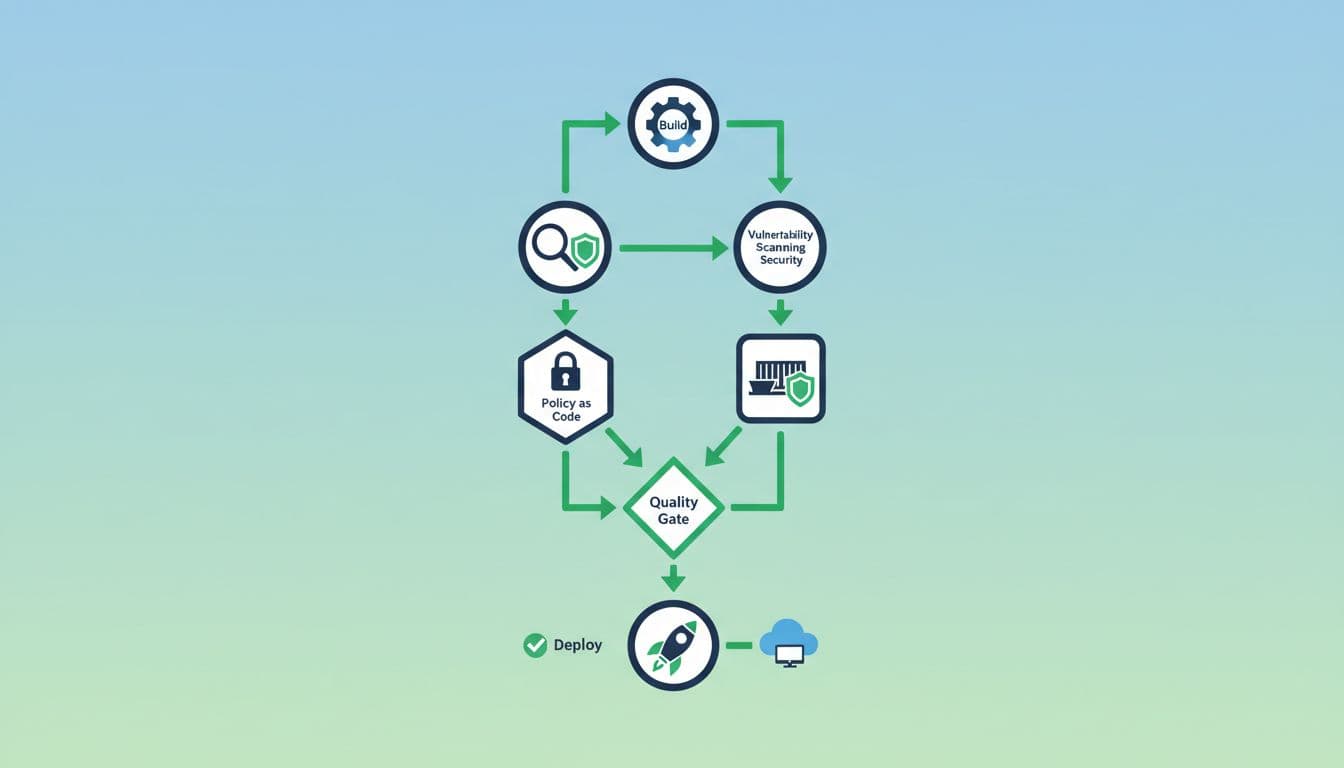
In practice, that means stronger CI/CD security, better cloud and infrastructure defaults, and safer daily developer habits. CI/CD is the build and release pipeline. IAM means who gets access to what. Policy as code means rules written in code, so the pipeline checks them on every change.
Look for someone who can talk clearly about a few core areas:
- Threat modeling: thinking through how a feature could be abused before launch
- Secrets management: handling tokens, keys, and passwords across laptops, CI, and production
- Container and Kubernetes security: reducing risk in images, clusters, and runtime settings
- Vulnerability management: fixing what matters first, instead of chasing every alert
- Incident readiness: logging, rollback plans, access reviews, and clean handoffs during pressure
Good candidates also know when not to block. If they can’t explain trade-offs in plain English, product teams will struggle with them. A solid outside summary of this approach appears in these DevSecOps best practices for development teams.
Be careful with enterprise-heavy candidates who only know audit workflows or long approval chains. Fast-moving product teams need someone who has supported frequent releases, worked with developers daily, and improved delivery, not just documentation.
Screen for product sense and developer empathy
Resumes can mislead here. Plenty of people list Kubernetes, Terraform, and scanning tools. Fewer can show how their work changed delivery. Recruiters and hiring managers should scan for verbs and outcomes: reduced false positives, cut secret sprawl, added pipeline gates, improved image signing, paired with developers, handled incidents. Certs can help, but shipped work matters more.
A strong candidate sounds like a partner, not a gatekeeper. They can explain why one control belongs in the pipeline, another at runtime, and a third in code review. They also understand that AI-assisted code raises dependency and logic risk, so they focus on safe defaults and review paths, not just more alerts.
Strong DevSecOps hires talk about trade-offs, developer behavior, and risk reduction, not just the scanner they installed.
Use interviews to test how they think under speed. Scenario questions work better than trivia. That approach lines up with Byteboard’s guide to hiring a security engineer, and it works especially well for DevSecOps roles.
Try questions like these:
- Pipeline hardening: “Walk me through a CI/CD pipeline you improved. What risks dropped, and what stayed manual?”
- Release pressure: “A team wants to ship today, but a scan finds a high issue in a base image. What do you do next?”
- Secrets and IAM: “How would you manage credentials across laptops, CI runners, and production?”
- Threat modeling: “How would you review a new public API that handles customer files?”
- Developer enablement: “Tell me about a control developers bypassed. How did you fix the control, not just the people?”
Listen for specific stories, not theory. Strong candidates mention rollout plans, false-positive tuning, exception handling, and cross-team communication. Many have also built office hours or a small security champions program so developers get help without waiting on a ticket queue.
Use a scorecard that rewards judgment
A loose interview loop creates noisy hires. Use one shared scorecard, with a 1 to 4 rating, so recruiters, engineering, and security grade the same things.
This simple scorecard works well for fast-moving SaaS teams:
| Area | Weight | What strong looks like |
|---|---|---|
| Secure delivery impact | 30% | Improved pipeline checks, reduced risky releases, measured outcomes |
| Cloud, IAM, and secrets | 20% | Built sane defaults, least-privilege access, practical secret handling |
| Threat modeling and risk judgment | 20% | Spots abuse paths and makes sensible ship or hold calls |
| Developer enablement | 20% | Coaches teams, writes guardrails, lowers friction |
| Incident readiness and communication | 10% | Clear during outages, understands logs, rollback, and postmortems |
The takeaway is simple: reward people who help teams ship safely, not people who recite product names.
Also watch for warning signs. Be wary of candidates who want to own every release decision, dismiss developers, or jump straight to buying tools. Product teams need someone who sets guardrails, teaches teams, and knows where automation helps most.
In 2026, compensation moves quickly. Recent US market snapshots put DevSecOps pay around $90,000 to $210,000+, with senior product-focused hires often landing higher in competitive markets. A current 2026 DevSecOps salary guide can help frame the range. Remote hiring still widens the pool, but strong candidates leave the market fast.
Keep the process tight. A recruiter screen, one technical deep dive, one practical scenario, and a cross-functional close is usually enough. Long take-homes scare off the best people because they’re already busy.
Fast teams don’t need a security bottleneck. They need a builder who turns security into part of delivery. When you hire devsecops engineer talent with clear outcomes, sharp interviews, and a real scorecard, you get fewer fire drills and better release confidence. That is the hire worth making.