table of contents
A strong GRC hire can save months of audit pain. A weak one can create a paper trail that falls apart under pressure. In regulated teams, the best candidate is part investigator, part organizer, and part translator.
That mix matters because the role touches evidence, controls, policy, risk, and people. If you hire for the wrong version of the job, the gap shows up fast during SOC 2, ISO 27001, HIPAA, PCI DSS, or GDPR work. Here’s how to hire the right person without getting lost in jargon.
Start with the actual job, not the title
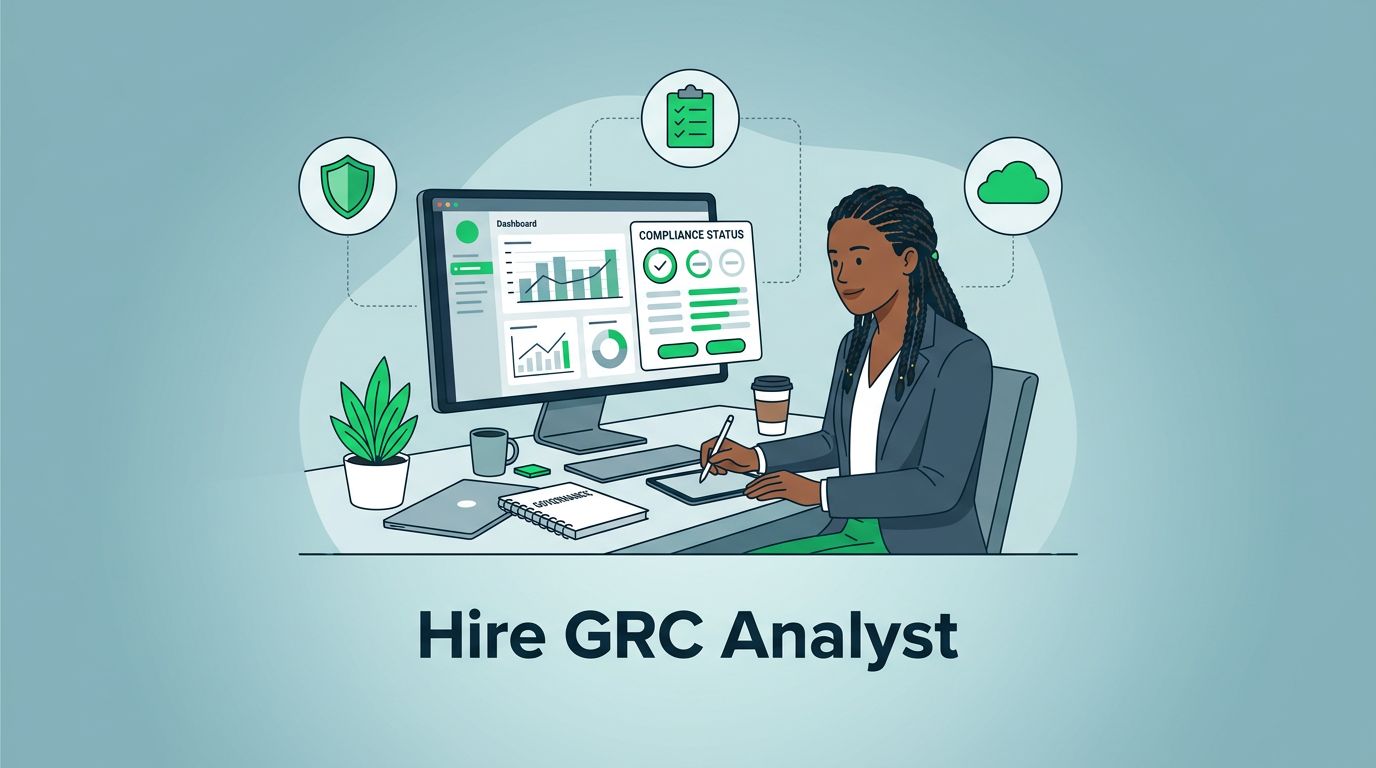
A GRC analyst is not just a spreadsheet owner. The role sits between security, legal, operations, and audit, so the person needs to move between technical detail and business context.
Start by defining what your team needs most right now. For some companies, that means control mapping and audit prep. For others, it means policy updates, vendor reviews, or risk tracking across cloud tools.
If you want a broader role view, ISACA’s GRC Analyst overview is a useful reference point. For a practical view of day-to-day work, this GRC role guide helps show how evidence, accountability, and reporting connect in real teams.
If the role needs only policy updates, don’t hire for full audit ownership. If it needs audit ownership, say so clearly.
A good hiring brief should name the problems the analyst will own. For example, maybe they will:
- collect evidence from engineering, HR, and IT systems
- map controls to frameworks like SOC 2 and ISO 27001
- track remediation items in Jira, ServiceNow, or a GRC platform
- support vendor risk reviews and security questionnaires
- keep policies current as products, vendors, and laws change
That list tells candidates what success looks like. It also helps recruiting teams filter out people who’ve only seen GRC from the edge.

Write a job description that attracts the right people
A vague job post gets vague applicants. A sharp one brings in people who’ve done the work before.
Keep the title simple, then spell out the real scope. If the role touches healthcare or fintech, name the frameworks up front. In 2026, that often means SOC 2, ISO 27001, HIPAA, PCI DSS, GDPR, and sometimes DORA or NIS2 for EU-facing teams. You don’t need a lawyer’s brief. You do need clarity.
For more help shaping the role, Anecdotes’ next-GRC-hire questions are a solid prompt list for hiring managers.
Use language that makes the work concrete. Good job descriptions mention:
- evidence collection and audit support
- control testing or control monitoring
- policy management and exception handling
- risk assessments and remediation tracking
- cross-functional communication with engineers, product, privacy, and finance
- experience with tools such as Drata, Vanta, OneTrust, AuditBoard, ServiceNow, or similar platforms
Also say what success looks like in the first 90 days. For example, the analyst might clean up evidence requests, reduce audit back-and-forth, or build a better control register. That detail helps strong candidates picture the job.
Screen for real-world skill, not framework memorization
A candidate who can name frameworks isn’t automatically a strong hire. The real test is whether they can handle messy work with calm judgment.
A useful screen compares what they say with how they think. Here’s a simple way to spot the difference:
| Area | Strong candidate | Weak candidate |
|---|---|---|
| Evidence | Explains how to gather system exports, tickets, logs, and approvals | Depends on screenshots only |
| Controls | Can map one control across several frameworks | Talks in framework names, but not connections |
| Risk | Breaks down impact, likelihood, and owner | Gives generic risk language |
| Stakeholders | Shows how they handle pushback from busy teams | Blames others for delays |
| Tools | Has used GRC or ticketing tools to track work | Treats tools as a nice-to-have |
That table matters because GRC work lives in the details. A person who understands evidence strength will save your audit team time. A person who can map controls will cut duplicate work.
For interview ideas, Wiz’s GRC interview prompts offer a useful starting point. Then make the questions yours.
Ask candidates things like:
- Tell me how you would collect evidence for a control that spans HR, cloud, and ticketing systems.
- Walk me through a time you found a control gap. What happened next?
- How do you decide whether a policy needs a full rewrite or a small fix?
- If engineering says a control slows delivery, how do you respond?
Good answers sound specific. They mention systems, owners, follow-up, and trade-offs. Weak answers stay high level.

Use a scorecard so the loudest voice doesn’t win
Hiring teams often overrate confidence. A scorecard keeps the process grounded.
Use one scorecard for every finalist. Give each criterion a weight, then score answers against real examples. A simple model works well:
| Criterion | What to look for | Weight |
|---|---|---|
| Evidence collection | Clear method, good judgment, strong follow-up | 25% |
| Control mapping | Can connect one control across multiple frameworks | 20% |
| Audit readiness | Knows how to prep for fieldwork and sample requests | 20% |
| Stakeholder communication | Can explain risk without jargon | 20% |
| Tool fluency | Has used ticketing or GRC platforms well | 15% |
This kind of scorecard keeps the process fair. It also helps HR, security, and compliance leads stay aligned.
Red flags show up fast when a candidate talks well but can’t give a real example.
Watch for these warning signs:
- they describe every past job in vague terms
- they talk about frameworks, but not outcomes
- they treat evidence as a last-minute scramble
- they avoid conflict with stakeholders entirely
- they have never used a GRC platform or ticketing workflow in a meaningful way
A good hire doesn’t need to know everything on day one. Still, they should know how to learn fast, document well, and keep teams moving.
Hire for judgment, not just checklists
The best GRC analysts help regulated teams stay ready without slowing them down. They bring structure to messy work, and they make audits feel less chaotic.
If your process focuses on evidence, controls, communication, and tool use, you’ll spot the difference quickly. That’s how you hire for real fit, not just a polished resume.
If you want help shaping the role or shortlisting candidates, Book a Discovery Call with Bud Consulting.