table of contents
Your organization is likely running on invisible connections. From cloud services and CI/CD pipelines to AI agents and automated bots, these non-human entities outnumber human users by a significant margin. If you lack a clear strategy for managing these identities, you are inviting unnecessary risk into your production environment. A non-human identity security engineer serves as the dedicated guardian for these critical access points, ensuring that machines talk to machines only when authorized and never with more power than they require.
Hiring for this specialized role requires a shift in perspective. You are not looking for a traditional IAM professional who spends their day managing employee lifecycle workflows. Instead, you need a technical expert who understands the nuances of machine-to-machine authentication, secret rotation, and automated governance. Finding the right talent starts with understanding how this role fills the gaps left by traditional identity management strategies.
Understanding the Non-Human Identity Security Role
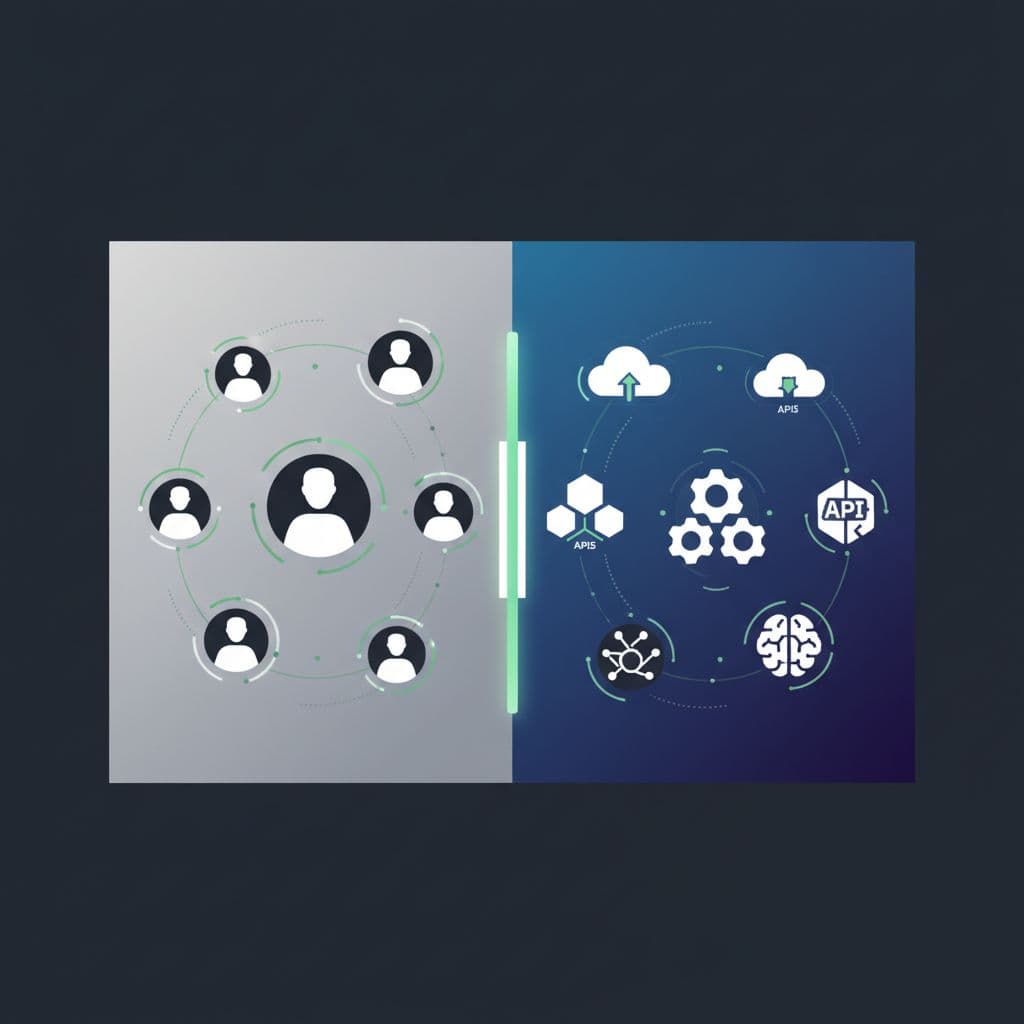
A non-human identity security engineer focuses on protecting the digital accounts and credentials that machines use to interact with your infrastructure. While an IAM engineer manages user logins, passwords, and multi-factor authentication, this role addresses the persistent identities that do not log in like humans. These include API keys, service accounts, and tokens that run your internal systems 24/7.
These identities are often a significant security blind spot because they frequently lack clear owners. A standard IAM tool might catch a suspicious login from a remote user, but it often misses an over-privileged service account that has been dormant for months. For a deeper look at why these identities are causing shifts in security structures, see how non-human identities are redefining identity security roles.
The primary objective is to inventory, secure, and monitor all automated access. When you hire for this position, you want someone who can move beyond static access control lists and build automated, policy-driven security. They must be comfortable working with DevOps teams to integrate security directly into the software development lifecycle, rather than acting as a gatekeeper who slows down deployment.
Distinguishing the Role from Related Security Functions
You may already have IAM, PAM, or machine identity engineers on your staff. It is important to know where the responsibilities of a non-human identity security engineer start and end. An IAM engineer primarily deals with human users, focusing on onboarding, offboarding, and federated identity management. A machine identity specialist typically focuses on the lower-level components of trust, such as certificate management, public key infrastructure, and device identity.
The non-human identity security role acts as a bridge and an expansion of these functions. They take the foundational work of machine identity and apply it to the broader scope of business applications and cloud-native services. They are responsible for secrets management, API governance, and the specific security challenges presented by modern AI agents. This breadth is necessary because your automated processes involve more than just server-to-server trust; they involve entire ecosystems of connected software.
If you are struggling to define the scope, consider that a machine identity expert secures the “what” (the server or the device). In contrast, a non-human identity engineer secures the “how” (the service account, the token, or the specific API permission). They bring an application-centric focus to security that traditional IAM often misses. If you want to refine your team’s approach to these complex layers, you can book a Discovery Call with Bud Consulting to discuss your specific organizational needs.
Essential Skills and Qualifications for 2026
When evaluating candidates in the current market, look for a blend of security engineering and development experience. A successful candidate needs more than just theoretical knowledge of identity standards like OIDC or SAML. They need practical experience in cloud environments and container orchestration.
Key technical requirements for a candidate include proficiency in at least one scripting language like Python or Go, which are essential for automating identity workflows. They should also demonstrate a solid understanding of cloud provider identity models, such as AWS IAM roles, Azure Managed Identities, or Google Cloud Service Accounts. Understanding these platform-specific mechanisms is non-negotiable for anyone tasked with securing modern infrastructure.
Beyond the technical toolkit, look for individuals who understand risk management. A great candidate knows that security must be balanced against operational efficiency. If their solution makes a developer’s life too difficult, the developer will find a workaround, which only increases your exposure. You need someone who can design systems that are both secure and frictionless.
Developing a Targeted Hiring Scorecard
To keep your interview process objective, use a scorecard to rank candidates across key technical and soft skill areas. Do not settle for candidates who only understand the “what” of security. You need engineers who can explain the “why” and “how” behind their security decisions.
| Skill Area | Priority | Evaluation Criteria |
|---|---|---|
| Cloud Identity | High | Mastery of cloud-native IAM, roles, and resource policies. |
| Secrets Management | High | Experience with tools like HashiCorp Vault or cloud-native key managers. |
| Automation Skills | High | Ability to script and integrate security into CI/CD pipelines. |
| Risk Modeling | Medium | Experience mapping identities to potential attack surfaces. |
| Communication | Medium | Ability to influence DevOps teams and explain security requirements. |
Use this table as a starting point. Tailor it to your specific tech stack, such as prioritizing Kubernetes expertise if your environment is heavily containerized. Focus your evaluation on the candidate’s ability to handle the full lifecycle of an identity, from automated provisioning to final decommissioning.
Practical Interview Questions to Test Expertise
Standard interview questions often fail to reveal a candidate’s actual competency with non-human identities. Avoid questions that ask for definitions. Instead, present scenarios that require them to apply their knowledge to real-world problems.
Ask them how they would approach a situation where a legacy service account lacks an identified owner. A qualified engineer will immediately talk about the need for service discovery and the risk of breaking production if they just turn it off. They should explain a process of audit, monitoring, and gradual remediation.
Also, ask about their experience with secret rotation. If a candidate says they manually rotate secrets, they are not suited for this role in 2026. You want someone who advocates for automated, dynamic secrets that expire quickly by default. Learn more about the importance of these strategies in this guide on identity access management strategy for non-human identities.
Finally, ask for an example of a time they had to reconcile security requirements with developer speed. Their answer will reveal whether they view security as an obstacle or as an enabler. An effective engineer acts as a partner to the development team, helping them build security into their code from the start rather than auditing it after the fact.
Onboarding and Setting Expectations
Once you have hired your new engineer, your success depends on how you integrate them into the existing team structure. They need visibility into the entire application stack, which means they must work closely with both the security and infrastructure teams. Do not isolate them within a narrow silo.
Set immediate goals that focus on visibility. Their first task should be to discover and inventory the non-human identities already present in your environment. You cannot secure what you cannot see, and most organizations are surprised by the number of forgotten or over-privileged service accounts discovered during the first 90 days.
Provide them with a clear mandate to automate. Their performance should be measured by how many manual identity processes they replace with automated, monitored workflows. If they spend all their time manually granting permissions, they are not fulfilling the strategic potential of this role. Your goal is to move your infrastructure toward a model of zero-trust, where every non-human identity is verified, authorized, and continuously validated.
Strengthening Your Identity Security Strategy
Hiring a single engineer is only one part of the solution. You must ensure they have the executive support to make necessary changes. This often requires shifting how you think about risk across the entire organization. When you successfully implement a robust strategy for non-human identities, you reduce your overall attack surface significantly.
The most effective organizations create a culture where identity is treated as a foundational element of all technical projects. This involves regular collaboration between developers, cloud architects, and your new identity specialist. They should have a seat at the table during the early stages of application design, not just when a vulnerability is detected.
Maintain a focus on continuous monitoring. Because non-human identities are dynamic and often change with your code, static security audits are insufficient. Your team must rely on tools that provide real-time visibility into credential exposure and permission creep. By integrating this mindset, you turn your identity security from a reactive burden into an asset that supports both speed and stability.
Final Observations on Talent Acquisition
Finding the right person for this role requires patience and a clear understanding of your current infrastructure needs. Do not be discouraged if you have trouble finding a “perfect” candidate who has done this exact job for five years. Because the role is still maturing, look for transferable skills in cloud engineering, DevOps, and traditional security roles.
Focus on candidates who show a strong aptitude for automation and a deep interest in the complexities of cloud-native architecture. If you find a developer with a passion for security or a security engineer who loves to code, you have found a potential winner. These are the individuals who will grow into the role and help your organization mature its approach to identity management.
Ultimately, you are looking for a teammate who can see the big picture of your infrastructure while sweating the small details of API keys and tokens. A strong candidate will help you navigate the increasing complexity of your digital environment while keeping your most important assets secure. Prioritize clear communication and technical curiosity above all else during your search.