table of contents
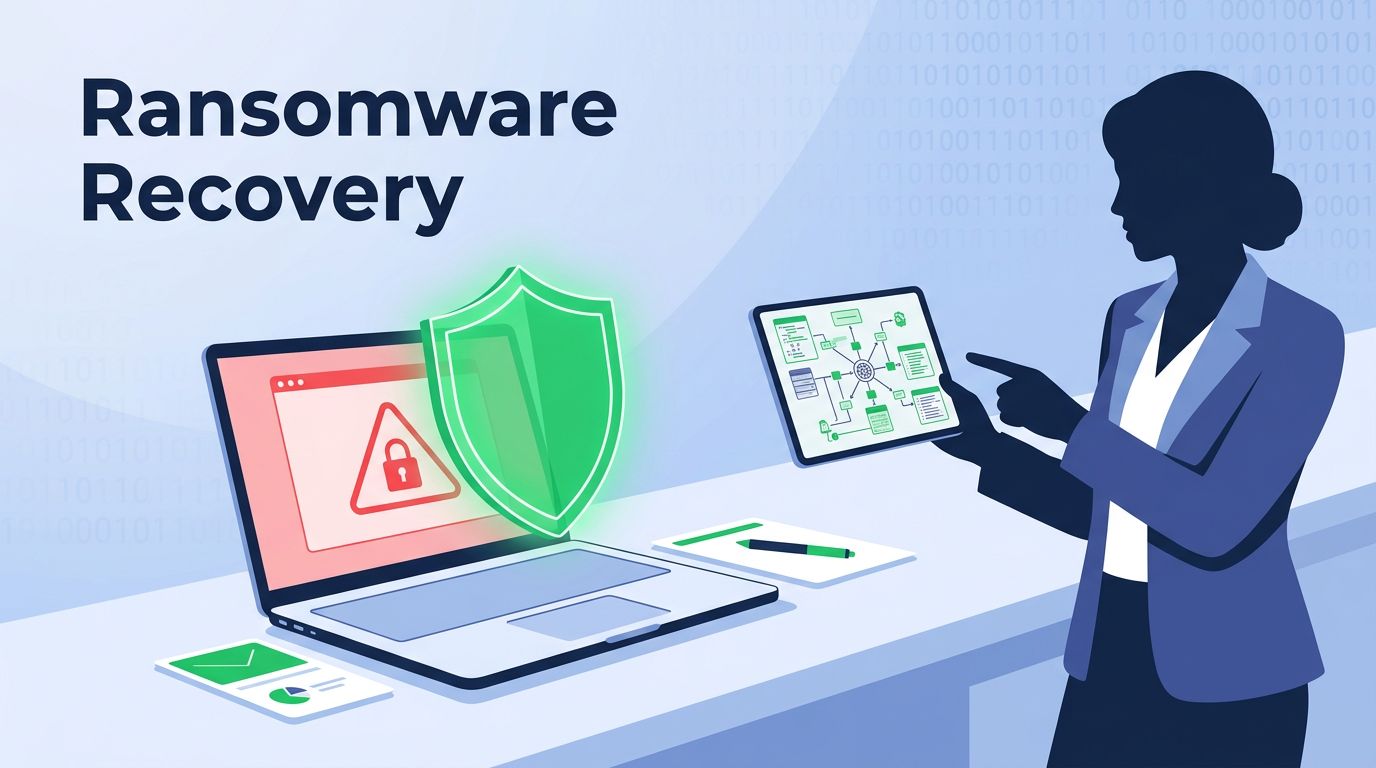
A ransomware event can turn a normal workday into a scramble for facts, files, and trust. When systems are locked or data may be exposed, the wrong move can make recovery slower and more expensive.
That’s why many teams choose to hire a ransomware recovery consultant early. The right person helps you contain the blast, protect evidence, test backups, and make decisions that hold up with legal, insurance, and compliance teams.
When hiring help makes sense fast
You should bring in a ransomware recovery consultant when the incident is active, recent, or still unclear. If you do not know how far the attacker moved, what data left the network, or whether backups are clean, time matters.
The case for outside help gets stronger when your internal team is stretched thin. It also gets stronger when you need to coordinate with outside counsel, your cyber insurer, or a regulator.
A good starting point is how to get help for ransomware, because the first few hours are where small mistakes become big ones.
A consultant is useful when you need more than technical cleanup. They should help with containment, forensic coordination, restore planning, stakeholder updates, and negotiation risk review. In other words, they help you make a recovery plan that is grounded in evidence, not panic.
What a strong consultant should bring to the table
Not every security firm knows how to recover from ransomware. Some are great at general incident response, but weak on restore strategy. Others can talk about backups, but have little experience with legal hold, evidence preservation, or insurer rules.
Use a simple filter when you review candidates.
| Capability | What good looks like | Why it matters |
|---|---|---|
| Containment | Cuts off spread fast without destroying evidence | Limits damage and keeps forensics useful |
| Backup validation | Checks restore points before any mass restore | Helps avoid restoring infected data |
| Legal and insurance coordination | Works with counsel and carrier rules | Keeps notices and vendor use on track |
| Stakeholder communication | Gives clear updates to leaders and staff | Reduces rumors and bad decisions |
The best ransomware recovery consultant will also ask smart questions about your environment. They should want to know where identity lives, how admin access is controlled, and whether backups are isolated. If they skip those basics, keep looking.
For more recovery detail, ransomware data recovery strategies can help frame the backup and restore issues you’ll need to sort out.
The first 24 hours can shape the whole recovery
The first day after an attack is about control, not speed for its own sake. You need to stop the spread, keep evidence intact, and build a clear view of what happened.

A consultant should help you focus on a few urgent actions:
- Confirm which systems are isolated.
- Preserve logs, images, and key artifacts.
- Verify which backups are known-good.
- Align leadership, legal, and insurance contacts.
That order matters. If you restore too early, you can spread the attack again. If you wipe systems too soon, you may lose the evidence needed for root-cause analysis or a claim.
The threat picture also matters. Ransomware activity stayed high into April 2026, and identity compromise remains a common entry point. That means restore work should include credential review, access control checks, and a hard look at remote tools.
How to choose the right consultant for your situation
The best fit depends on your industry, your insurer, and the current threat environment. A healthcare group may need faster compliance support. A manufacturer may need help with OT systems. An MSP may need someone who can work across several clients at once.
Look for direct ransomware experience, not broad cyber language. Ask who will do the work, how often they have handled double-extortion cases, and whether they have supported forensics, legal teams, and leadership briefings before.
A strong consultant reduces confusion first. Clean recovery comes after the facts are clear.
This is also the point where many teams ask for extra help with staffing or specialist vetting. If you need a partner to assess candidates or close a sudden skills gap, Book a Discovery Call with Bud Consulting.
A useful interview question is simple: “How do you prove a backup is safe before restore?” Good answers should mention clean restore points, isolated testing, and validation against known indicators of compromise.
Recovery planning, communication, and negotiation risks
Recovery is not only a technical exercise. It is also a communication problem, a legal problem, and a trust problem.
Your consultant should help you plan who speaks to staff, who updates customers, and who handles public statements. They should also help you avoid promises you cannot keep. A rushed timeline can damage credibility if systems fail again or data exposure is later confirmed.
Negotiation is another area where caution matters. A consultant can help you assess risks, but they should not push payment as the default answer. Payment does not guarantee data recovery, and it can create legal or policy issues. Some cyber insurance policies also require approved vendors or specific notification steps, so the process has to match your policy.
For a practical recovery outline, ransomware recovery done right is useful background, especially if you are checking how backup and continuity work together.
A decision that protects more than systems
If you are facing ransomware now, speed matters, but discipline matters more. The right consultant helps you contain the event, validate backups, coordinate with forensics, and keep legal and insurance steps on track.
The best choice is the one that fits your industry, your policy requirements, and the current attack pattern. When the clock is ticking, clarity is the real advantage.