table of contents
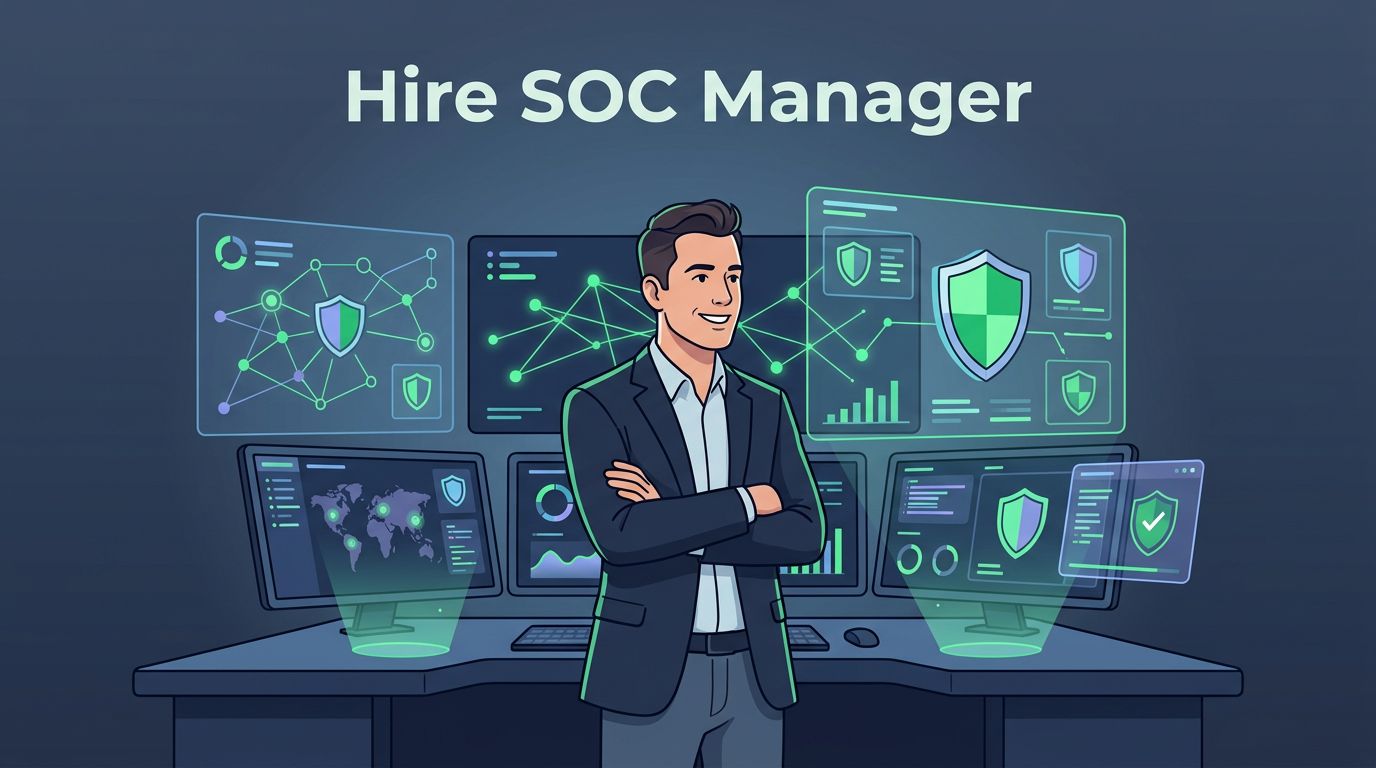
Hiring a security operations manager is not about filling a shift lead role. It’s about choosing the person who keeps your detection, response, and reporting work moving when pressure hits.
That matters even more in 2026. Attack volume is high, SOC burnout is still a problem, and leaders need people who can manage tools, teams, and business risk at the same time.
Start with the operating model, not the job title
Before you post the role, decide what kind of operation you’re hiring for. The same title can mean a very different job in a small company, an enterprise, or an MSSP.
| Environment | What to prioritize | Common tradeoffs |
|---|---|---|
| In-house small team | Hands-on SOC work, alert triage, process building, and coaching | Breadth matters more than deep specialization |
| Enterprise in-house | Team leadership, incident command, reporting, and cross-functional coordination | More experience with scale and governance is needed |
| MSSP or hybrid | SLA management, multi-client operations, queue discipline, and client communication | Less room for pure strategy, more focus on throughput |
This is where many hires go wrong. If you need a builder, don’t hire a pure manager. If you need a team lead, don’t expect one person to also redesign the whole stack.
A current Security Operations Manager job description example can help you compare scope, but your own environment should set the bar.
What the manager should own day to day
A strong manager keeps the SOC moving like a control tower. They don’t stare at every alert, but they do shape how alerts become action.

Photo by Tima Miroshnichenko
Their day usually includes SIEM oversight, incident escalation, analyst coaching, and tuning detection rules. They also review threat patterns, check ticket quality, and keep response steps consistent.
In many teams, they own or influence:
- SIEM health and use case tuning
- incident response coordination
- threat detection and triage workflows
- vulnerability management handoffs
- compliance support and audit evidence
- metrics like MTTD, MTTR, backlog, and false positives
- communication with IT, legal, HR, audit, and leadership
For a broader view of how modern teams are organized, see Abnormal AI’s modern cybersecurity operations guide. It shows how SecOps now reaches beyond a classic SOC.
The best managers don’t just close incidents. They build a team that closes them faster next quarter.
That mindset matters because the role is part operator, part coach, and part translator. They need to explain risk to executives without hiding behind jargon.
Look for technical depth and people skills
A good candidate knows the tools, but they also know how to lead under noise. You want someone who can move between a SIEM dashboard, a Slack escalation, and a leadership update without losing the thread.
Technical skills that should show up
The strongest candidates usually bring real experience with SIEM platforms, detection engineering, incident response, and threat hunting. They should understand MITRE ATT&CK, know how alerts are created and tuned, and know what a good investigation looks like.
They should also have enough cloud and endpoint knowledge to ask sharp questions. In 2026, most environments face blended threats, so managers need more than on-premise habits.
Leadership skills that matter just as much
Look for clear coaching habits, calm judgment, and steady follow-through. The person should know how to run shift handoffs, reduce analyst fatigue, and keep standards consistent.
Metrics matter too. Ask how they use data to improve outcomes, not just to report them. A strong answer will mention containment time, alert quality, analyst workload, and repeat-incident reduction.
Backgrounds that fit the role
Good hires often come from SOC lead, incident response, threat hunting, or security engineering paths. Some also come from systems administration, cloud ops, or network security, if they’ve worked close to detection and response.
Certifications can help, but they shouldn’t hide weak experience. In 2026, CISM, CISSP, and CCSP still carry weight for senior candidates, while GCIH, CEH, or similar incident-focused credentials can support a more hands-on profile. Pay also reflects that mix, with U.S. compensation often landing around $120,000 to $210,000 depending on seniority, industry, and location.
Interview for proof, not polish
A polished interview is nice. Real proof is better.
Start with a structured interview that tests judgment, not trivia. Use the same core prompts for every finalist, then score answers against a rubric.
- Ask for a recent incident they led. Listen for role clarity, timing, and communication.
- Give a SIEM scenario. See how they investigate, prioritize, and tune.
- Ask how they reduce alert fatigue. Good answers include workflow fixes, not just more tools.
- Test cross-functional communication. They should explain the issue to IT or leadership in plain language.
If you want more question ideas, these security operations manager interview questions are a useful starting point. Still, the best interview goes beyond canned answers.
Use case studies for the final round. For example, ask candidates to review a noisy detection, a delayed response, and a missed vulnerability handoff. Then ask what they’d fix first and why.
Watch for these red flags
- They talk about tools, but not outcomes.
- They lead with blame instead of process.
- They can’t explain metrics in simple terms.
- They struggle to coordinate with IT, compliance, or business leaders.
Build your job description and scorecard before you post
A clear scorecard saves time later. It also keeps hiring aligned when different stakeholders want different things.
Use this quick checklist:
- Define whether the role is in-house, MSSP, or hybrid.
- Set the level, such as manager, senior manager, or working manager.
- List the core stack, especially SIEM, ticketing, EDR, and cloud tools.
- State incident response ownership and escalation authority.
- Include team size, shift coverage, and mentoring duties.
- Add the key metrics you expect them to move.
- Note compliance areas, such as ISO, NIST, HIPAA, PCI, or internal audit support.
- Separate must-haves from nice-to-haves.
For smaller firms, a capable working manager may be enough. For larger or regulated companies, you may need someone who can report to the CISO, support audits, and lead across time zones.
If the role feels hard to scope, that’s a sign to slow down and define it better. That step often saves more time than another round of interviews.
If you’re hiring for a niche or high-stakes environment, Book a Discovery Call with Bud Consulting to pressure-test the role before you open the search.
Hiring a security operations manager is really about finding balance. You need someone who can run the room, read the data, and keep people moving when alerts pile up. Get that mix right, and your SOC becomes steadier, faster, and much easier to trust.