table of contents
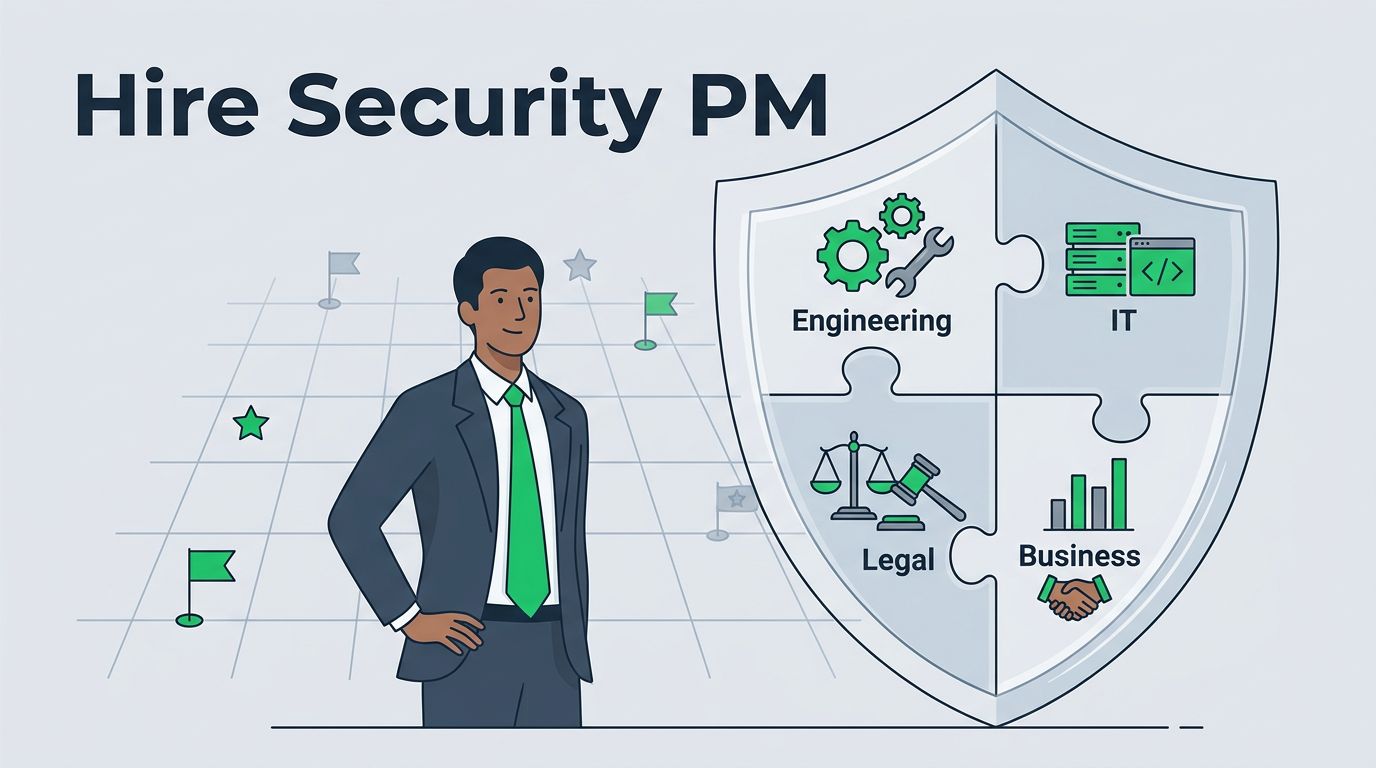
Hiring a Security Program Manager gets harder when the role is vague. Many teams think they need a planner, then discover they need a cross-functional operator who can move risk work forward.
That gap slows programs down. It also leads to hires who can track tasks, but can’t influence engineering, IT, legal, or business leaders.
The best hire turns security goals into managed work, clear ownership, and steady progress. Here’s how to find that person.
Define the role before you post it
Start with outcomes, not a job title. A strong Security Program Manager owns the structure around security work, not the technical fixes themselves.
That means they should drive priorities, maintain program cadence, surface risks, and keep leaders aligned. In many companies, they also manage reporting, deadlines, and follow-through across teams.
If you want a useful public reference, GitLab’s Security Program Manager handbook page shows how broad the role can be. Airbnb’s Senior Program Manager, Information Security posting is another good benchmark for scope and influence.
The key is to decide what your version of the role must cover. A startup may need a hands-on builder. A mature security team may need someone who runs governance across many programs.
In plain language, program governance means the rules for how work gets decided, tracked, and escalated. A risk register is the running list of threats, owners, and due dates. Those two tools should be part of the job.

Build a scorecard that matches your security program
Before interviews begin, write a scorecard. Without one, every interviewer will weigh different things, and the hire will drift toward opinion.
Use five criteria at most. Keep the language simple. A recruiter should be able to score it without being a security specialist.
| Area | What strong looks like | Weight |
|---|---|---|
| Cross-functional leadership | Influences engineering, IT, legal, and ops without formal authority | High |
| Risk management | Turns threats into priorities, owners, and deadlines | High |
| Program governance | Uses cadences, dashboards, and decision logs well | High |
| Stakeholder communication | Writes clear updates for executives and working teams | Medium |
| Execution | Removes blockers and keeps programs moving | High |
A scorecard like this keeps the team honest. It also helps you compare candidates on the same terms.
Calibrate pay early, too. Recent 2026 market data shows many U.S. roles landing around $128k to $203k in total pay, with senior outliers higher. Scope, location, and people management all change the number.
If the compensation band is too low for the scope, the search will stall before it starts.
Screen for leadership, risk judgment, and follow-through
The best candidates don’t just talk about security. They explain how they got work done when no one reported to them.
Look for proof that they can align people across teams. Ask how they handled a disagreement between security and engineering. Ask how they got a fix prioritized when the business wanted something else.
Strong candidates also talk clearly about tradeoffs. They can explain why one risk moved ahead of another, and who made that call.
Here’s a quick screen for non-specialist recruiters:
- They can explain a security program in plain English.
- They name the people they worked with, not just the tools they used.
- They describe deadlines, blockers, and outcomes.
- They show comfort with reporting to executives.
- They can point to a program that improved over time.
Watch for a different pattern, too. If a candidate only describes tracking tasks, they may have project skills but not program ownership. If they only talk about tools and controls, they may lack the people side.
In short, hire for influence plus execution. Security programs fail when either side is missing.

Ask interview questions that expose real capability
Theory sounds good in interviews. Execution shows up in the details.
Use scenario-based questions that force candidates to think about stakeholders, risk, and delivery. For more examples, compare your list with sample security program manager interview questions.
Try questions like these:
- Tell us about a security program you led across multiple teams. What made it hard?
- How do you decide whether a risk needs executive attention?
- Give an example of a time an important security task slipped. What did you change?
- How do you keep leaders informed without flooding them with updates?
- What does good program governance look like to you?
Then listen for structure. Strong candidates usually give context, action, and result. Weak answers stay abstract or blame other teams.
Ask for an example of a risk escalation as well. That’s when someone raises a risk to the right leader because normal delivery paths won’t solve it. A good Security Program Manager knows when to escalate and when to keep working the issue.
You can also test communication by asking for a sample status update. If the answer is clear, brief, and honest, that’s a good sign.
Set the first 90 days before you make the offer
The hire should not walk into a blank page. Before the offer, agree on what success looks like in month one, two, and three.
A simple plan works well:
- Map the active security programs and owners.
- Review the top risks and open dependencies.
- Define the reporting cadence for leaders.
- Confirm how decisions get escalated.
- Pick one visible win for the first 90 days.
If your search is broad, slow, or unusually senior, Book a Discovery Call with Bud Consulting to pressure-test the brief and the shortlist.
The right hire makes security work move
When you hire a Security Program Manager well, the payoff shows fast. Meetings get shorter, risks get clearer, and work stops drifting between teams.
The best candidate won’t just keep a program organized. They’ll help your security function earn trust, one decision at a time.