table of contents
A ransomware attack just hit your company. Systems are down. Regulators demand answers. Your board wants a timeline for normal operations. You need someone to lead the recovery now.
In 2026, breaches like this happen daily. Recovery demands coordination across forensics teams, legal experts, insurers, and operations staff. A security recovery lead steps in to own this chaos. They restore trust and get business moving.
This guide walks you through hiring one. You’ll learn the role, must-have skills, smart questions, and a checklist to pick the best fit.
Understand What a Security Recovery Lead Does
Your security recovery lead owns the post-breach phase. They coordinate containment, eradication, and full restoration. This person bridges technical fixes with business needs.
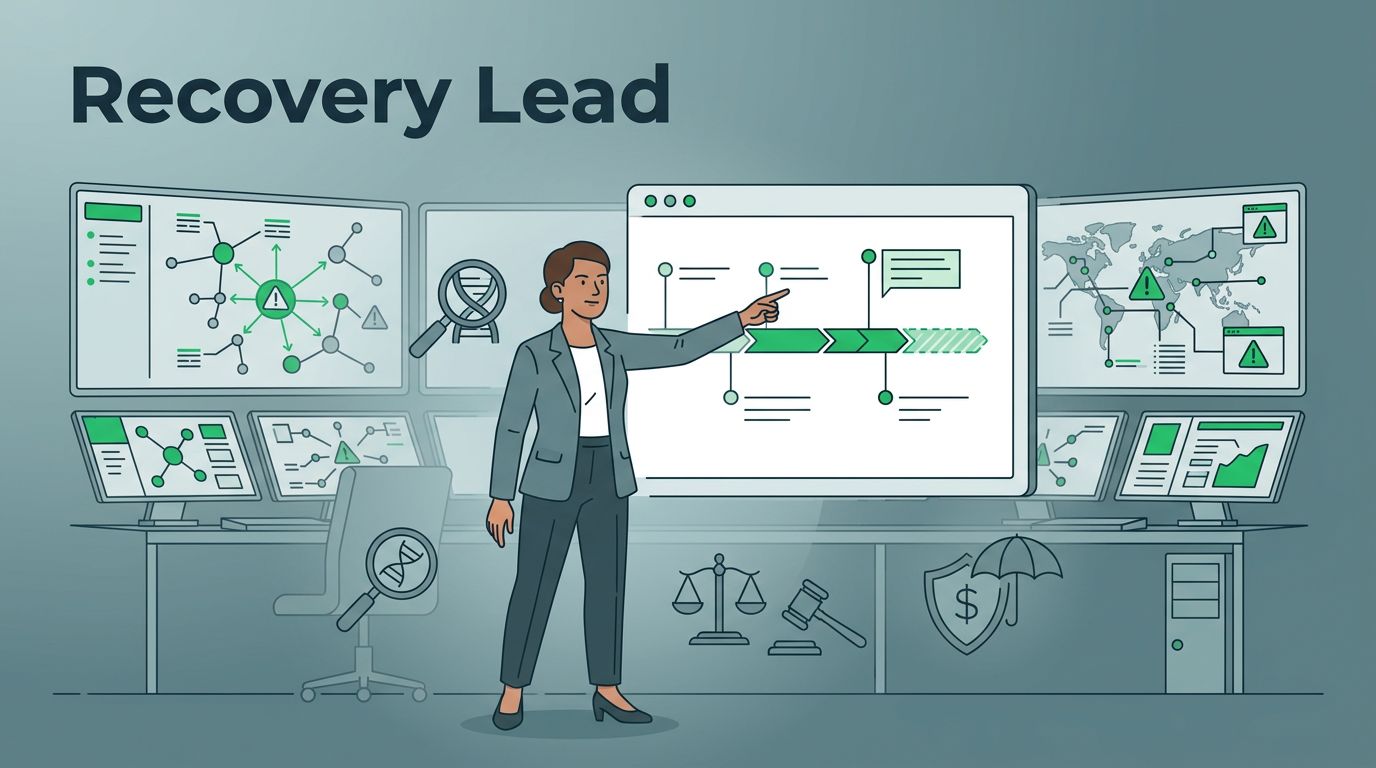
Think of them as the quarterback in a high-stakes game. They direct third-party forensics firms to preserve evidence under legal privilege. They negotiate with cyber insurers for payouts while aligning on remediation steps. Customer notifications follow strict timelines under laws like GDPR or CCPA updates.
In practice, they run daily war rooms. They update the C-suite on ransomware decryption progress or supply chain compromises. Business continuity stays first; they prioritize critical apps to minimize revenue loss.

Expect them to measure success by metrics like mean time to recovery (MTTR) under 72 hours or zero repeat incidents in six months. Past examples help: A strong candidate led recovery at a mid-sized firm hit by LockBit in 2025. They cut downtime from weeks to days by staging clean rebuilds in parallel clouds.
Current trends show demand for these roles. With 4.8 million global cybersecurity gaps, firms seek leaders in GRC and cloud recovery. However, tight budgets mean you hire versatile pros who handle AI-driven threats too.
Define Must-Have Qualifications
Look for 7-10 years in incident response. They need hands-on ransomware decryption or supply chain breach work. Certifications like GIAC Certified Incident Handler (GCIH) or CREST CRT add credibility.
Key skills match 2026 pressures. They must grasp regulatory filings like SEC’s 4-day disclosure rule. Experience with tools like Volatility for memory forensics or EDR platforms such as CrowdStrike is table stakes.
Past wins matter most. Did they coordinate with firms like Mandiant? Have they testified in breach litigation? A top candidate at a healthcare breach managed HIPAA notices, insurer claims, and board briefings without leaks.
Soft skills seal it. They communicate risks simply to non-tech execs. One example: They turned a complex MITRE ATT&CK map into a one-page executive summary during active recovery.
Remote flexibility helps too. Many pros left RTO mandates in 2026, so offer it to attract talent. Check proactive cyber hiring tips for post-breach speed.
Where to Source Candidates Fast
Don’t post generic jobs now. Use specialist recruiters like Bud Consulting who vet senior talent. Networks on platforms for CISOs yield quick referrals.
Target incident response managers from MSSPs or consultancies. Job boards show roles like technical incident responder with recovery focus.
Forensics firms and insurers refer pros. Legal teams often know hybrids skilled in privilege handling. Aim for those with cloud breach experience, as 90% of attacks hit there.
In 2026, GRC experts top lists because audits follow breaches. Pair with co-hiring security and legal for balanced teams.
Ask These Interview Questions
Probe real scenarios. Start with: “Walk us through your last ransomware recovery. What was MTTR, and how did you coordinate insurers?”
Test forensics: “How do you collect evidence without breaking chain of custody? Describe a case with legal involvement.”
For comms: “How would you brief the board on a customer data leak? What metrics do you track for success?”

Regulatory angle: “Outline steps for SEC or GDPR notifications post-breach.” Success indicator: They cite timelines and templates.
Business focus: “How do you balance speed with thoroughness in recovery? Give an example where you cut costs.”
Draw from expert IR questions. Listen for calm under pressure. Vague answers mean pass.
Candidate Evaluation Checklist
Score on a 1-5 scale per item. Use this framework after interviews.

- Experience: Led 3+ breaches? Ransomware recovery proven?
- Technical Depth: Forensics tools, EDR, cloud IR skills?
- Coordination: Worked with legal, insurers, forensics partners?
- Comms: Clear board updates? Customer notice examples?
- Metrics: Reduced MTTR? Zero re-breaches post-recovery?
- Culture Fit: Aligns with business-first mindset?
Top score: 28+. Require references from breach scenarios. Measurable wins like 50% faster recovery beat resumes.
Reference incident response planning for role alignment.
Key Takeaways
Hire a security recovery lead who turns breach chaos into controlled recovery. Focus on proven experience, sharp questions, and your checklist.
They shorten downtime, satisfy regulators, and rebuild trust. In 2026’s tight market, the right hire pays off fast.
Book a Discovery Call with Bud Consulting to source vetted talent now.
(Word count: 978)