table of contents
Your Security Information and Event Management (SIEM) alerts flood the SOC with noise. Analysts chase false positives while real threats slip by. Costs climb as log volumes explode in cloud environments.
You need someone to fix that. That’s why you should hire a SIEM optimization engineer. They excel in SIEM platform engineering, tuning your platform for speed, accuracy, and savings. They turn chaos into clear signals.
This guide walks you through the process. You’ll learn to spot talent that handles Splunk, Sentinel, or Elastic, enhancing threat detection and response in 2026’s hybrid setups.
Defining the Role of a SIEM Optimization Engineer
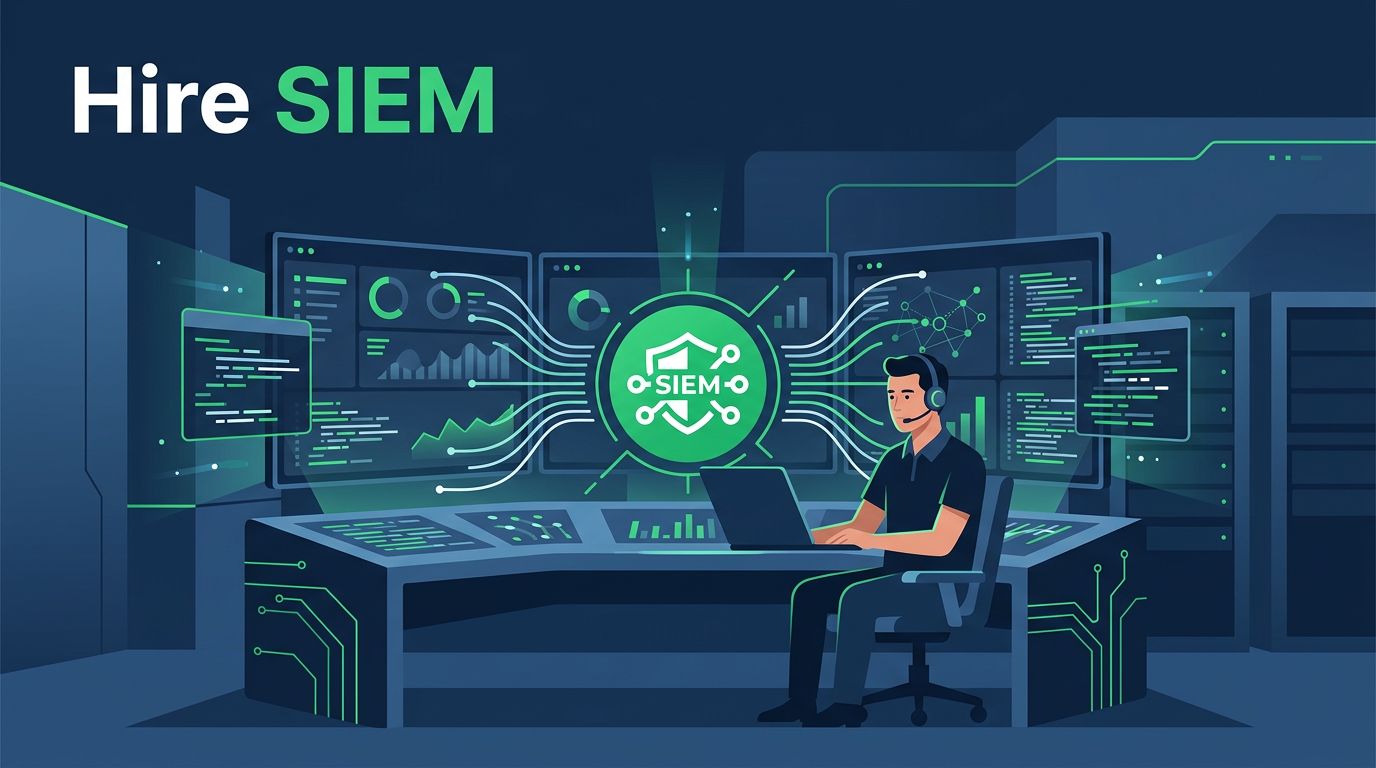
SIEM optimization engineers, experts in Security Information and Event Management (SIEM), keep security tools sharp. They handle massive data flows from endpoints, clouds, and networks through effective log source integration. Without them, your system slows and misses attacks.
These pros tune performance first. They implement log ingestion and normalization strategies to process petabytes fast. Tools like Cribl Stream help them trim noise and cut storage bills.
Data pipelines come next. Engineers build flows for logs from AWS, Azure, or the CrowdStrike Falcon platform. They fix ingestion lags with Kafka or forwarders, including data quality validation. Delays mean blind spots.
Detection rules get constant refinement. Using the MITRE ATT&CK framework, they craft correlation rules for anomalies. False positives drop through risk scoring.
They normalize data too. Formats like CIM or OCSF make logs consistent. Threat intel feeds add context for hunts.
Health monitoring rounds it out. Dashboards and visualizations track freshness and throughput. During outages, they lead fixes.
In 2026, cloud-native SIEM dominates. Engineers scale for hybrid setups and integrate ML for UEBA. Automation via Python scripts enables SOAR platform integration and the creation of incident response playbooks.
Expect compliance work. They prep logs for GDPR or PCI audits and build exec reports.

This role aligns with detection engineering. It demands hands-on fixes over theory.
Why Hire a SIEM Optimization Engineer in 2026
Hire a SIEM optimization engineer to tackle 2026 challenges head-on. Log costs hit hard now. Cloud bills spike with unfiltered data. This expert optimizes ingestion to save 30-50% without losing telemetry coverage, enhancing security posture.
Threats evolve fast. Ransomware and supply chain attacks need precise rules. Generic SIEM setups overwhelm threat detection and response teams.
Hybrid clouds complicate things. On-prem QRadar mixes with Sentinel. Engineers unify pipelines across environments.
Automation gaps hurt response times. Manual triage burns analysts. Skilled hires script workflows and build dashboards and visualizations for instant blocks.
Market shortages grow. Demand outpaces supply for Splunk or Elastic experts. Salaries average $150K-$200K, per recent postings.
Firms like Bank of America seek these pros for SIEM platform engineering and platform resiliency. They monitor latency and tune queries in SPL or KQL. See their senior SIEM engineer role for real duties.
Hiring one pays off quick. Reduced alerts boost SOC efficiency by 40%. Compliance risks fall too.
Don’t wait for a breach. Bring in expertise before logs bury your team.
What to Look for in a Candidate
Top candidates balance speed, cost, and detection. They cut noise yet catch stealthy threats.
Technical depth matters most. Proficiency in two-plus platforms: Splunk Enterprise Security SPL, Microsoft Sentinel KQL, Elastic, QRadar, or Chronicle. They know log ingestion and normalization using the Elastic Common Schema.
Pipeline skills shine. Experience with Kafka, Cribl, or connectors for high-volume logs. Exposure to cloud security platforms like AWS GuardDuty or Azure logs, and endpoint detection and response, is key.
Detection chops include MITRE mapping and UEBA tuning. They integrate threat intel and baseline behaviors.
Automation and scripting sets stars apart. Proficiency in Python and PowerShell for scripts, SOAR playbooks, API ties to EDR like CrowdStrike.
Soft skills support this. They document runbooks clearly. Cross-functional collaboration with SOC analysts and devs is essential.
In 2026, cost focus rules. Candidates who slashed bills via sampling or dedup win.

Look for 3-5 years in SecOps. Technical certifications like Splunk Admin or Microsoft Sentinel help but prove less than projects.
Avoid generalists. You want SIEM specialists who fixed real pipelines.
Where to Source SIEM Optimization Talent
LinkedIn leads searches for Security Information and Event Management (SIEM) optimization talent. Filter for “SIEM engineer” plus platforms. Join groups like Splunk User Community.
Niche boards work better. Dice, ClearanceJobs for cleared roles, or CyberSecJobs list specialists.
Recruiters specialize here. Firms target hard fills like yours. Bud Consulting matches Security Operations Center (SOC) pros fast; book a discovery call with Bud Consulting to discuss needs.
Job sites show benchmarks. WorkWave’s Security Operations Engineer posting highlights tuning and runbooks.
Conferences yield leads. Black Hat, RSAC booths connect you to speakers.
Referrals beat ads. Ask peers for names. Offer bounties for strong fits.
Passive candidates dominate. Many skip applications. Direct message with challenges they solve.
Aim for 20-30 outreach weekly. Track response rates.
Assessing Technical and Practical Skills
Start with resumes. Seek quantifiable wins: “Cut false positives 60% via rule tuning.”
Phone screens test basics. Ask: “How do you normalize firewall logs?” Probe pipelines, costs, and data quality validation.
Live coding follows. Give a KQL or SPL task: tune a noisy alert. Watch efficiency.
Take-homes simulate work. Build a detection rule for lateral movement, incorporating use case development and threat hunting capabilities. Limit to 4 hours.
Platform demos prove fit. Share a sandbox Sentinel instance. Have them optimize a pipeline for security posture enhancement.
Behavioral questions reveal culture. “Describe a pipeline outage you fixed.” Listen for ownership.
Prioritize hands-on over theory. They must query live data comfortably.

Reference checks confirm. Ask past bosses: “Did they reduce log costs or improve endpoint detection and response efficiency?”
RedMatter’s senior SIEM role stresses tuning in classified setups. Match that rigor.
Run a Smooth Interview Process with This Checklist
Structure interviews in stages. Week 1: screens. Week 2: tech deep dives. Week 3: finals.
Use a scorecard. Rate skills 1-5 with examples.
Key checklist items:
| Criterion | Evaluation Method | Pass Criteria |
|---|---|---|
| SIEM Proficiency | Live query test (threat detection and response) | Writes efficient SPL/KQL; tunes rules |
| Pipeline Experience | Take-home | Builds scalable flow with dashboards and visualizations; handles errors |
| Cost Optimization | Case study | Proposes 20%+ savings tactics |
| Automation and Scripting | Code review | Scripts Python for enrichment |
| Soft Skills | Panel interview (executive-level reporting) | Explains complex fixes simply |
| Cultural Fit | Team chat | Collaborates on mock issue |
Present offers fast. Include equity for seniors.
Onboard strong. Pair with SOC lead day one.
This process hires keepers.
Frequently Asked Questions
What does a SIEM optimization engineer do?
SIEM optimization engineers tune platforms like Splunk or Sentinel for speed, accuracy, and savings. They build data pipelines, refine detection rules using MITRE ATT&CK, and normalize logs with CIM or OCSF. This cuts false positives, slashes cloud costs, and sharpens threat detection in hybrid setups.
Why hire a SIEM optimization engineer in 2026?
Log volumes explode in cloud environments, spiking bills and overwhelming SOC teams. These experts save 30-50% on ingestion while boosting detection for ransomware and supply chain threats. Demand outpaces supply, so hire now to avoid breaches and compliance risks.
What key skills should candidates have?
Seek proficiency in Splunk SPL, Sentinel KQL, Elastic, or QRadar, plus pipeline tools like Kafka and Cribl. They must automate with Python, map to MITRE, and integrate threat intel for UEBA. Proven wins like cutting false positives 60% or optimizing costs set top talent apart.
How do you evaluate SIEM optimization candidates?
Start with resumes showing quantifiable impacts, then phone screens on normalization and pipelines. Use live coding for rule tuning, take-homes for detection rules, and platform demos in sandboxes. Reference checks confirm real-world fixes for outages and cost reductions.
What’s the typical salary for a SIEM optimization engineer?
Base salaries average $150K-$200K, higher for seniors with cloud-native experience. Firms like Bank of America post in this range for platform engineering roles. Equity and bonuses attract top talent in this tight market.
Key Takeaways
Hire Security Information and Event Management (SIEM) optimization engineers to tame logs and sharpen detections. Focus on proven tuners who save costs in cloud setups.
Technical skills in Splunk, Sentinel, and pipelines top the list. Pair them with practical tests and a clear checklist.
Act now. Top talent fills roles quick in 2026’s tight market.
Your SOC runs smoother with the right hire. Strong signals enhance threat detection and response, meaning fewer breaches.