table of contents
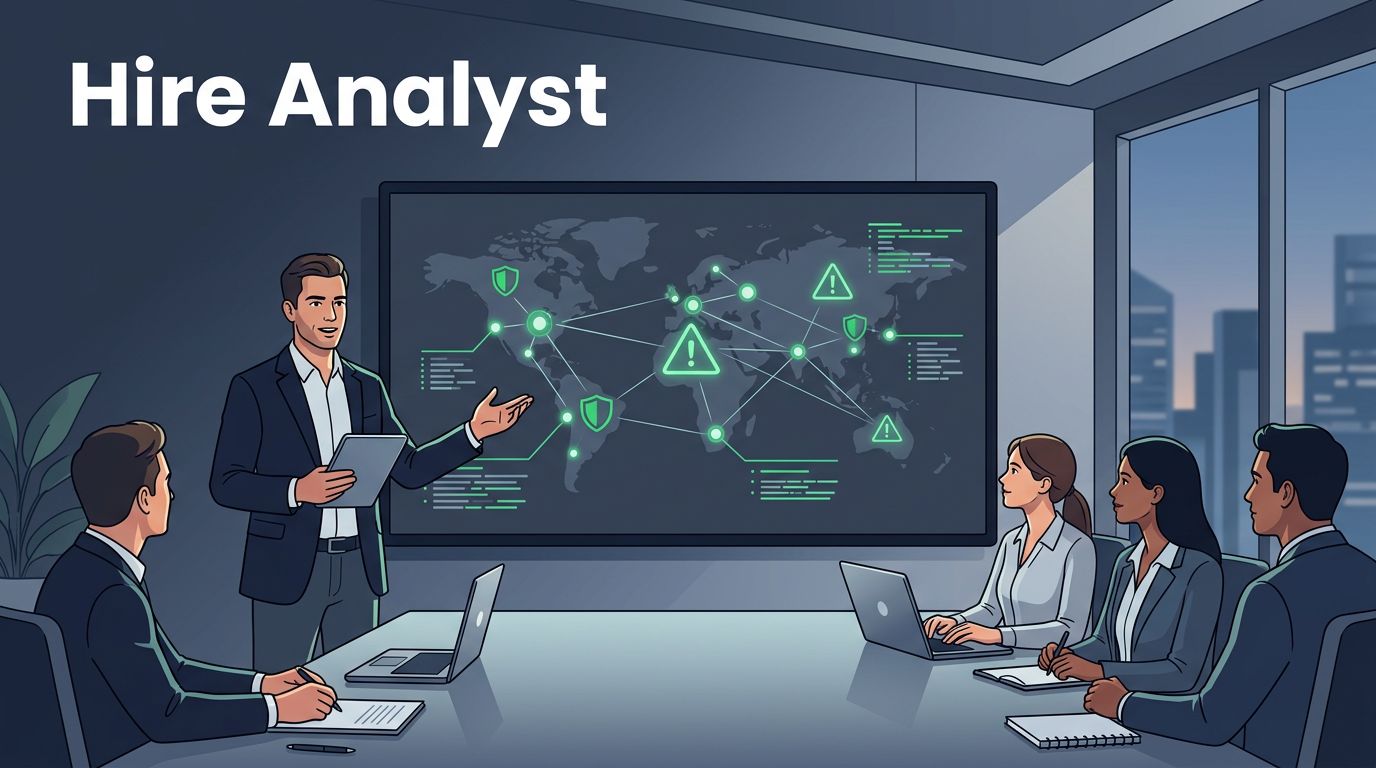
When you hire a threat intelligence analyst for executive briefings, you are not filling a research seat. You are hiring someone who can sort signal from noise, then speak about cyber risk in plain business language.
That matters because executives do not need a raw feed of indicators. They need to know what changed, why it matters, and what decision needs attention now.
The right analyst makes those conversations shorter, sharper, and far more useful. The wrong one fills the room with data and leaves leaders still guessing.
What Executive Leaders Need From a Threat Intelligence Analyst
Executive briefings work best when they answer three questions fast: what is happening, what does it mean for the business, and what should we do next. If the analyst cannot do that, the briefing turns into a report reading exercise.
A strong executive-facing analyst needs a different mindset than a purely technical researcher. They should know how to tie threat activity to business assets, brand exposure, customer trust, legal risk, and operating cost. They also need discipline, because not every alert deserves airtime.
Good briefings are clear, brief, and opinionated. The analyst should separate confirmed facts from likely scenarios, say where confidence is high or low, and keep the focus on decisions. Think of it as a decision memo spoken aloud.

A useful briefing also respects time. Executives want the headline first, then the business effect, then the action. If the analyst leads with technical detail, the room drifts.
Tactical, Operational, or Strategic? Pick the Right Level
Before you write the job post, decide which type of intelligence the role should produce. That choice shapes the skills you need.
| Intelligence type | Main audience | Typical output | Hiring signal |
|---|---|---|---|
| Tactical | SOC and detection teams | Indicators, TTPs, hunt leads | Strong technical detail and fast turnaround |
| Operational | Security operations and incident response leads | Campaign analysis, actor behavior, likely targets | Pattern recognition and solid context |
| Strategic | CISO, executives, board members | Risk briefings, trends, and recommendations | Clear writing, business impact, and judgment |
For executive briefings, strategic intelligence is the core need. Operational skill still helps, because the analyst must understand what is behind the trend. Tactical skill matters too, but only if it supports a higher-level story.
A posting like UnitedHealth Group’s strategic cyber threat analyst role shows the mix well. It calls for trend analysis, risk analysis, and concise reporting to senior leadership. That is the shape you want when the audience is executive.
If your need is mostly detection support, hire differently. If your need is board-ready risk framing, be explicit about that from the start.
Skills That Separate Strong Candidates From Average Ones
The best candidate can take a noisy threat picture and leave you with three or four useful points. They do not try to impress with volume. They impress with judgment.
Look for these traits during screening:
- Executive-ready writing: They can explain a threat in plain English without losing meaning.
- Prioritization: They know how to rank threats by business relevance, not by novelty.
- Source discipline: They can explain where data came from and how reliable it is.
- Business context: They understand how cyber risk affects revenue, operations, legal exposure, and reputation.
- Live communication: They can brief someone who asks sharp follow-up questions under pressure.
A strong résumé often shows more than one path into the role. Some analysts come from threat research. Others come from incident response, security operations, or executive protection work. The mix matters less than the output.
Capital One’s threat intelligence executive protection role is a good example of audience shift. It highlights the need to move from technical depth to executive summary, depending on who is in the room.
You can also learn a lot from how a candidate writes. ThreatLocker’s cyber threat intelligence research analyst posting shows how much weight clear reporting carries. If the writing sample is muddy, the briefing will be muddy too.
A great analyst does not just know more. They know what to leave out.

Interview Questions That Expose Real Briefing Ability
Standard interview questions rarely reveal whether someone can brief a CISO or board member. A better test is to ask for synthesis under time pressure.
Use a short exercise like this:
- Give the candidate a one-page incident summary or threat feed.
- Ask for a 90-second verbal briefing.
- Ask which three facts they would keep, and which details they would cut.
- Ask what the business should do next, and how confident they are.
Then listen for structure. The best candidates open with the headline, connect the threat to business impact, and finish with a recommendation. They should not wander through every data point they saw.
Good follow-up questions include:
- How would you brief this differently for a board member versus a security director?
- What would make you downgrade or delay this briefing?
- Which sources would you trust least, and why?
- How do you handle a case where the intelligence is incomplete?
Their answers should sound measured, not theatrical. Strong analysts know when to state uncertainty. They also know how to avoid false confidence.
A written test helps too. Ask for a one-page executive briefing after the interview. That shows structure, tone, and editing skill. If they can write clearly on deadline, they can likely speak clearly in the room.
Write the Job Description and Scorecard Before You Post It
A weak job description pulls in the wrong candidates. A tight one helps the right people self-select.
When you write the post, name the business outcome first. For example, say the analyst will prepare executive threat briefings, prioritize threats by business impact, and support leadership decisions during active risk events. Then add the technical parts that matter.
For this role, your responsibilities should probably include:
- Turning threat feeds and open-source intelligence into concise executive briefs.
- Tracking threat actors, campaigns, and trends tied to your business.
- Working with incident response, security operations, and risk leaders.
- Writing briefing notes for the CISO, senior leadership, and sometimes the board.
- Keeping an intelligence requirements list tied to business priorities.
Your scorecard should measure analysis, writing, business awareness, and delivery under pressure. If you leave out communication skill, you will end up hiring a good researcher who cannot brief leaders.
That is why the interview process should include at least one live presentation and one writing sample. If a candidate can explain a threat to a non-technical leader without sliding into jargon, that is a real hiring signal.
If your team needs help finding someone who can do this work well, Book a Discovery Call with Bud Consulting and narrow the search before it drags on.
Where Hiring Goes Wrong, and How to Avoid It
The most common mistake is hiring for technical depth alone. That creates a gap between analysis and action. The analyst may know the threat actor well, but still miss the executive point.
Another mistake is vague ownership. If the role is supposed to brief leaders, say so. If it is supposed to support both operations and strategy, define how time gets split. Otherwise, the analyst will spend too much time chasing low-value detail.
Hiring also fails when the company has no clear intelligence requirements. A good analyst needs a target. Without that, even strong work feels scattered. Start with the business areas you care about most, then build the role around them.
Most importantly, judge the candidate on clarity. Threat data is easy to collect and hard to interpret. The best hire helps leadership move faster because the risk picture is simple enough to use.
Conclusion
The best executive-facing threat intelligence analyst is part researcher, part editor, and part translator. They can take a crowded threat picture and turn it into a short path to action.
If you keep the role tied to business impact, clear communication, and the right intelligence level, your interviews will get better fast. More important, your executives will get briefings they can actually use.