table of contents
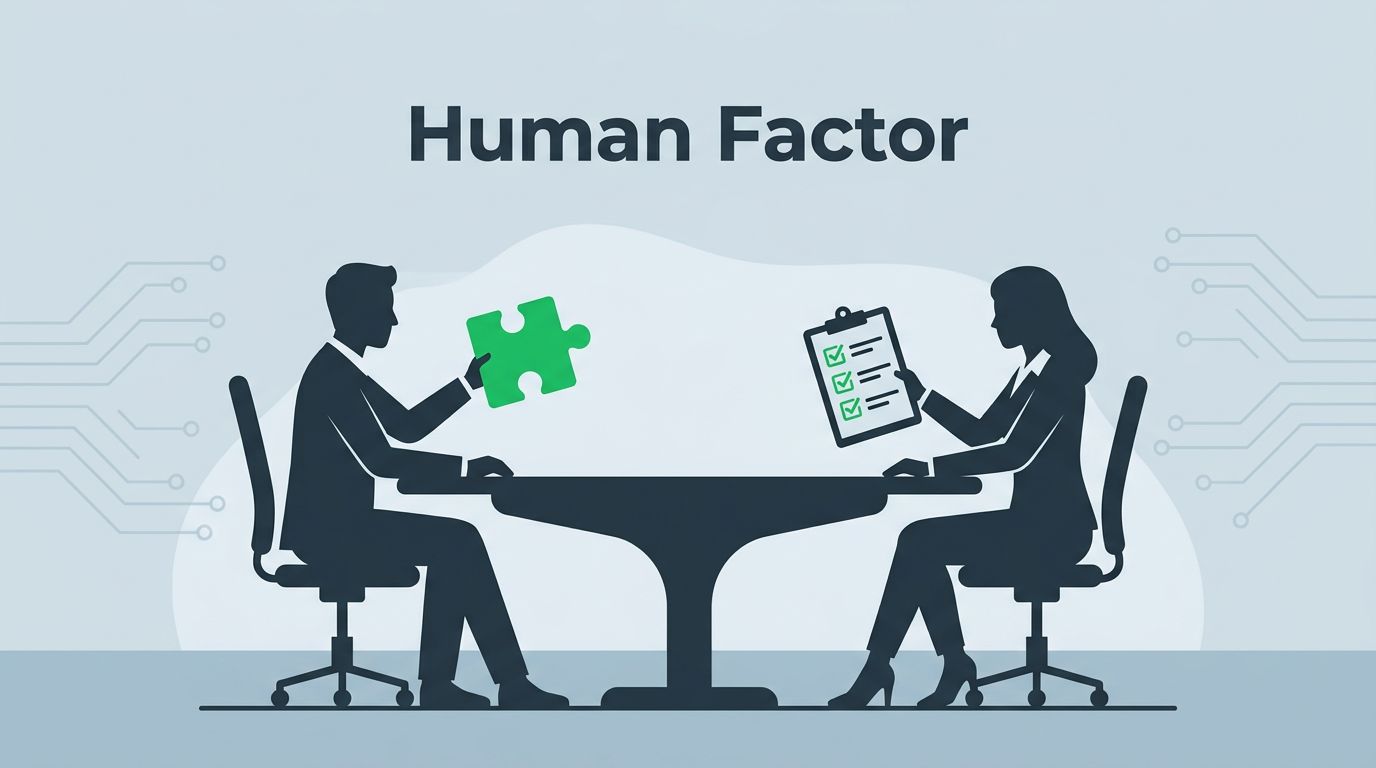
Hiring for high-stakes security roles often feels like a balancing act between verifying technical prowess and predicting long-term fit. Many organizations lean heavily on technical quizzes or automated coding tests to filter candidates quickly. While these assessments provide a baseline for skill, they frequently miss the human factors that determine whether an expert thrives within your specific team.
Technical quizzes capture a single, narrow snapshot of what a candidate knows at a specific moment in time. They struggle to measure how that person applies knowledge, navigates conflict, or adapts to unexpected pressure. If you want to build a team that handles complex security threats effectively, you need more than just a list of correct answers.

The Limitations of Point-in-Time Technical Testing
Technical assessments often act as a convenient filter to reduce a large pool of applicants to a manageable list. They are useful for checking baseline competency, such as familiarity with specific syntax or standard frameworks. However, these tools are inherently static. They rarely reflect the messy, nonlinear nature of real-world security operations.
A candidate might score perfectly on a test about incident response protocols while struggling to remain calm or communicate effectively during a live breach. Technical tests measure individual output in a vacuum. They fail to account for how a professional interacts with existing team workflows, manages conflicting priorities, or explains complex risks to non-technical stakeholders.
You should consider these tests as a floor rather than a ceiling. They establish that a candidate possesses necessary foundational knowledge. Relying on them exclusively risks missing out on individuals who possess strong analytical reasoning and adaptability but may not have memorized the specific details covered in a standardized quiz.
Understanding the Depth of Behavioral Interviews
Behavioral interviews shift the focus from what someone knows to how they think and perform over time. By asking candidates to recount specific instances of past behavior, you gain insight into their decision-making processes. This approach is rooted in the idea that past performance is the best indicator of future behavior.
When a candidate describes how they handled a difficult feedback session or resolved a tense disagreement during a project, you learn far more than a technical quiz could ever reveal. You observe their level of self-awareness, their commitment to team goals, and their ability to own mistakes. These attributes are often more critical to long-term success than a perfect score on a multiple-choice exam.

While behavioral interviews require more time and preparation than automated quizzes, the payoff is significant. You develop a clearer picture of whether a hire will mesh with your culture or clash with it. For teams handling sensitive security environments, these interpersonal variables matter immensely. If you want to improve how your firm evaluates talent, you can Book a Discovery Call with Bud Consulting to discuss better assessment frameworks.
Creating a Balanced Hiring Strategy
The most effective hiring processes incorporate both methods, using each for its strengths. You do not have to choose one over the other. Instead, sequence them to maximize the value of every interaction. Start with a baseline technical assessment to ensure candidates have the necessary skills to perform the day-to-day work.
Once you have verified the baseline, move to a structured interview process that emphasizes behavioral questions. This creates a data-driven approach where you measure cognitive capacity alongside practical judgment and professional maturity. Experts note that combining multiple selection methods in sequence allows you to capture a holistic view of the candidate.
When you structure your behavioral questions, focus on specific, high-pressure scenarios relevant to your business. Ask about times the candidate had to pivot due to changing requirements or explain a complex security vulnerability to a business executive. These questions force candidates to demonstrate their actual experience rather than reciting hypothetical best practices.
Why Context Matters in Security Hiring
Security work is rarely just about technical correctness. It involves managing risks, influencing behavior, and working across diverse teams. A brilliant security architect who cannot build consensus will struggle to implement new policies. Similarly, an expert who ignores the human side of social engineering exposure will find their technical defenses undermined by simple mistakes.
Technical tests cannot evaluate the nuance required to balance security and usability. They also cannot identify the curiosity and drive needed to keep up with an evolving threat landscape. Behavioral questions allow you to probe for these traits. You can discover if a candidate has a history of self-directed learning or if they take accountability for gaps in their own understanding.
Remember that a candidate’s resume often masks these deeper qualities. Many people learn how to write a CV that mirrors industry buzzwords. The interview process is your only opportunity to cut through the performance and find out who the person is behind the credentials. This is the difference between hiring a smart worker and a reliable team member.
Avoiding Common Evaluation Biases
Structured behavioral interviews help standardize your evaluation, reducing the impact of unconscious bias. When every candidate answers the same set of performance-based questions, you can compare responses objectively. This creates a more equitable process than unstructured conversations where you might gravitate toward people who share your background or communication style.
Avoid the temptation to judge candidates based on how well they perform in a high-pressure interview setting. Some of your best engineers might be introverted or struggle with the performance aspects of a typical interview. Use the questions to dig into how they handled past challenges, even if their delivery is not polished. The content of their experience is far more important than their charisma.
If you find that your current hiring pipeline produces candidates who look great on paper but fail to integrate, take a step back. Examine whether your assessment process emphasizes the right skills. Sometimes, it is necessary to pivot from a focus on static knowledge to one that centers on problem-solving, collaboration, and character.
Building a Long-Term Talent Strategy
Investing time in better interviews results in higher retention and stronger team performance. People who are vetted for their behavior and alignment with team values are more likely to stay and contribute to a healthy security culture. They are also more likely to mentor others, creating a virtuous cycle of improvement within your organization.
Automated tools and quick quizzes have a place in managing high-volume recruiting, but they should never be the final judge of human talent. Use them as a starting point. Use your interview time to evaluate the qualities that make a professional capable of sustained success. That investment creates a massive difference in the quality of your team.
Final thoughts on building your process: prioritize the candidate’s ability to communicate, their willingness to admit to mistakes, and their approach to resolving complex conflicts. These markers of experience are invaluable. If you continue to find gaps in your hiring outcomes, rethink the weighting you give to technical scores compared to the insights gained from direct conversation. You will likely find that the most impactful hires are those who demonstrate growth and awareness in every answer they give.