table of contents
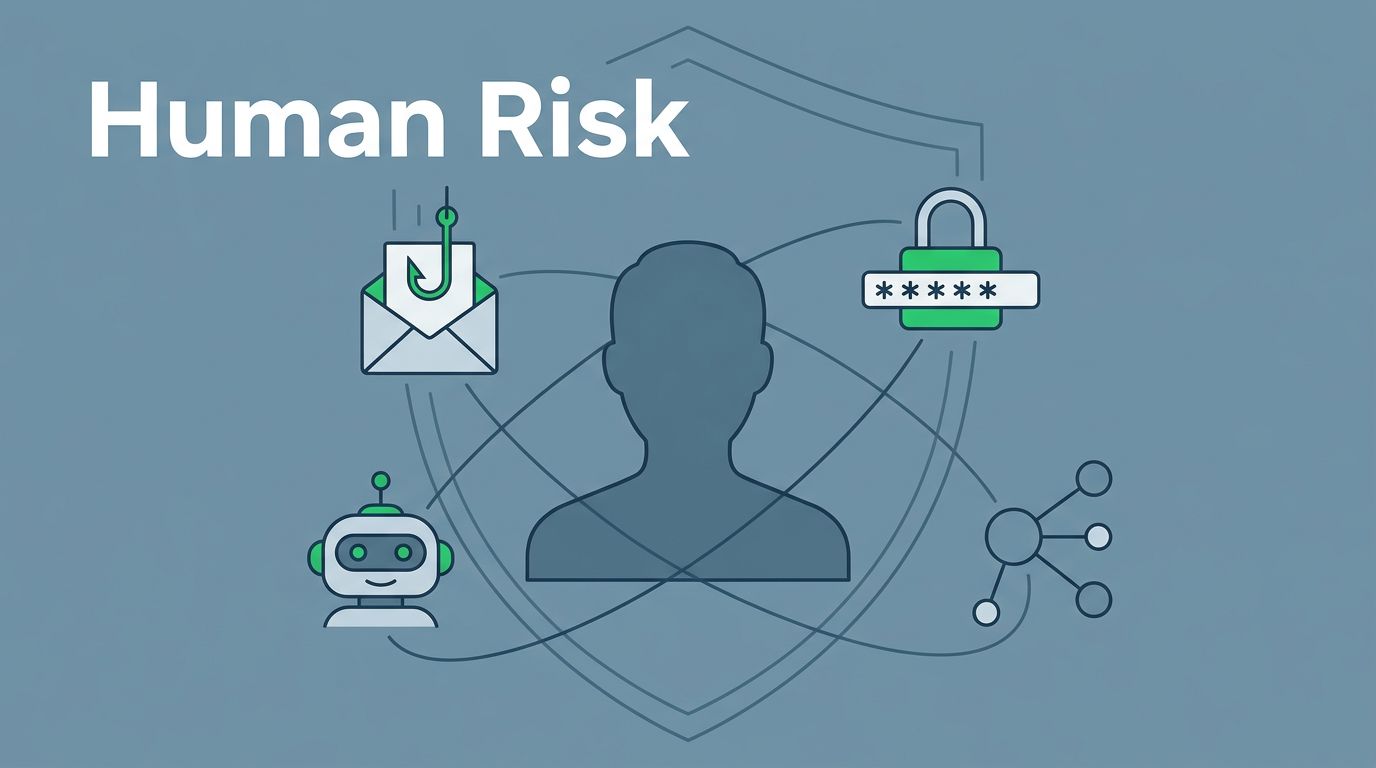
A human risk platform should do more than track clicks and course completions. It should show who is at risk, why that risk exists, and whether behavior changes after intervention.
That matters more in 2026, because identity sprawl, AI-assisted work, and sharper phishing tactics make old awareness metrics feel thin. If you are comparing vendors for an enterprise or mid-market program, the right criteria will save you from buying a polished dashboard with little security value.
What a modern platform should measure
Start with outcomes, not activity. A useful human risk platform measures behavior before and after training, then ties that behavior to exposure in your environment.
Look for signals such as repeat phishing susceptibility, report rates, risky sign-ins, password reuse, and response time after a simulation. Also ask how the platform handles AI-assisted workflows, because human risk now includes people acting through copilots, agents, and automated helpers.
If the system cannot connect behavior to exposure, the score is only decoration.
A platform that cannot explain risk in plain terms is usually reporting noise, not managing it.
Core features that separate useful tools from noise
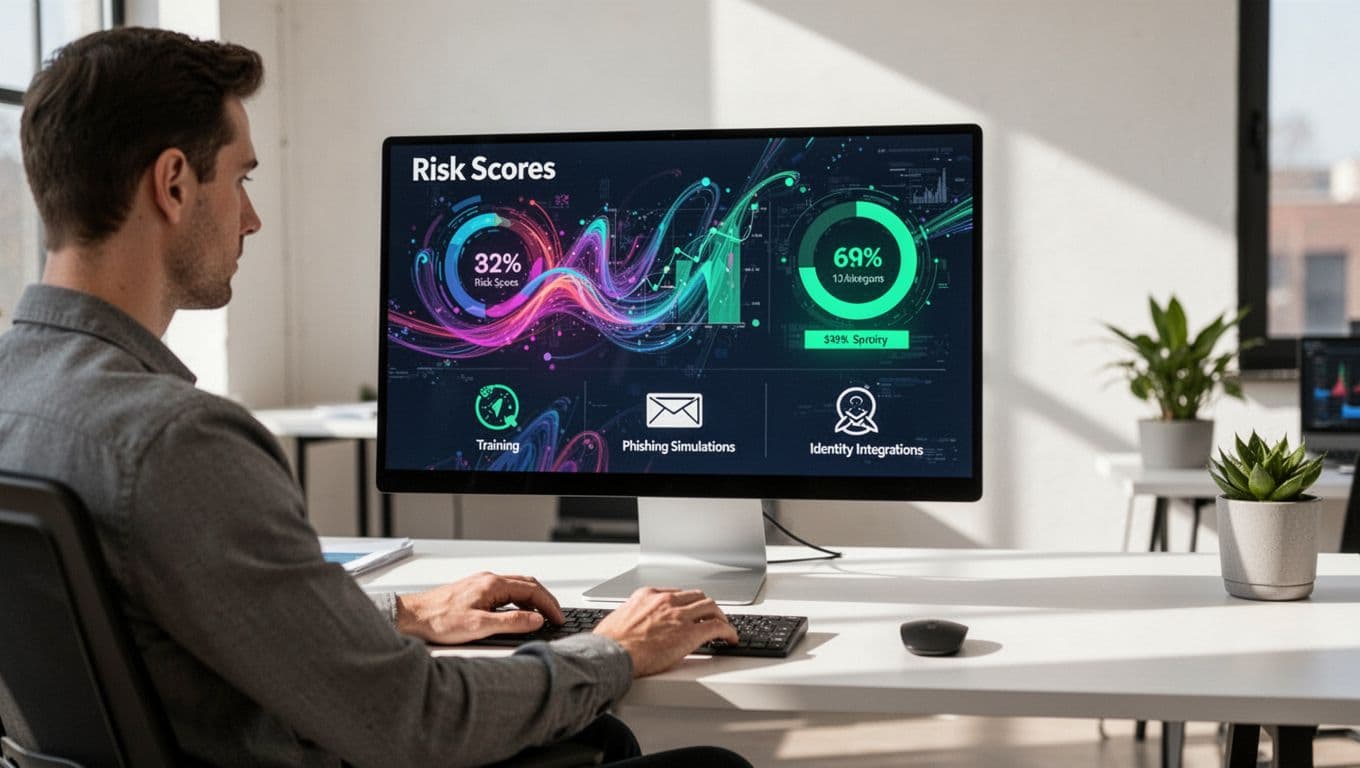
AI-driven risk scoring should sit at the center of the platform. The score should change when a user’s behavior changes, when identity risk rises, or when threat exposure shifts. Static scores age badly.
Adaptive training matters next. Fixed annual modules rarely change habits. Better platforms adjust lessons by role, language, location, and past behavior. That gives security teams a way to coach high-risk users without sending everyone through the same path.
Phishing simulation also needs maturity. Basic templates are easy to spot and even easier to ignore. Strong platforms vary sender profiles, lure types, and difficulty over time. They should also connect simulations to real-world threat patterns, so campaigns reflect the attacks your staff are most likely to face.
Integrations matter just as much as the learning model. The platform should connect with identity tools, email, HRIS, SIEM, SOAR, and ticketing systems. Without those links, risk scoring misses context and your team gets a partial view.
For a current market view, see how to choose a human risk management platform. The best guidance in 2026 keeps returning to the same point, the platform should show change, not just participation.
A simple scorecard for vendor comparison
A short scorecard helps you compare vendors without getting lost in demo polish. Use the same questions for every finalist, then score evidence, not promises.

| Criterion | What good looks like | Questions to ask |
|---|---|---|
| AI-driven risk scoring | Scores update with behavior, identity, and exposure signals | Which data changes the score, and how often does it refresh? |
| Adaptive training | Lessons adjust by role, region, and past mistakes | Can we target coaching by user group and risk pattern? |
| Simulation maturity | Phishing campaigns evolve and mirror current threats | How do you tune scenarios by threat type and business unit? |
| Integrations | Works with identity, email, HRIS, and security tools | Is the data flow bi-directional, or only read-only? |
| Privacy and governance | Clear retention, access controls, and audit trails | Can we limit data, set retention rules, and delete on request? |
A vendor should be able to show this in your own environment. If the demo depends on generic examples, the product may not fit your stack.
Questions that expose weak spots fast
When vendors stay vague, ask for proof in your exact use case. These questions usually separate real capability from marketing language:
- Which signals feed the risk score, and which ones are optional?
- How does training change after the same user makes repeated mistakes?
- Can simulations vary by role, region, and current threat pattern?
- What data stays inside our tenant, and what leaves it for processing?
If the answers stay broad, the platform likely tracks events without helping you reduce them. That is a poor fit for a security team that needs measurable change.
Privacy and proof should shape the final choice
Privacy-by-design is no longer a nice extra. Security teams need role-based access, clear retention rules, regional data handling, and audit logs that stand up to internal review. HRIS and identity data can help, but only when the vendor handles it with clear controls.
Teams should also ask how the platform proves behavior change. Look for evidence that report rates rise, repeat risky actions fall, and targeted groups improve over time. A current roundup of best human risk management software in 2026 can help with feature names, but your shortlist should rest on outcomes.
If you want a second opinion before you write the RFP or trim the shortlist, Book a Discovery Call with Bud Consulting.
The strongest human risk platform is the one that connects behavior, exposure, and change. It should fit your identity, email, HRIS, and security stack, while giving you clear proof that risk is going down.
If a tool only reports completion rates and phishing clicks, keep looking. Security teams need context, privacy controls, and measurable movement in the right direction.