table of contents
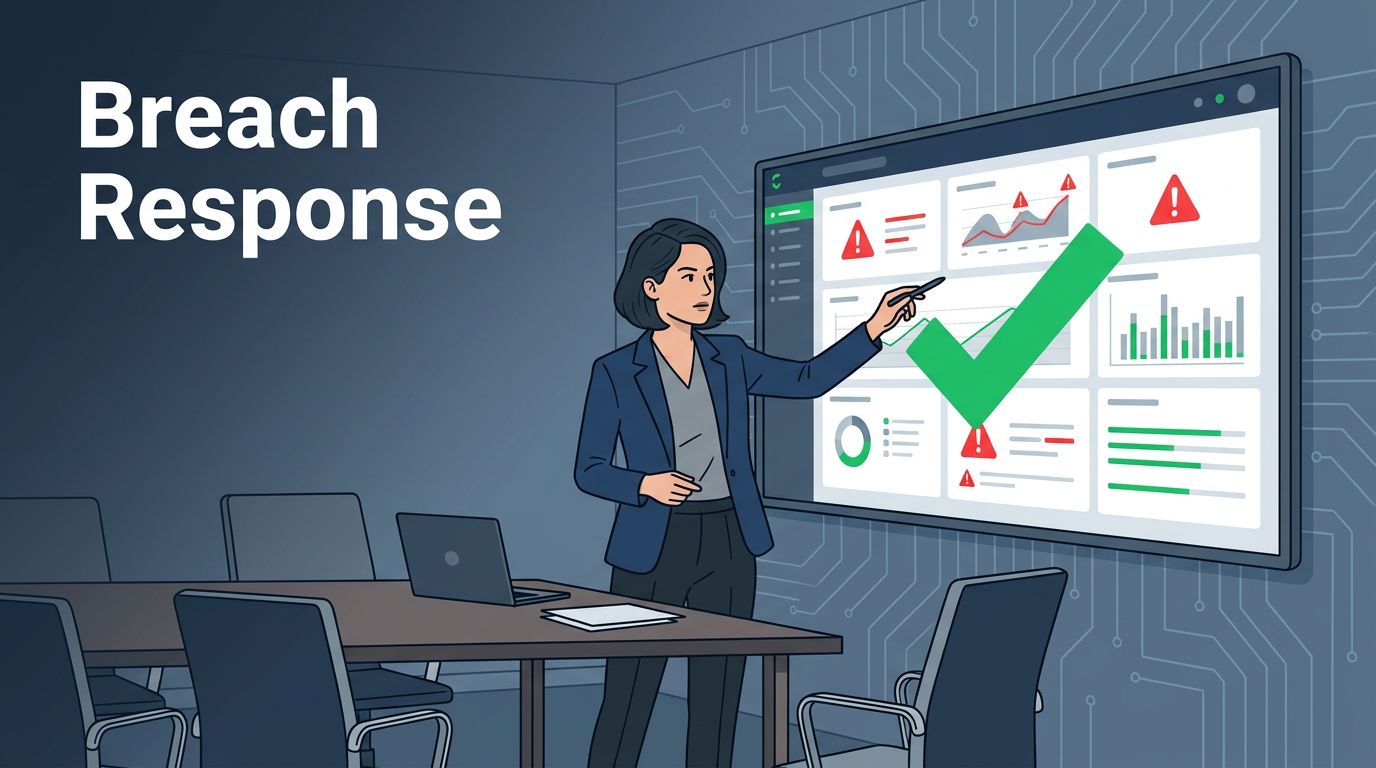
When a data breach hits, the first few hours shape everything that follows. If you choose the wrong cyber incident response help, you can slow containment, lose evidence, or create a compliance headache.
An incident response consultant brings crisis management order to that moment. The right one helps you calm the noise, protect proof, and move toward recovery without guessing.
Key Takeaways
- An incident response consultant leads triage, containment, evidence preservation, and recovery during active breaches, helping answer critical questions fast while coordinating with legal, privacy, and executive teams.
- They differ from MSSPs (operations), MDR (detection), digital forensics (analysis), and general consultants by connecting all under pressure for minimal business disruption.
- Engage quickly by naming one internal owner, looping in legal/insurance early, sharing a rough summary, freezing changes, and setting a response cadence—speed beats perfection.
- Vet for proven incident experience, immediate availability, clear chain of custody, named staff, and full recovery support; avoid vague promises or weak evidence handling.
What an incident response consultant actually does
Think of this role as the person who steps in for cyber incident response during adversarial events, when the alarm is real, but the full story is still unclear. A strong consultant starts with triage, then moves fast into containment, evidence preservation, and decision support.
That often includes isolating affected systems for containment and eradication, checking whether attackers still have access, and confirming what changed. Cybersecurity experts also work with legal counsel, privacy teams, insurers, and executives so the response stays aligned with policy and law. For a broader view of service scope, see this incident response services guide.
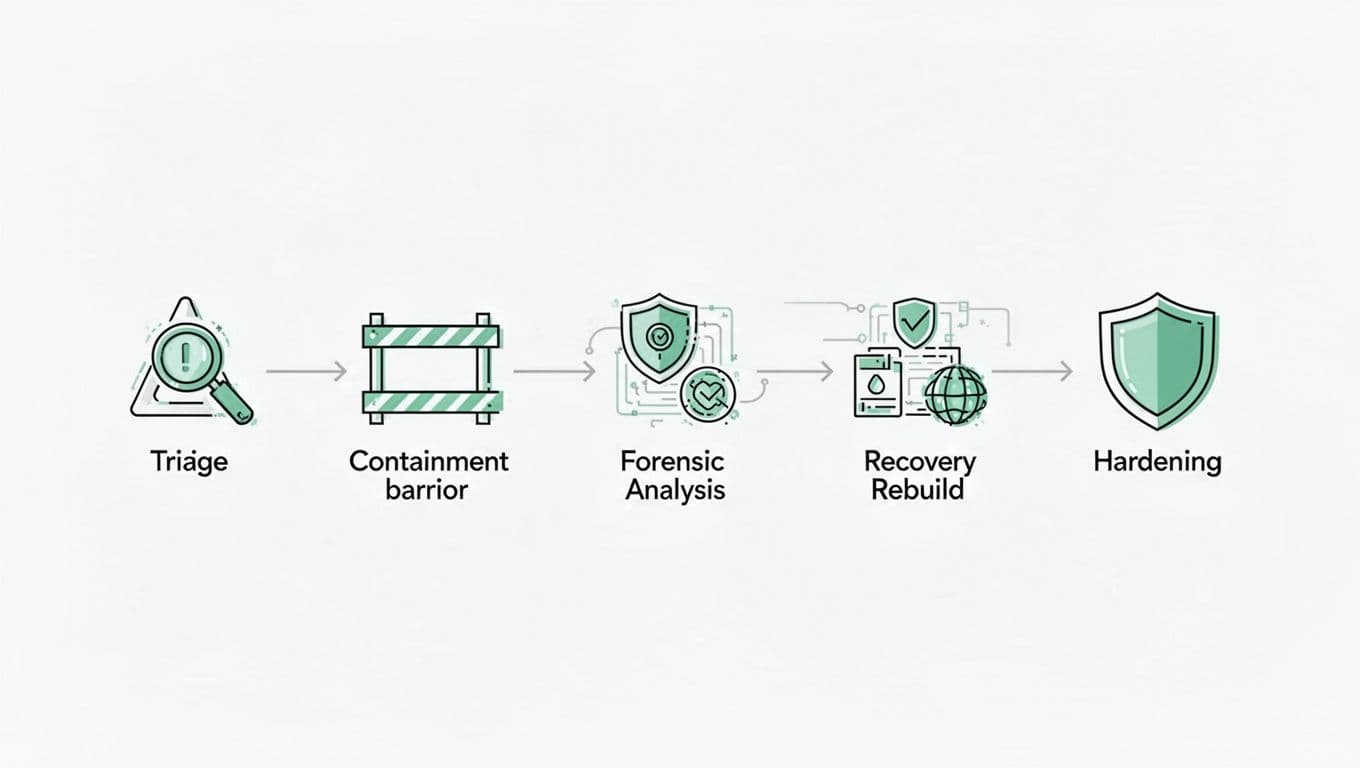
Recent 2026 reporting shows attacks move fast, sometimes in minutes. That means the consultant’s value is not theory, it is speed plus discipline. They should help you answer five questions quickly through cyber investigation: what happened, what is still exposed, what evidence must be preserved, who needs to know, and what should happen next.
Just as important, they should help after containment. Recovery planning, control hardening, and lessons learned are part of the job. If a provider stops at cleanup, you may end up facing the same gap again.
How incident response consultants differ from other security providers
Many teams blur these services together, but they do different jobs. If you need a deeper comparison of ongoing monitoring models, this MDR vs MSSP guide is a useful reference.
| Provider | Best use | Main strength | Common gap |
|---|---|---|---|
| Incident response consultant | Active breach, ransomware, suspected exfiltration | Leads triage, containment, forensics coordination, and recovery planning | Not always a 24/7 monitoring service |
| MSSP | Ongoing security operations | Tool management, patching, log review, routine oversight | Often not built for live breach command |
| MDR provider | Fast threat detection and endpoint detection and response | Finds and stops active threats quickly | Usually narrower than full incident response |
| Digital forensics firm | Evidence collection and root-cause work | Deep forensic analysis and reporting | May not lead live containment or business recovery |
| General cybersecurity consultant | Program design and control gaps | Policies, architecture, and assessments | Can lack hands-on breach-response depth |
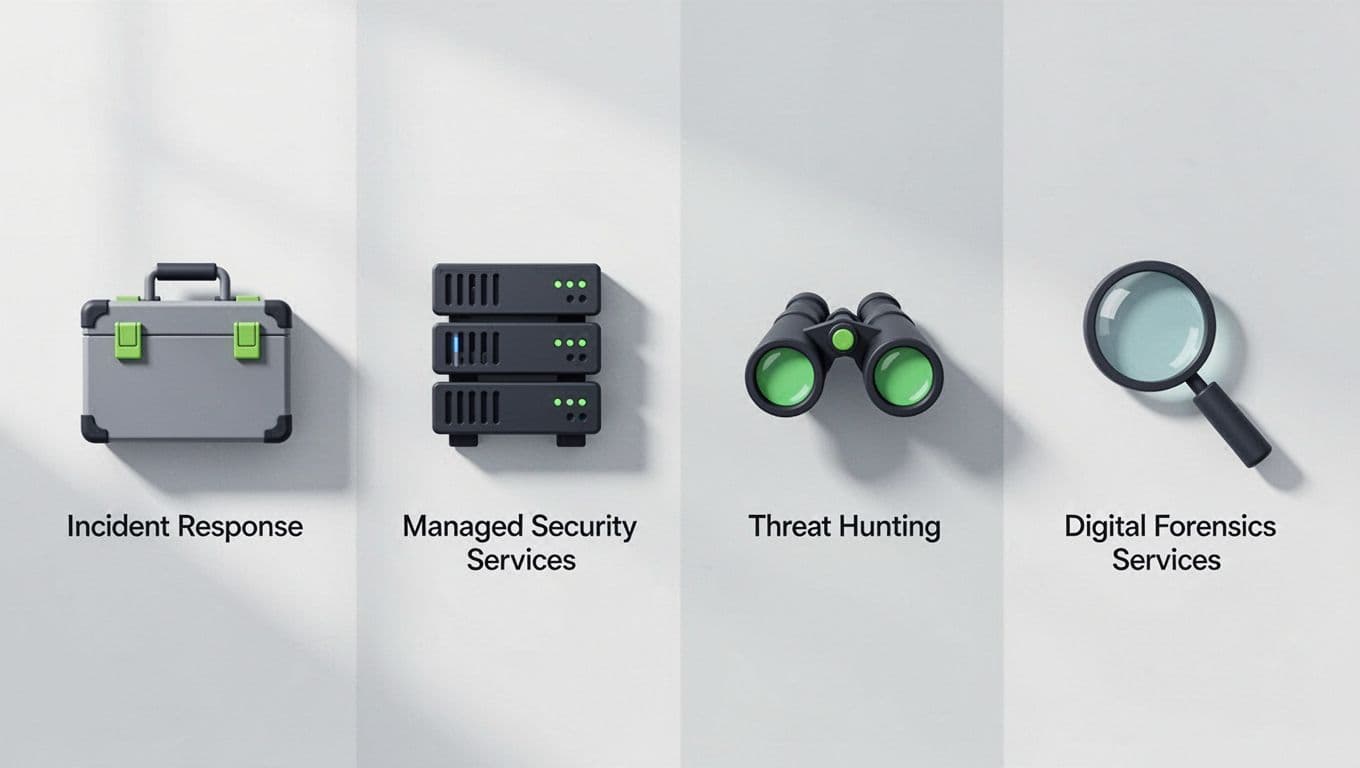
The main lesson is simple. MDR watches and reacts, MSSPs run security operations, and digital forensics firms document what happened. An incident response consultant has to connect all three under pressure while minimizing disruption to business operations.
A general cybersecurity consultant can still be useful, especially for strategy and hardening. However, if the issue is active compromise, you want someone who has run live incidents before and knows how to work with legal and technical teams at the same time.
How to engage one quickly when pressure is high
Speed matters, but messy communication slows everything down. Start with a short, controlled process.
- Name one internal owner. One person, familiar with the organization’s incident response plan, should manage the consultant, even if many teams are involved.
- Loop in legal, insurance, and strategic communications early. They may shape evidence handling, notice timing, and approved language.
- Call the consultant with a rough summary. Say what you know, what you suspect, and what systems may be affected.
- Freeze risky changes. Avoid reimaging, log wipes, or broad config edits until the consultant advises.
- Set a response cadence. Decide when updates happen, who joins, and how decisions get recorded.
Don’t wait for a perfect timeline. A rough one gives the consultant more value than a polished guess.
If you are still deciding who should lead the work, book the first conversation for emergency response consulting now, then sort details during the call. In a live incident, momentum matters more than a perfect intake form.

What to gather before the first call
You don’t need a complete case file. You do need enough context regarding the security incident to help the consultant move fast.
- The first sign of trouble, plus the time it appeared.
- A short timeline of alerts, outages, user reports, or ransom notes.
- Affected systems, identities, cloud tenants, or third parties (e.g., business email compromise or insider threat).
- Recent changes, like patches, new software, vendor access, or admin edits.
- Logs and alerts from EDR, SIEM, email, cloud, firewall, and identity tools.
- Backup status, recovery points, and any known restore tests.
- Legal, privacy, insurance, and communications contacts.
- Any public statements or customer notices already sent.
If you only have fragments, share them anyway. The consultant can work with gaps, but they can’t work with silence.
Frequently Asked Questions
What does an incident response consultant actually do?
They step in during live adversarial events for triage, containment, eradication, forensics coordination, and recovery planning. Consultants help preserve evidence, confirm attacker access, and align responses with legal and policy needs. Post-containment, they guide hardening and lessons learned to prevent repeats.
How do incident response consultants differ from MSSPs, MDRs, or forensics firms?
MDR watches and reacts to threats, MSSPs manage ongoing operations, and forensics firms analyze post-event. Consultants lead full live responses, connecting detection, operations, and analysis under pressure while minimizing disruption. Use others for their strengths, but breach command needs this specialized role.
How can I engage a consultant quickly during high pressure?
Name one internal owner from your incident response plan, loop in legal/insurance/comms early, call with a rough summary of known issues, freeze risky changes, and set update cadences. Don’t wait for perfect details—a rough timeline lets them add value immediately. Book an emergency call now if deciding providers.
What should I gather before the first consultant call?
Share the first alert time, a short timeline of events, affected systems/users, recent changes, logs/alerts from tools, backup status, and key contacts. Fragments are fine; silence slows them down. This context helps them triage and move fast.
How do I vet the right incident response consultant?
Look for immediate start capability, similar incident experience, plain-language chain of custody, coordination with counsel, named staff, clear documentation, and recovery support. Red flags include vague staffing, overblown claims, or weak comms plans. Proof of live incidents matters more than general security talk.
How to vet the right provider
The best provider for a calm assessment may not be the best provider for an active breach. Look for proof of incident work, not just general security talk. A broader guide to vetting information security consulting firms can help you compare options.
Check for these points:
- They can start now, not next week.
- They’ve handled incidents similar to yours.
- They can explain chain of custody in plain language.
- They coordinate well with outside counsel and compliance teams on e-discovery.
- They provide named staff, not vague bench promises.
- They document decisions and handoffs clearly.
- They provide technical assistance throughout recovery planning and post-incident hardening, including vulnerability remediation.
- They can work with your stack without forcing a tool switch.
Red flags are easy to spot once you know them. Vague staffing, overblown claims, weak evidence handling, and no clear communication plan should all slow the deal.
If your team also has a skills gap after the incident, or you need help with post-incident assessment, lining up tabletop exercises, cyber readiness assessments for risk management, or the right specialist, Book a Discovery Call with Bud Consulting and map the next step before the pressure builds again.
A breach puts speed and judgment on the same clock. The right incident response consultant gives you both, while protecting evidence, legal footing, and the path back to stable operations. That’s what turns a chaotic first call into a controlled response.