table of contents
Invoice fraud usually hides in routine work. A vendor asks for a bank change, a manager rushes a payment, and an AP queue fills up fast. If your team has never rehearsed those moments, a real scam can move before anyone notices.
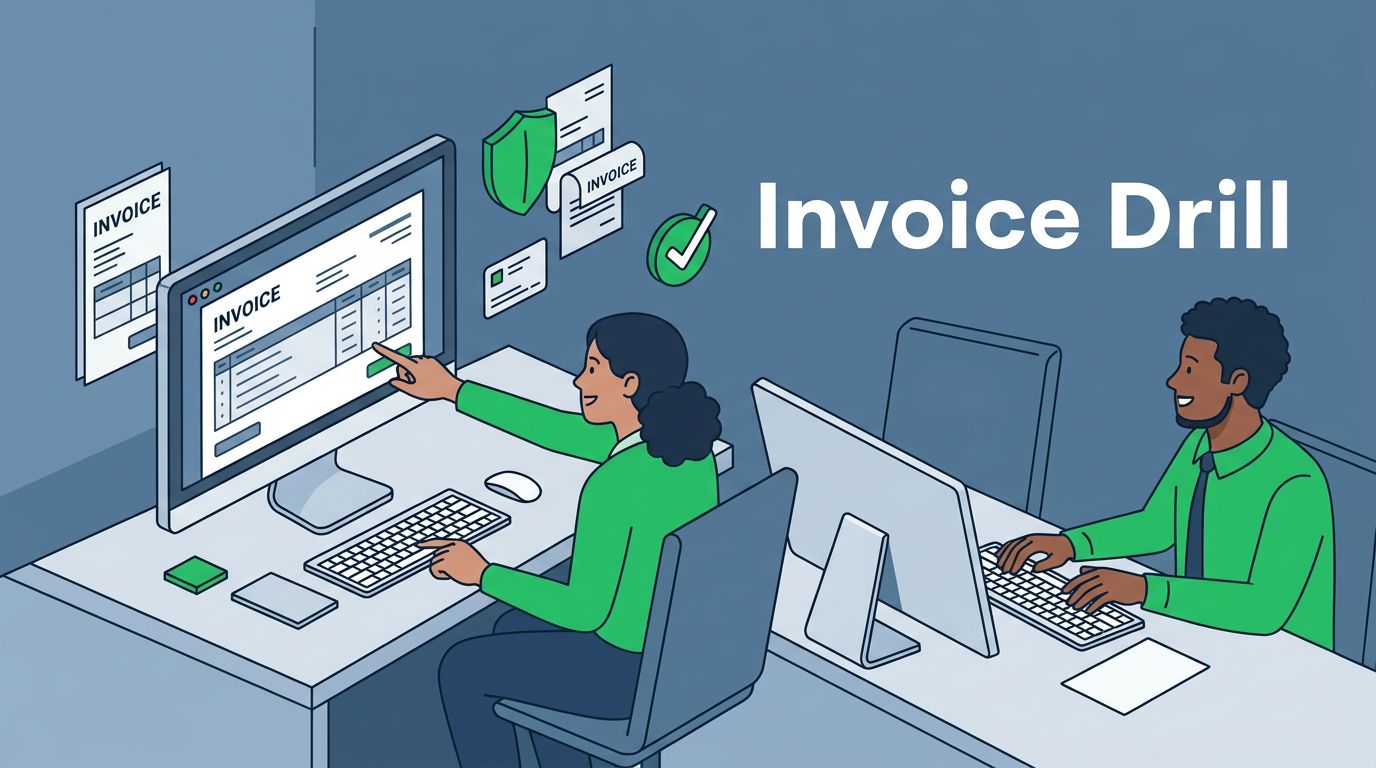
An invoice fraud drill gives finance teams a safe way to test the handoffs between AP, procurement, IT/security, and compliance. The goal is simple, catch weak spots before a fraudster does.
Why invoice fraud drills matter
Invoice fraud is often a business email compromise problem with a finance wrapper. The FBI’s IC3 has long warned about Business Email Compromise, and CISA still keeps a useful BEC scam alert. These scams work because they look like normal business requests.
In 2026, the pressure is higher because attackers can copy writing style, spoof executive tone, and push urgency through email, text, or even voice. A fake vendor bank-detail change, a spoofed executive approval, a duplicate invoice, or a compromised vendor email thread can all land in the same AP inbox.
A good drill should expose weak handoffs, not punish the person who catches the scam first.
The best teams treat the drill like a fire alarm test. They want smoke to show up in the right places, not flames.
Set scope, roles, and rules
Start with the payment path you use most often. That usually means AP, procurement, a finance approver, IT/security, and a compliance or risk contact. Keep the drill tight enough to run in one session, but broad enough to test the real chain.
| Role | Drill duty | Good outcome |
|---|---|---|
| AP | Reviews the invoice or change request | Flags risk, pauses payment, logs the case |
| Procurement | Checks vendor records and contract terms | Confirms whether the request matches the master file |
| IT/Security | Reviews mail headers, forwarding rules, and mailbox clues | Finds technical evidence quickly |
| Compliance | Checks policy steps and exception handling | Confirms the team followed the process |
| Drill lead | Runs timing and scoring | Keeps the exercise realistic and fair |
A strong drill also follows your own control rules, such as dual approval, callback checks, and segregation of duties. If those steps get skipped in the drill, they will get skipped under pressure.
Design scenarios that feel like real invoices
Use scenarios your staff sees every week. The closer the drill feels to real work, the more useful the result.

Build around one clear trigger, then layer in pressure. For example, a fake vendor email can ask for updated bank details right before month-end close. Another scenario can use a spoofed executive approval that pushes AP to pay a disputed invoice. You can also test duplicate invoice handling, urgent payment requests tied to a “late fee,” or a compromised vendor thread that hides the attacker inside an old conversation.
The point is not to trick people for sport. It is to see whether the team pauses, verifies, and escalates in the right order.
Run the drill in a live workflow
A drill works best when it follows normal work. Do not announce every detail to every participant. Keep the scenario believable, then observe the response.
Sample invoice fraud drill workflow
- Seed the scenario into a real channel, such as the shared AP inbox or a mock vendor thread.
- Let the invoice or request enter the normal queue.
- Watch who spots the issue first, and how long it takes.
- Require out-of-band verification, such as a known phone number or vendor portal check.
- Ask IT/security to review mailbox clues if the scenario includes spoofing or compromise.
- Stop the payment path, document each action, and reset the workflow.
A good drill also tests what happens when someone is busy. Does the team slow down, or does urgency win? That detail matters more than the fake invoice itself.
Spot the red flags quickly
A short checklist helps people move from instinct to action. For examples of fake invoice email warning signs, use the same clues your AP team already checks.
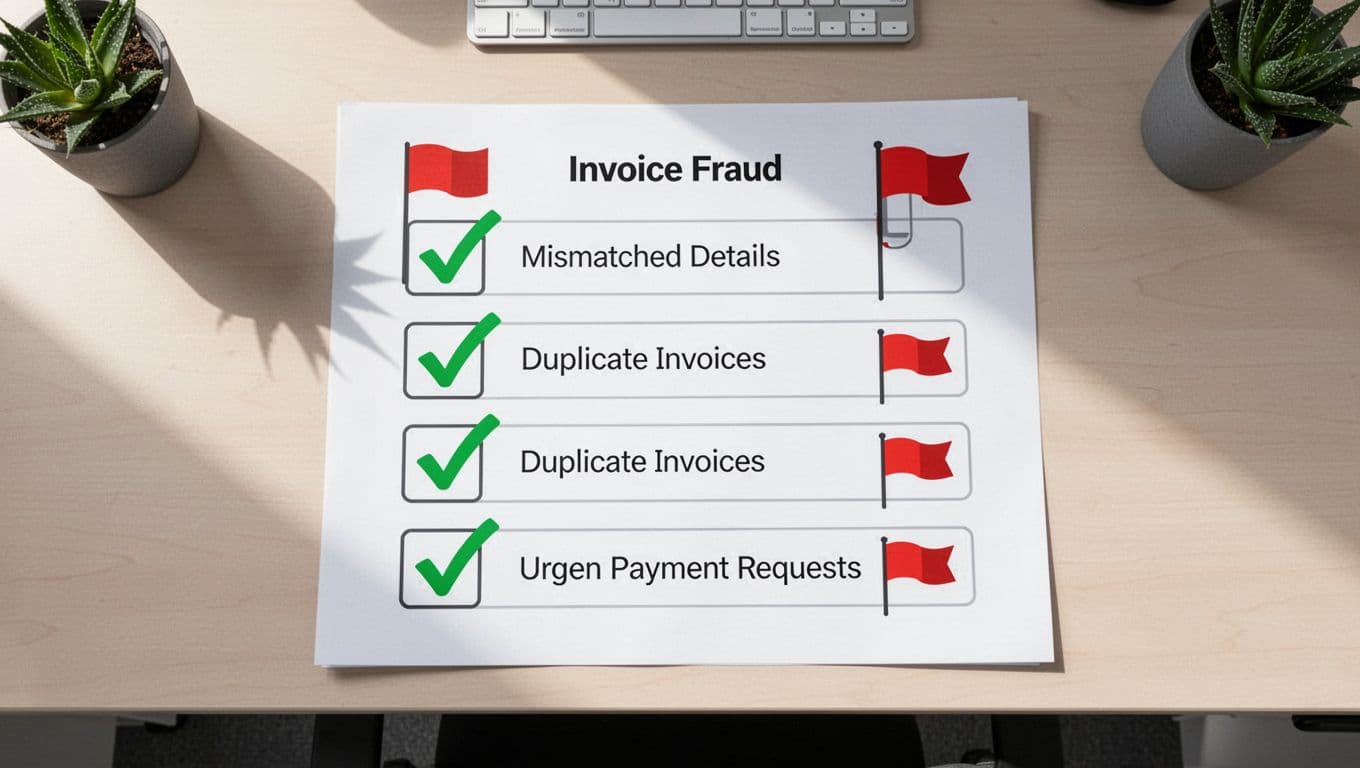
Watch for these warning signs:
- A vendor changes bank details without a known callback.
- The sender address is off by one character.
- An executive asks for urgent payment outside the usual approval path.
- The invoice number or amount looks like a repeat.
- A vendor thread has strange wording, odd timing, or a rushed tone.
- Attachment names, PO numbers, or remittance details do not match the contract.
Train staff to stop on one red flag, not wait for three. The fastest fraud stops often come from a single reliable check.
Measure what changed, then debrief
Score the drill on behavior, not just on whether someone caught the fake. If the team found the problem but took too long to escalate, that still counts as a gap.

Track a few clear metrics:
- Time to first challenge on the suspicious request.
- Time to verify the request through a known channel.
- Percent of staff who followed the approval chain.
- Number of handoffs that needed coaching.
- Time to finish the after-action notes and fix plan.
Then ask direct debrief questions:
- Where did the first hesitation happen?
- Did AP know who owned verification?
- Did procurement and IT/security get looped in fast enough?
- Which control felt weak during a busy day?
Document the answers, assign owners, and rerun the scenario later. That second run tells you whether the process changed or only the discussion did.
If your team wants help shaping a drill around real payment workflows, Book a Discovery Call with Bud Consulting.
A strong invoice fraud drill does one job well. It shows whether finance can slow down, verify, and escalate before money leaves the door.