table of contents
Key card logs can look clean while risk keeps building. One stale badge, one shared credential, or one missed after-hours entry can turn into a real security problem.
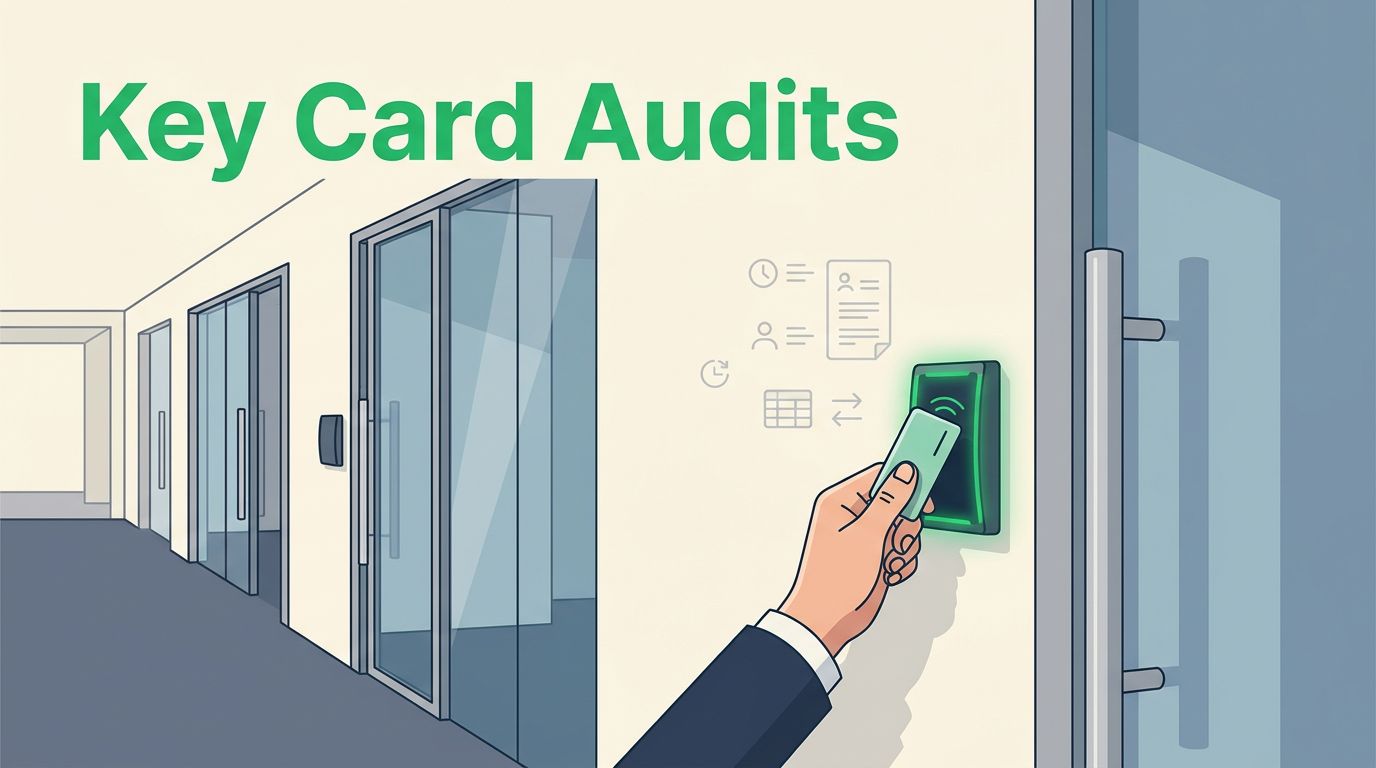
A regular key card audit helps you see who is entering your office, when they enter, and whether that access still fits the job. It also gives you better evidence during an incident review and a clearer picture for compliance checks.
For a plain-language primer on how these systems work, keycard and key fob access systems is a useful starting point.
The log entries that deserve attention
Most teams don’t need to inspect every swipe by hand. They need to watch for patterns that don’t fit normal work.
| Log pattern | What it can mean | Why it matters |
|---|---|---|
| Unauthorized after-hours access | Someone entered outside normal work hours | May point to misuse or a policy gap |
| Orphaned credentials | A badge is still active after someone leaves or changes roles | Former staff may still get in |
| Excessive failed entries | Shared badge use, guessing, or reader trouble | Can hide tailgating or tampering |
| Shared badges | One credential used by several people | Breaks accountability |
| Access permissions that no longer match job roles | Access still reflects an old position | Creates avoidable insider risk |
Any one entry may be harmless. The pattern is what matters. A few odd swipes can reveal a badge being passed around, a contractor keeping access too long, or a role change that never reached the access system.
A key card log is only evidence if it matches real behavior.
That matters because the log should tell a truthful story. If it doesn’t, the door may still open, but control has already slipped.

Why audits matter for security, investigations, and accountability
A key card system is only useful when someone reviews it. Without audits, old permissions stay active, and bad habits stay hidden.
That creates trouble in three places. First, physical security weakens because people keep access they no longer need. Second, incident investigations slow down because you have to sort through too much noise. Third, operational accountability fades because no one can say with confidence who approved each access change.
A regular review also helps you spot insider risk early. For example, repeated access to sensitive rooms after a role change can signal a control problem. It can also show simple neglect, which still deserves a fix.
If you want to see why physical access still gets tested and bypassed, how key card access gets bypassed is a good reminder that logs should never be treated as background noise.
Compliance teams benefit too. Many internal policies, insurance reviews, and audit requests ask for evidence that access is reviewed and removed when needed. A current log trail makes those conversations easier. A messy one creates more work and more doubt.
A practical way to run your own key card audit
If you need a simple starting point, a 30-minute key audit guide can help you build a basic process. Keep the first pass small, then repeat it on a schedule.

- Pull the last 30 to 90 days of logs for sensitive doors first. Start with entrances to server rooms, records areas, executive spaces, and after-hours doors.
- Compare active badges with your current employee, contractor, and visitor lists. Remove anyone who no longer belongs in the system.
- Look for exceptions such as unauthorized after-hours access, repeated failed entries, and use patterns that don’t fit the job.
- Confirm each questionable entry with a manager or business owner before making changes. That step keeps the process fair and accurate.
- Record every change, who approved it, and when the next review will happen. This creates a clear trail for future audits and incident response.
A monthly review works well for high-risk areas. Quarterly checks can fit lower-risk office doors. The key is consistency.
If your team needs help tightening access control reviews across multiple sites, Book a Discovery Call with Bud Consulting to map a review cadence that fits your operation.
A monthly checklist your team can use
Use this as a quick reset each month:
- Compare badges in use against current staff and contractor rosters.
- Review after-hours access for sensitive doors.
- Check for repeated failed swipes or unusual retry patterns.
- Flag shared badges or duplicate use by different people.
- Confirm access rights still match current job roles.
- Close out exceptions with a named owner and due date.
Keep the list short enough that someone will actually finish it. If the review feels heavy, the process is probably too broad. Split it by door group, site, or risk level.
One owner should own the final report. That person doesn’t need to make every access change, but they do need to see that each issue gets resolved.
Your office key card logs tell a story every day. The question is whether anyone reads it before a problem does.
Regular audits keep access aligned with real work, not old assumptions. They also make incidents easier to investigate and make your physical security record easier to defend.
When the log and the workplace match, the door tells the truth.