table of contents
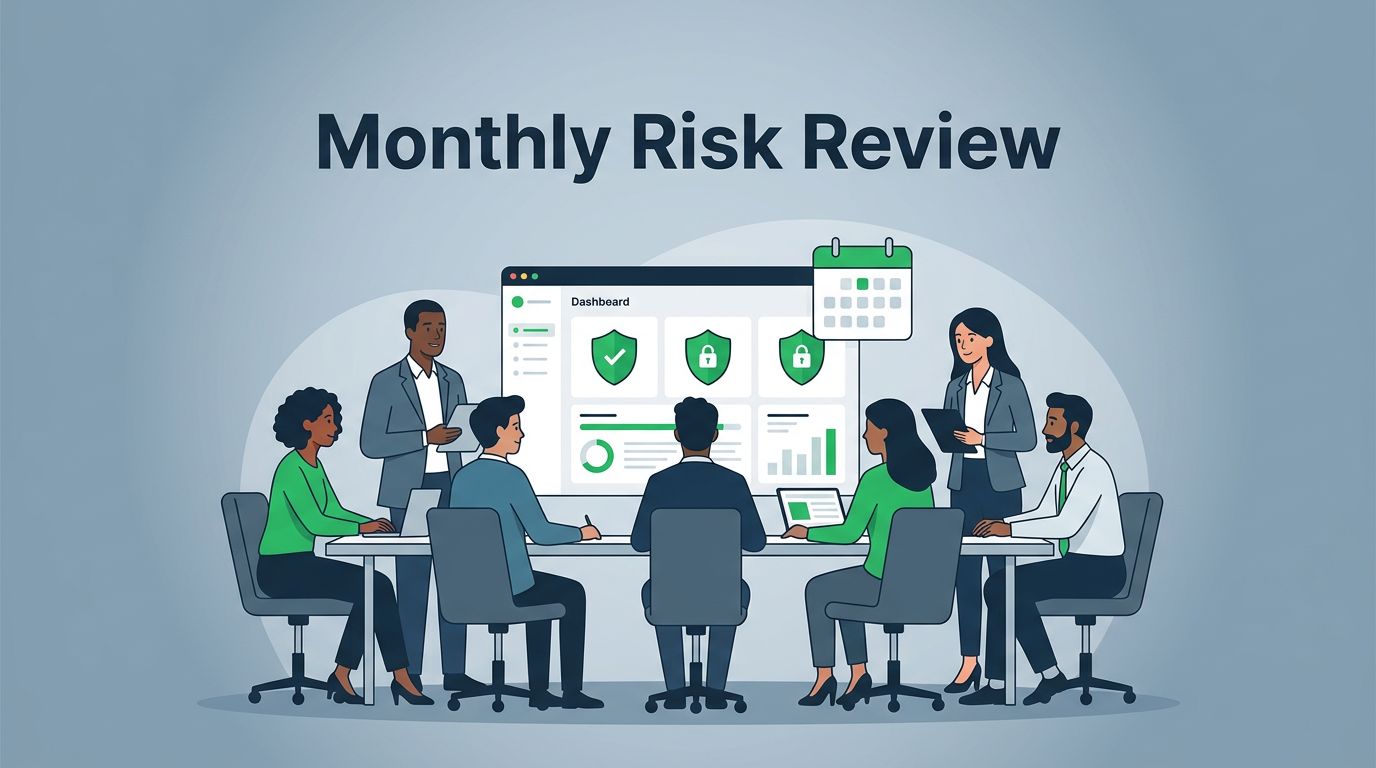
One overlooked email from HR last month led to a phishing scam that cost a mid-sized firm thousands. You run security, but risks hide in every department. Monthly security risk reviews fix that by pulling leads together.
These sessions spot issues early and build shared ownership. They take accountability beyond IT. Let’s walk through how to set them up right.
Prepare Your Security Risk Review Agenda
Start with a clear agenda. Send it a week ahead so leads prepare updates. Keep meetings to 60 minutes.
List these core items:
- Quick welcome and last month’s recap (5 minutes).
- Department updates on new risks or incidents (20 minutes).
- Review open actions from prior meetings (10 minutes).
- Prioritize top risks and assign owners (20 minutes).
- Next steps and escalations (5 minutes).
Tailor examples to your teams. For HR, check access for ex-employees. Finance might flag unusual wire transfers. IT reports patch status. Legal reviews contract risks. Operations scans vendor access.
Use a simple template. Here’s one you can copy.
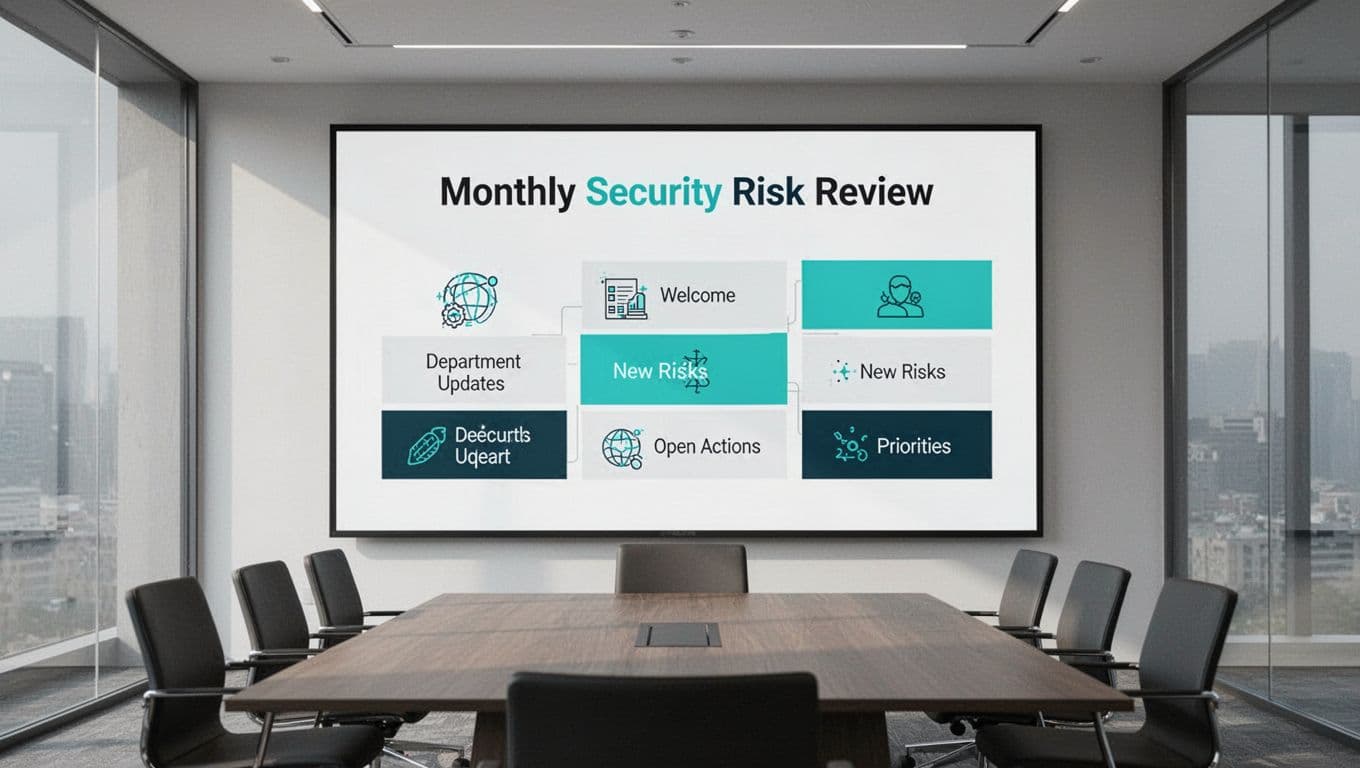
Pre-populate it with data from tools like logs or scans. This saves time. For best practices on quick monthly checks, see this 5-minute security audit guide.
Invite the Right Department Leads
Pick leads who own risks daily. Don’t overload with too many people. Aim for five to seven.
Include HR for insider threats like poor offboarding. Finance handles fraud risks in payments. IT covers tech vulnerabilities. Legal spots compliance gaps. Operations manages physical and supply chain issues.
For instance, HR might share, “We onboarded 10 vendors last month without security checks.” Finance could note, “New payment software lacks encryption audits.” IT flags unpatched servers. Legal warns of GDPR fines from data shares. Operations reports weak supplier controls.
Send invites via calendar with the agenda attached. Set a recurring slot, say first Thursday at 10 a.m. Require pre-submitted one-page updates. This keeps things focused.
Details on department-specific risks appear in this guide to including teams in cyber assessments.
Conduct the Review Meeting Effectively
Facilitate with structure. You lead as security head, but let leads speak first. Use a shared screen for the agenda.
Start with positives. “HR closed all ex-employee access last month. Good work.” Then hit updates. Ask pointed questions: “Finance, any odd transactions?” Time each segment strictly.
Encourage debate. If IT says a patch is low risk but operations disagrees because it affects production, hash it out. Note decisions in real time.

Record the call. Share minutes right after with action items. This builds trust across functions.
Prioritize Risks and Assign Actions
Not all risks need equal attention. Use a simple matrix to score them.
Plot likelihood versus impact. Low likelihood and low impact stays green; high on both goes red.

Example: HR’s unvetted vendor scores medium likelihood, high impact (data leak). Assign HR owner, due in two weeks.
Set clear SLAs. Critical risks fix in 7 days; medium in 30. Track in a shared tool like Jira or Excel.
Try this cybersecurity prioritization matrix template for a ready setup. It matches 2026 practices from NIST updates on risk integration.
Establish Follow-Up and Accountability Measures
End every meeting with assigned actions. List owner, due date, and success metric.
Send a recap email within hours: “Finance owns payment audit by May 15. IT patches servers by May 10.”
Check progress mid-month via quick email or Slack. If stalled, nudge privately first.
Use a dashboard for visibility. Everyone sees open items. This drives accountability without micromanaging.
For ISO-style cadence tips, check this risk review frequency overview.
Define Escalation Paths and Reporting
Some risks exceed department control. Define escalations upfront.
If a risk hits high impact with no fix path, bump to C-suite. Document criteria: score above 8/10 or over $50K potential loss.
Report quarterly to execs. Summarize trends: “Three HR risks closed; two IT escalated.”
Tie into enterprise risk. NIST now stresses this link for better decisions.
Key Takeaways for Your Monthly Security Risk Reviews
Monthly reviews turn scattered risks into owned actions. Department leads own their piece, so fixes stick.
Start small. Run one pilot with two departments, then scale. You’ll spot threats faster and build a security mindset firm-wide.
If gaps persist, book a discovery call with Bud Consulting for tailored advice on culture and processes. Your team stays ahead.