table of contents
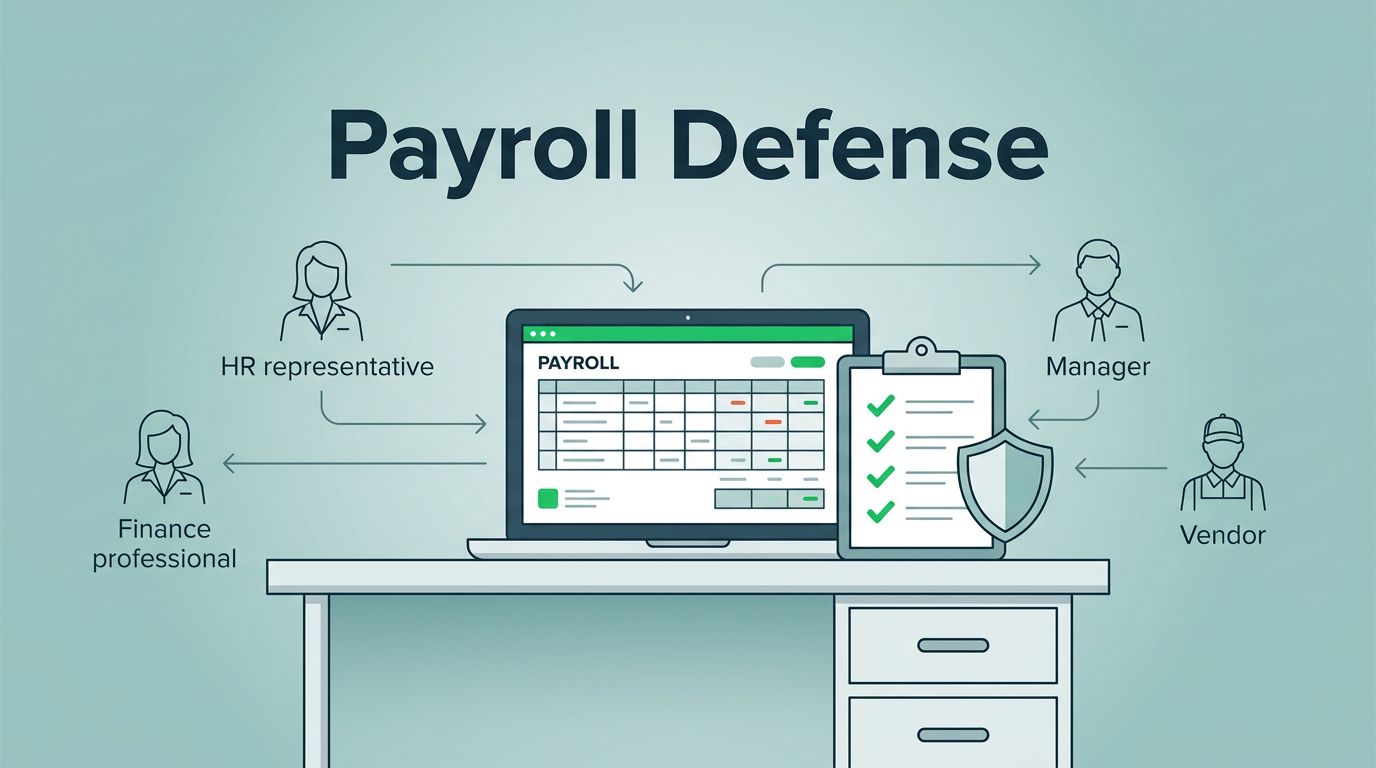
Payroll fraud usually starts with one small gap, not a huge scheme. Busy teams miss it because payroll sits between HR, finance, managers, and outside vendors.
A practical payroll fraud checklist does not need long policies or extra meetings. It needs a few controls that are easy to repeat and hard to bypass.
The goal is simple, protect pay runs without adding more admin work. Start with the checks that catch the biggest problems first.
Start with the checks that stop the biggest losses
If your team only has a few minutes, use this order.
- Match the payroll roster to active employees. Remove former workers fast, and compare payroll names to HR records before each run.
- Separate bank change review from payroll processing. One person should not request, approve, and release a direct deposit change.
- Require manager approval for time and overtime. Approval should happen before payroll closes, not after.
- Compare pay rates to the last run. Any change should have a reason, a date, and a second set of eyes.
- Reconcile payroll totals each period. Look at gross pay, net pay, taxes, and any large swings.
- Review vendor access and payroll permissions. Shared logins and old admin rights create easy openings.
If you need a simple reference, the Payroll Fraud Checklist from MP HR is a useful starting point for a lean review.
Spot the payroll fraud risks that hide in plain sight

Payroll fraud often looks boring at first. That is what makes it dangerous. A few extra hours, a quick bank update, or a small reimbursement can slip through if no one checks the pattern.
Use this quick scan during every pay cycle:
| Risk | Red flag | Quick control |
|---|---|---|
| Ghost employees | A worker appears on payroll but no manager can confirm them | Monthly roster-to-HR match |
| Timesheet manipulation | Hours change after approval, or shifts look rounded up | Lock edits after manager sign-off |
| Unauthorized pay rate changes | Pay jumps without a ticket or approval | Require second review for rate changes |
| Direct deposit fraud | Bank details change right before payday | Verify changes out of band |
| Fake reimbursements | Claims lack receipts or repeat the same amounts | Sample receipts and limit approval rights |
| Overtime abuse | One person racks up unusual overtime every cycle | Compare overtime against schedule and job need |
| Vendor or process weakness | One user can set up, approve, and pay | Split duties and review access logs |
The direct deposit fraud prevention playbook is a helpful model for bank-change controls. It reinforces a simple idea, changes to payment details need verification, not speed.
If a payroll change feels urgent, slow it down. Urgency is often the weak point.
Build controls that people can’t casually bypass

A good control only works if it blocks real shortcuts. That means role separation matters. The person who enters a change should not be the same person who approves it and releases payment.
Use these controls as your baseline:
- Verify employee data changes outside the payroll system. Call the employee on a known number, or confirm through HR records.
- Keep audit trails turned on. You need to know who changed what, when, and from where.
- Use manager approvals with deadlines. Late approvals often hide errors.
- Limit access by job need. Payroll admin access should stay tight.
- Review exceptions every run. Look at manual checks, off-cycle payments, and address or bank changes.
Nacha’s checklist for payroll origination shows how small steps in payment setup can reduce fraud and errors. That same logic works inside payroll, because the weakest link is often a rushed handoff.
If your payroll process touches email approvals, shared spreadsheets, or outside payment tools, consider a short control review. Book a Discovery Call with Bud Consulting if you want help tightening the process without adding heavy overhead.
Run a quick review after every pay cycle
Detective controls matter because prevention alone won’t catch everything. A short review after each run gives you a second chance to spot odd patterns.
Focus on the numbers that move. Ask these questions every cycle:
- Did headcount stay the same, or did someone slip in?
- Did overtime spike for one person or one team?
- Did any bank or address changes happen near cutoff?
- Did reimbursements jump without a clear reason?
- Did a manager approve time after the pay run closed?
Keep a monthly reconciliation too. Compare payroll reports to the general ledger, tax filings, and bank drafts. If one report does not match the others, stop and trace the difference before the next cycle.
Small teams do better when the review takes 15 minutes and happens every time. A skipped review once is a pattern waiting to form.
Keep the checklist short, but consistent
Payroll fraud rarely begins with one obvious theft. It usually starts with weak review, loose access, or a change nobody verified.
A lean payroll fraud checklist works best when it is boring, repeatable, and assigned to real people. Match the roster, verify changes, separate duties, and review exceptions on every run. Those few habits catch most of the risk without adding much work.
The best defense is a process that stays tight even on a busy Friday.