table of contents
You face a tight market for penetration testers. Only about 4,600 roles sit open in the US right now. Companies chase candidates with real skills in cloud security and web apps. General recruiters often miss the mark. A penetration testing recruiter knows the field inside out.
Hiring goes wrong without one. You waste time on mismatched profiles. Deadlines slip, and threats grow. This guide shows you why to pick a specialist. It covers roles, talent signals, and steps to succeed.
Why You Need a Specialized Penetration Testing Recruiter
The cybersecurity job market stays brutal in 2026. Demand surges for offensive security experts. Yet supply lags. A penetration testing recruiter cuts through the noise.
They tap hidden networks. Think private Slack groups and conference connections from Black Hat or DEF CON. Generalists post jobs on LinkedIn. Specialists message candidates directly. As a result, you get faster responses.
Specialists spot fakes too. Resumes claim OSCP certs, but few prove it in labs. Recruiters verify hands-on work. They check GitHub repos and past reports. This saves you interview hours.
Costs make sense. Bad hires drain budgets. One weak pentester leaves gaps attackers exploit. Firms like Code Red Partners focus on cyber talent. They build teams for ambitious companies.
In short, specialists deliver quality. Your security strengthens quicker.

Key Differences in Penetration Testing Roles
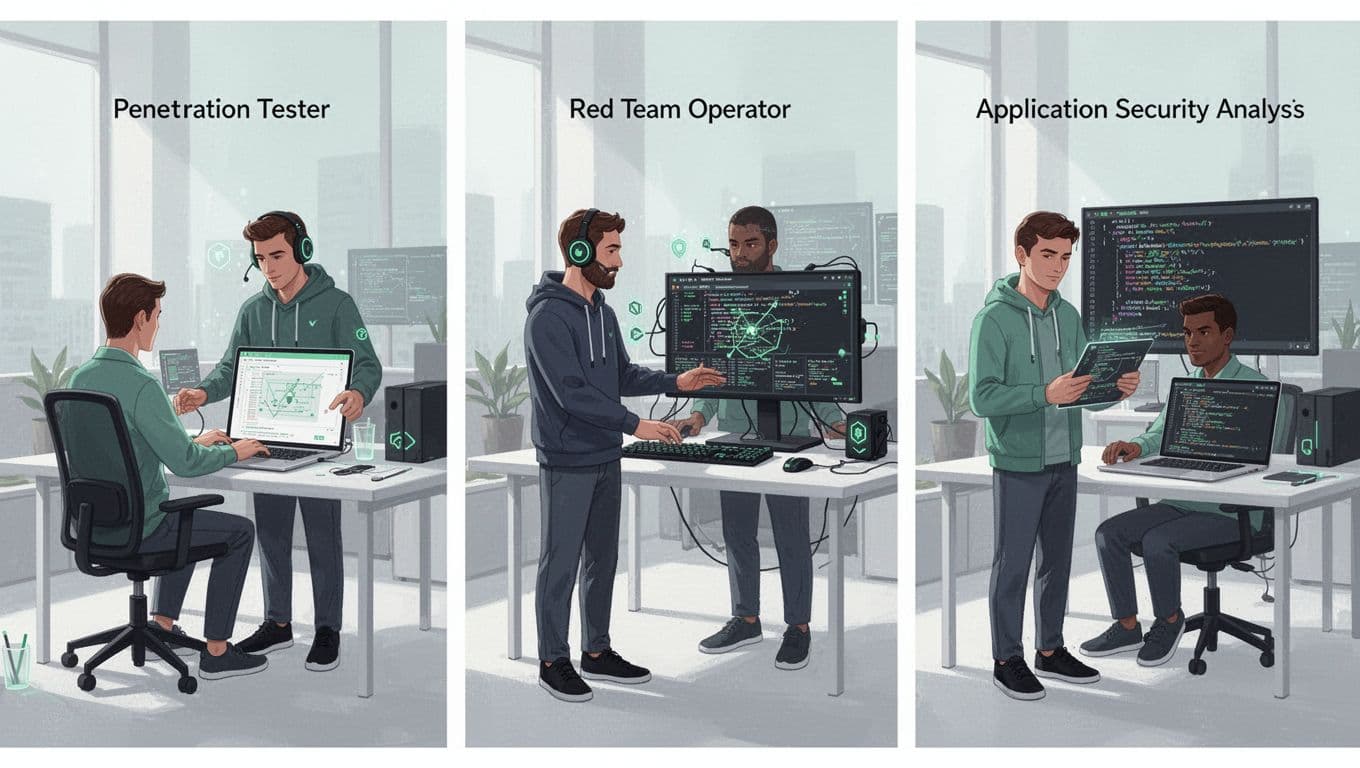
Not all offensive security jobs match. Pentesters, red teamers, and app sec testers differ in focus. A penetration testing recruiter matches the right fit.
Pentesters hunt bugs in networks and apps. They use tools like Burp Suite for web scans. Cloud experience matters most now. AWS and Azure vulns top lists.
Red teamers go further. They mimic full attacks. Think phishing plus persistence. They need OSEP certs for advanced evasion.
App sec testers dig into code. They review source for flaws like SQL injection. OSWE helps here. They bridge devs and security.
Here’s a quick comparison:
| Role | Main Focus | Key Tools/Skills | Top Certs |
|---|---|---|---|
| Pentester | Networks, web, cloud | Burp, Nmap, cloud configs | OSCP |
| Red Teamer | Simulated attacks, evasion | Metasploit, C2 frameworks | OSEP |
| App Sec Tester | Code review, SAST/DAST | Static scanners, web exploits | OSWE |
This table shows why precision counts. For example, OSCP vs OSWE comparisons highlight paths. Mix them up, and hires flop.
Specialized recruiters know these lines. They source accordingly.
What to Look for in Top Penetration Testing Talent
Top talent stands out by signals. Hands-on experience tops the list. Look for lab write-ups or bug bounties.
Report writing seals deals. Pentesters must explain risks clearly. Clients act on advice. Weak reports gather dust.
Client-facing skills matter. They brief execs without jargon. Ethical hackers stay legal too. They get rules of engagement right.
Certs confirm basics. OSCP proves exploitation. OSWE nails web apps. OSEP covers enterprise pivots. Check OffSec’s OSCP vs OSWE guide for details.
Cloud and web app chops dominate 2026 trends. Firms need Azure pentests now. Demand outpaces general roles.
Use this checklist:
- 3+ years in vulns assessment.
- Public reports or PoCs.
- Certs like OSCP/OSWE/OSEP.
- Cloud/web experience.
- Strong communication.
A penetration testing recruiter vets these fast. They share pre-screened profiles.

Practical Steps to Hire Through a Recruiter
Partnering works best. Start with clear needs. Define role, skills, and timeline.
Next, pick specialists. Review lists like top cybersecurity recruiters in 2026. Ask for cyber track records.
Share your brief. Include budget and culture fit. Good ones refine it.
They source and screen. Expect shortlists in weeks. Interview top picks.
Close with offers. Negotiate salaries. Trends show $150K-$250K for seniors, per market data.

Secure Your Edge Now
Specialized recruiters fill gaps fast. They match roles to skills like cloud pentests and certs. Your team grows stronger.
Threats wait for no one. Act today. Book a Discovery Call with Bud Consulting to start sourcing.
What role do you need filled first?