
table of contents
A single gap in your site’s perimeter can turn a quiet shift into chaos. Facilities managers know this risk all too well. One unauthorized entry leads to evacuations, investigations, and compliance headaches.
You need your team ready to act fast and smart. This means clear perimeter breach response protocols that everyone follows without hesitation. Good training builds that muscle memory.
Let’s start with the foundation. A strong plan sets the stage for safe, coordinated action.
Assess Risks and Set Clear Goals
Know your site’s weak spots first. Walk the perimeter with your team. Note fence heights, gate locks, camera blind spots, and access points. Map them out.
High-traffic areas like loading docks demand extra focus. Industrial sites face vehicle ramming threats. Healthcare facilities worry about patient safety during alerts.
Set specific goals for training. Aim for response times under two minutes for initial alerts. Ensure staff can contain a breach without escalating risks.
Use this quick assessment checklist before planning:
- Identify all entry points.
- Review past incidents.
- Check compliance with local regs like OSHA standards.
Teams that assess risks upfront cut response errors by half. Document findings in a shared report. Share it site-wide.
Next, turn those insights into a workable plan.
Build a Solid Response Plan
Start with a simple framework: alert, contain, assess, escalate. Everyone knows their role from day one.
Assign an incident commander. This person takes charge during breaches. They direct traffic and call for backup.
Define communication paths. Use radios for on-site alerts. Switch to phones for off-shift staff. Post numbers in break rooms.
Create escalation tiers. Tier one handles minor probes. Tier two calls law enforcement. Tier three activates full lockdown.
Here’s a sample response flowchart:
| Phase | Actions | Responsible Party |
|---|---|---|
| Alert | Sound alarm, notify commander | First spotter |
| Contain | Block access, secure doors | Perimeter team |
| Assess | Check intruder intent, injuries | Commander + EHS lead |
| Escalate | Call 911, notify execs | Commander |
This table keeps steps clear. Review it quarterly.
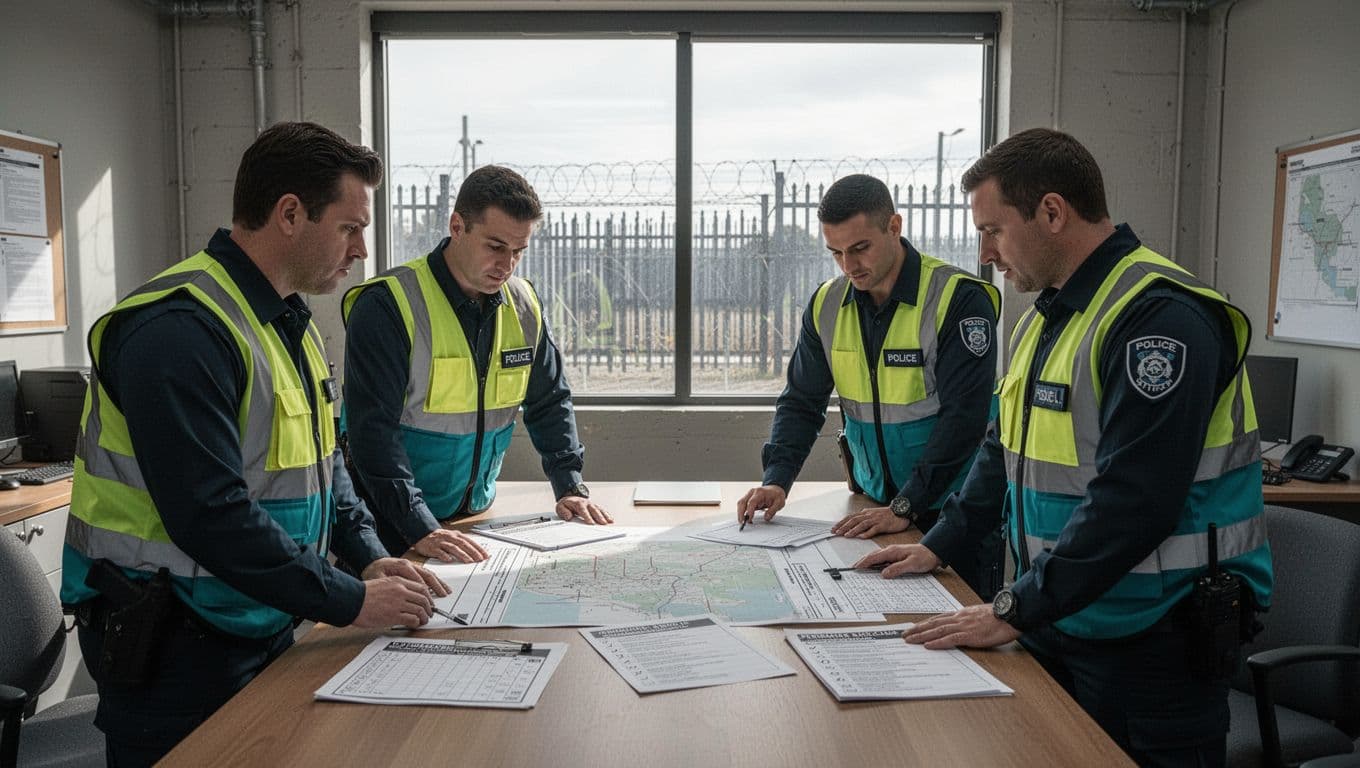
Your team huddles like this to refine the plan. Test it on paper first. Adjust based on feedback.
Make the plan accessible. Laminate copies for security posts. Load digital versions on team apps.
Compliance matters too. Align with NFPA 101 for egress paths. Train on de-escalation to avoid force unless needed.
A solid plan prevents panic. It turns chaos into order.
Craft Realistic Training Scenarios
Base scenarios on real risks. Don’t use generic scripts. Tailor them to your site.
For a corporate campus, simulate a tailgater at the employee gate. Practice ID checks and vehicle stops.
Industrial yards might drill a fence cutter at night. Healthcare teams handle a suspicious loiterer near ER entrances.
Build scenarios step-by-step:
- Spot the breach.
- Alert the team.
- Contain the area.
- Assess and report.
Rotate roles each drill. Let maintenance staff play spotters sometimes.
Incorporate weather variables. Run wet-weather gate failures. This builds adaptability.
Keep scenarios short, 10-15 minutes max. End with safe resolution.
Document each one. Store in a training folder. Reuse and tweak yearly.
Realistic drills stick. Staff recall them under stress.
Run Effective Training Drills
Schedule drills monthly. Pick off-peak hours to minimize disruption.
Start with a briefing. Review the scenario and safety rules. Stress no real risks.
Use props like cones for barriers. Actors play intruders, but keep them cooperative.
Time the response. Coach on radio etiquette: short, clear calls.
After containment, practice assessment. Check for mock injuries. Decide on escalation.
Debrief right away. Note wins and fixes.

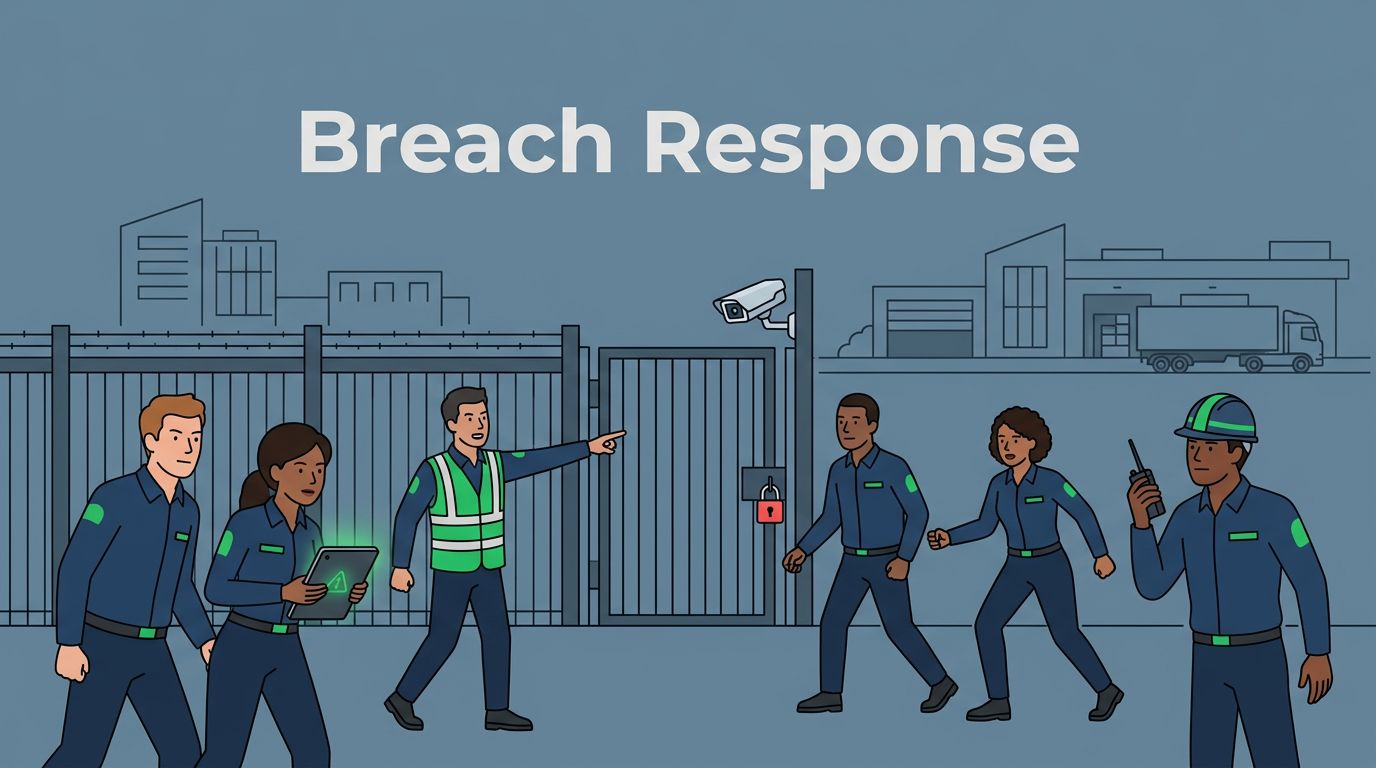
Drills like this one sharpen coordination. One leader with radio guides the rest.
Vary formats. Tabletop talks for planners. Full walk-throughs for hands-on teams.
Track participation. Require 90% attendance per quarter.
Drills build confidence. Teams respond faster because they’ve done it before.
Measure Training Success
Track metrics that matter. Response time drops? Good. Fewer missed steps? Better.
Use simple scorecards post-drill:
| Metric | Target | Actual |
|---|---|---|
| Alert time | <2 min | 1:45 |
| Containment | 100% | 95% |
| Escalation accuracy | 100% | 100% |
Log trends over time. Share reports with leadership.
Survey the team. Ask what felt off. Adjust plans accordingly.
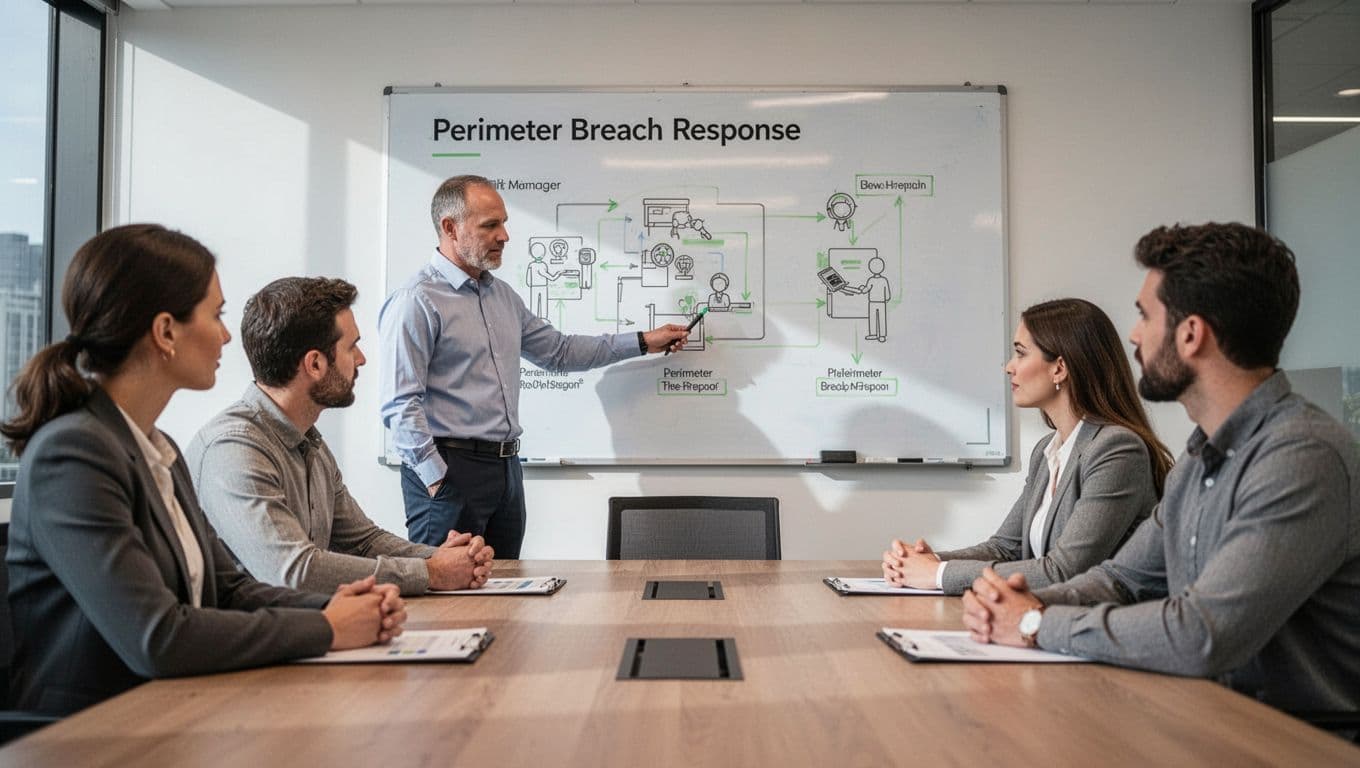
Debriefs like this pinpoint gaps. Highlight the alert-contain-assess flow.
Certify top performers. Offer badges or shoutouts.
Recertify yearly. Invite external auditors for fresh eyes.
If you need help scaling this, Book a Discovery Call with Bud Consulting. They specialize in security culture.
Metrics prove your program’s value. They justify budgets too.
Key Takeaways for Perimeter Breach Readiness
Strong perimeter breach response training saves lives and assets. Start with risk assessments and a clear plan. Run tailored drills and measure results.
Your team gains speed and poise. Incidents become managed events, not crises.
Commit to regular practice. Safety depends on it.

