table of contents
Quantum computers loom closer. They threaten to break RSA and ECC encryption that protects your data today. Enterprises face a real risk: attackers grab encrypted traffic now and decrypt it later.
You run high-stakes operations. Long-term secrets in backups or customer records sit vulnerable. NIST standards arrived in 2024. Deadlines from NSA’s CNSA 2.0 push action by 2030. Start your quantum-safe migration before compliance catches you off guard.
This guide lays out practical steps. It covers inventory, phases, and tools tailored for 2026.
Why Enterprises Need Quantum-Safe Migration Now
NIST released FIPS 203, 204, and 205 in 2024. These standards use ML-KEM for keys, ML-DSA for signatures, and SLH-DSA as backup. They resist quantum attacks. Old algorithms fail against them.
CNSA 2.0 sets firm dates. New systems go quantum-safe by January 2027. Full applications follow by 2030. Infrastructure wraps up by 2035. Defense contractors feel this first. Financial firms and healthcare follow suit because vendors align to these timelines.
Attackers exploit “harvest now, decrypt later.” They store your TLS handshakes today. A quantum breakthrough cracks them tomorrow. Google warns: delay past 2030 spells trouble.
Your board asks about risks. Regulators demand proof. Start inventory this quarter. Hybrid modes blend old and new crypto during transition. They buy time without breaking systems.
Post-quantum tools hit $15 billion market by 2030. Cloud providers like AWS KMS add PQC support. Act in 2026. You avoid rushed fixes and outages later.
Assessing Your Enterprise’s Current Cryptographic Footprint
Begin with a full crypto inventory. List every key, certificate, and protocol. Tools scan code, networks, and devices. Miss one, and gaps persist.
Focus on high-risk areas. Long-lived keys in PKI top the list. Internet-facing APIs come next. Cloud storage holds sensitive data.
Create a risk heatmap. Score systems by exposure. Data lifetime matters most. Secrets good for 10 years need priority.

Use open-source like OpenQuantumSafe’s liboqs. It tests for quantum vulnerabilities. Commercial scanners from PostQuantum.com speed enterprise jobs.
Document dependencies. Apps call libraries. Libraries use ECC. Map them all. This step takes months. Do it now.
Prioritize based on business impact. External portals rank high. Internal tools wait. Assign owners to each asset.
Validate findings. Run proofs in labs. Confirm breakage risks. This builds your baseline.
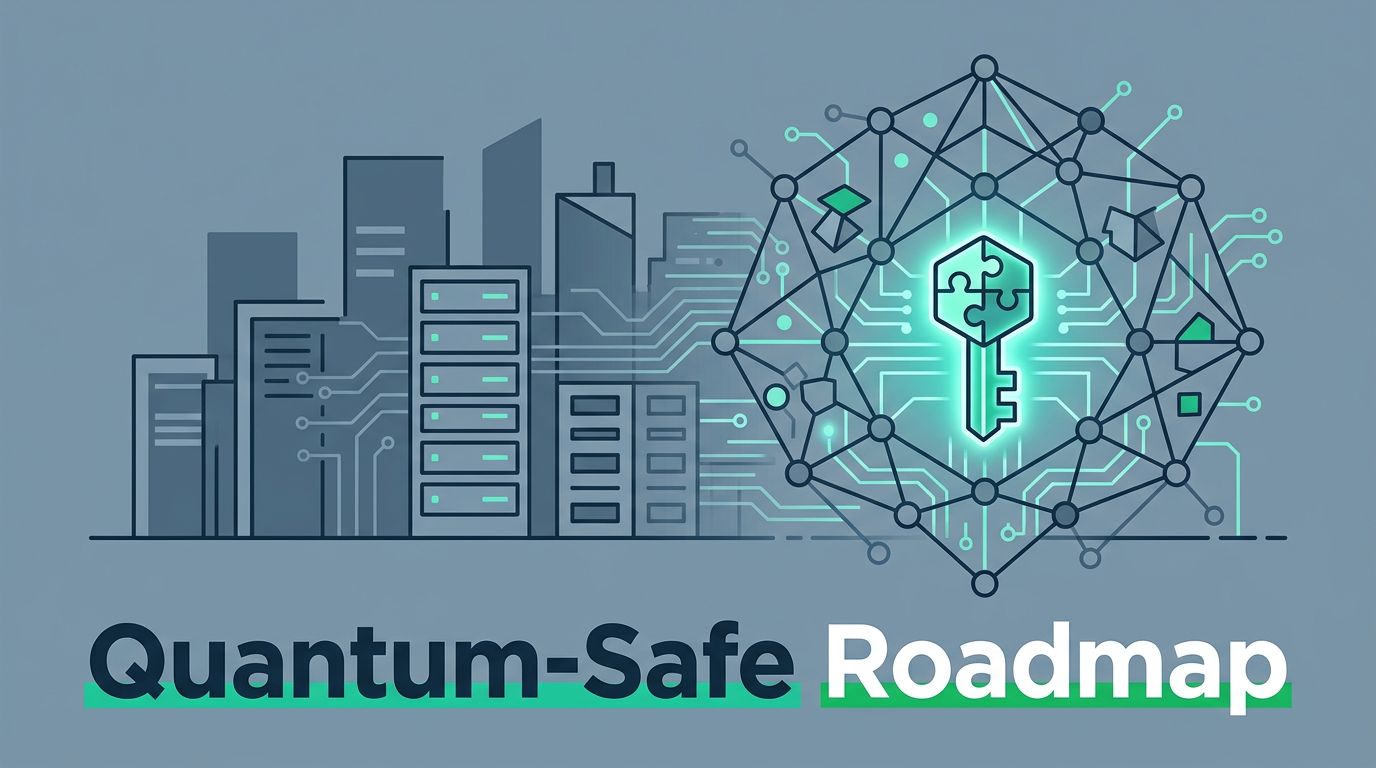
Phased Roadmap for Quantum-Safe Migration
Break migration into waves. This spreads work and cuts disruption.
Phase 1: Preparation (Now to 2027)
Inventory crypto assets. Build risk tiers. Test hybrids in labs. Finalize your plan with budgets.
Phase 2: Pilots (2026-2028)
Deploy hybrid TLS on staging. Patch key services. Lock vendor contracts for PQC hardware.
Phase 3: High-Priority Rollout (2028-2030)
Update red-zone systems. Think VPNs, root CAs, and portals. Re-encrypt long-term data.
Phase 4: Full Adoption (2030-2035)
Switch defaults to pure PQC. Retire classical keys. Decommission old gear.

NIST’s Crypto Agility guide backs this. See a risk management framework for details.
Track progress quarterly. Adjust for vendor delays. Budget 3-8 years total.
Here is a quick checklist:
- Complete CBOM register.
- Risk-score all systems.
- Pilot one hybrid service.
- Secure board buy-in.
Phases match CNSA timelines. You stay compliant.
Securing Networks and PKI Infrastructure
PKI forms your trust base. Certificates use RSA or ECC. Quantum cracks them fast.
Switch to hybrid certificates first. Combine ML-KEM with X25519. Browsers and servers handle them now.
Update root CAs. Issue new templates with PQC. Roll to intermediates. End-users follow.
Test HSMs. Thales Luna adds PQC firmware. Utimaco supports IoT gear.

VPNs need attention. Old boxes drop packets with big PQC keys. Refresh head-ends by 2028.
TLS 1.3 hybrids roll easy. OpenSSL 3.2 integrates liboqs. Patch servers now.
Vendor sync matters. AWS, Azure enable PQC KMS. Demand roadmaps from others.
Monitor cert expiry. Automate renewals with quantum-safe chains. This prevents gaps.
Networks stay up during switch. Pilots prove it.
Protecting Applications and Identity Systems
Apps embed crypto deep. Codebases span years. Scan them all.
DevSecOps teams update libraries. Replace ECC in signatures. Use ML-DSA.
Identity stacks like Okta or Azure AD add PQC. Test SAML and OIDC flows.
Hybrid keys protect sessions. Apps run unchanged.
Prioritize custom code. Off-the-shelf updates come via patches.
Run chaos tests. Simulate quantum breaks. Fix breaks early.
Compliance teams document changes. Auditors check hybrids.
Identity stays secure. Users notice nothing.
Safeguarding Data at Rest and Long-Term Secrets
Backups hold crown jewels. Re-encrypt with PQC symmetric wrappers. AES stays safe. Keys need upgrade.
Cold storage tops risks. Data lasts decades. Migrate now.
Cloud buckets enable hybrids. AWS S3 KMS does it seamless.
Tape archives? Plan digitals shifts. Vendors offer PQC tools.
Key management systems centralize. Rotate to ML-KEM.
Audit access logs. Tighten under quantum threat.
Data endures. Your secrets do too.
Tackling Key Challenges in Quantum-Safe Migration
Time drags longest. Expect 5-15 years. Hardware cycles align poorly.
HSMs lag. Bigger keys strain old chips. Budget refreshes.
Ghost incompatibilities hide. APIs fail silent. Staging catches them.
Partners delay. Dual-stack forever? Force contracts.
Costs add up. Performance dips first. Optimize later.
Teams fragment. Assign a PQC lead. Align IT and security.
NCSC timelines offer global view. Phased plans fix most issues.
You push through. Order wins.
Top Tools and Vendors for 2026
Pick proven options. Fortanix handles HSMs and inventories. It spots hidden breaks.
Encryption Consulting kits upgrade PKI. They guide pilots.
Cloud natives shine. AWS PQ KMS auto-hybrids. Google and Azure follow.
OpenQuantumSafe libs test free.
| Vendor | Strength | Best For |
|---|---|---|
| Fortanix | Hybrid HSMs | Clouds, APIs |
| Thales | FIPS firmware | Hardware swaps |
| AWS KMS | Auto modes | Cloud data |
| PostQuantum.com | Risk tools | Planning |
Start with these. They cut timelines.
Need expertise? Book a Discovery Call with Bud Consulting. They fill PQC skill gaps.
Key Takeaways for Your Quantum-Safe Journey
Standards lock in. Deadlines approach. Your roadmap starts with inventory and phases.
High-risk systems lead. Hybrids bridge gaps. Tools ease the load.
Act in 2026. You secure operations for decades.
Quantum threats fade. Your enterprise thrives.