table of contents
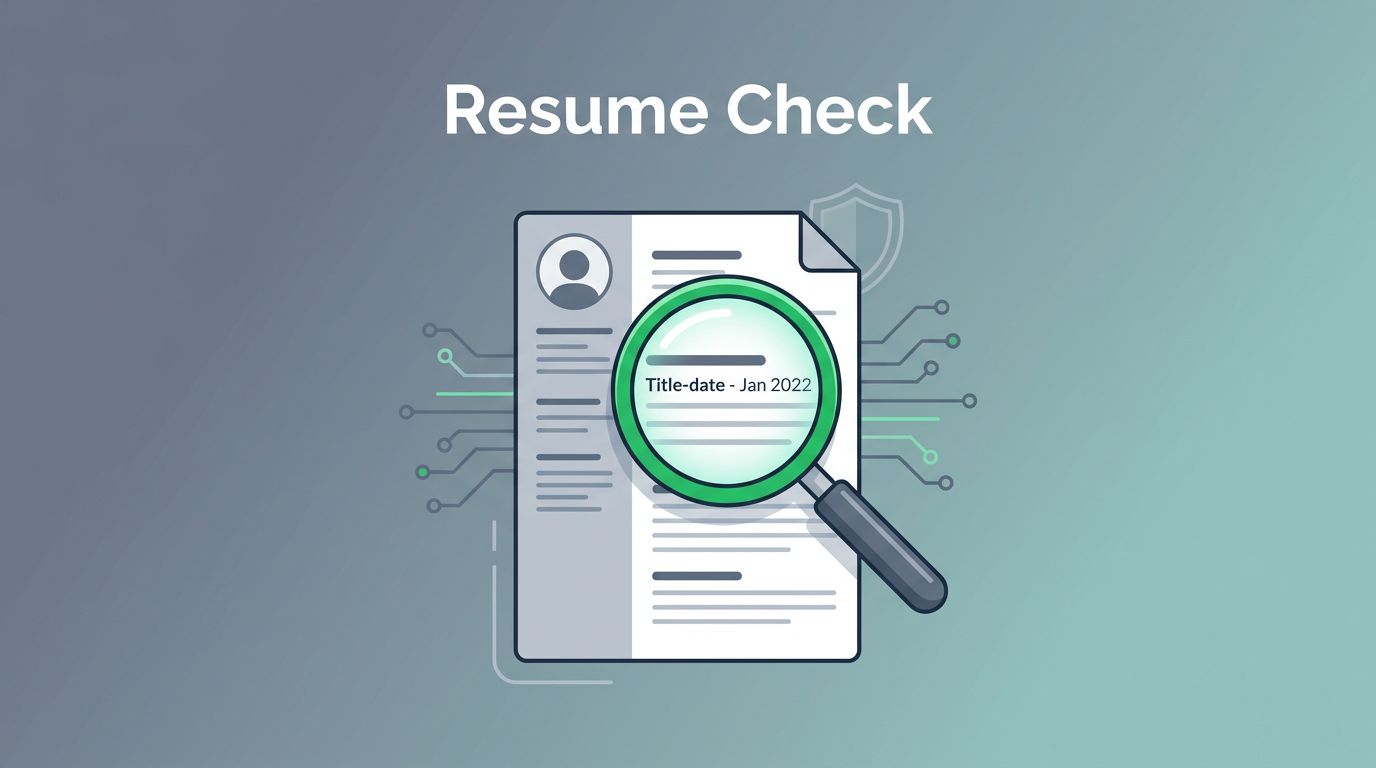
Resume inflation in cybersecurity hiring is easier to miss than most teams expect. In 2026, polished applications can hide weak experience, borrowed language, and claims that sound stronger than the work behind them.
That creates real risk. You lose time on interviews that go nowhere, and you can miss the candidates who are honest but less flashy.
The answer is a fair validation process, not blanket suspicion. Read on for a practical way to separate real skill from resume shine.
Look for scope mismatches, not just bad grammar
Inflated resumes rarely look broken. They look impressive at first glance, with senior titles, long tool lists, and results that sound clean but stay vague.
Watch for a gap between the title and the timeline. A candidate who claims to be a cloud security architect after eight months in the field needs a closer look. So does someone who says they led incident response, but can’t explain their part in triage, containment, or lessons learned.
The same goes for metrics. Real work usually comes with messy details. It includes what changed, who owned it, and which constraints got in the way. Inflated claims often skip that and lean on broad verbs like “improved,” “secured,” or “transformed.”
A strong resume still deserves review. However, a strong resume should also hold up under simple follow-up questions. That’s the point raised in The Cyber Talent Validation Gap, where paper strength and real skill no longer line up as neatly as they once did.
A resume is a claim document. Your hiring process should turn it into evidence.
Verify the claims that matter most
The best hiring teams check the claims that can be checked. Certifications, work scope, and tool use should all leave some kind of trail.
Use issuer records for certifications. ISACA’s verification page helps confirm credentials such as CISM and CISA. CompTIA’s certification verification is useful for Security+ and related certs. EC-Council also offers an official certification lookup. A screenshot is not enough.
Here is a simple way to sort claims by risk and proof:
| Claim on the resume | What to ask next | What proof looks like |
|---|---|---|
| Certification earned | Which issuer, when earned, and whether it is active | Verifiable record, badge, or issuer lookup |
| Job title | What work the person owned day to day | Clear scope, team size, and reporting line |
| Incident response experience | What happened first, what they did, and what evidence they handled | Timeline, ticket trail, postmortem details |
| Cloud security work | Which controls they touched in AWS, Azure, or GCP | IAM changes, logging setup, policy work, or guardrails |
| SOC experience | Which alerts they reviewed and how they closed cases | Use-case tuning, triage steps, and escalation examples |
| Tooling | How they used the tool, not just whether they know the name | Query examples, rule changes, or workflow steps |
The point is simple. Ask for the story behind the line on the page. Real candidates can usually tell it.

Test the work the candidate would actually do
A resume can say “SOC analyst” or “cloud security engineer.” A better interview shows whether the candidate can do the job on a live team.
Use scenario-based questions tied to the role. For incident response, ask how they would isolate a host, preserve evidence, and brief stakeholders. For cloud security, ask how they would handle risky IAM roles, public storage exposure, or missing logs. For compliance, ask how they map evidence to controls and manage an audit cycle. For SOC work, ask how they tune noisy detections and decide what gets escalated.
Hands-on tooling matters too. If a candidate claims Splunk, Sentinel, CrowdStrike, Wireshark, Okta, or another core platform, ask for a real walk-through. A short query review or ticket review tells you far more than a buzzword list.
A good test stays fair. It should match the level of the role and the seniority on the resume. Junior candidates should not face a senior exercise with no context. Senior candidates should not pass on theory alone.

Keep the process fair for junior and career-change candidates
Resume inflation is not always fraud. Sometimes it is compression, self-marketing, or plain confusion about titles across companies. Career changers also tend to translate work in ways that sound bigger than they are.
That is why validation should focus on evidence, not pedigree. A former sysadmin may not have held a “cloud security” title, yet they may know identity, logging, and access control well. A junior analyst may not have led incident response, yet they may know how to triage alerts and document cases cleanly.
The best way to avoid false positives is to ask for proof in layers. First, verify the claim. Next, check the scope. Then, compare the story to the level of the role. That method reduces bias and still catches exaggeration.
If your team wants a tighter, fairer screening flow for senior cyber roles, Book a Discovery Call with Bud Consulting and pressure-test the process before the next hiring cycle.
The strongest signal is useful detail
When you strip away the shine, real cybersecurity talent is easier to spot. Honest candidates can explain what they did, why it mattered, and where the limits were.
That is the heart of spotting resume inflation cybersecurity teams run into in 2026. The right process does not punish strong resumes. It simply asks them to earn trust.