table of contents
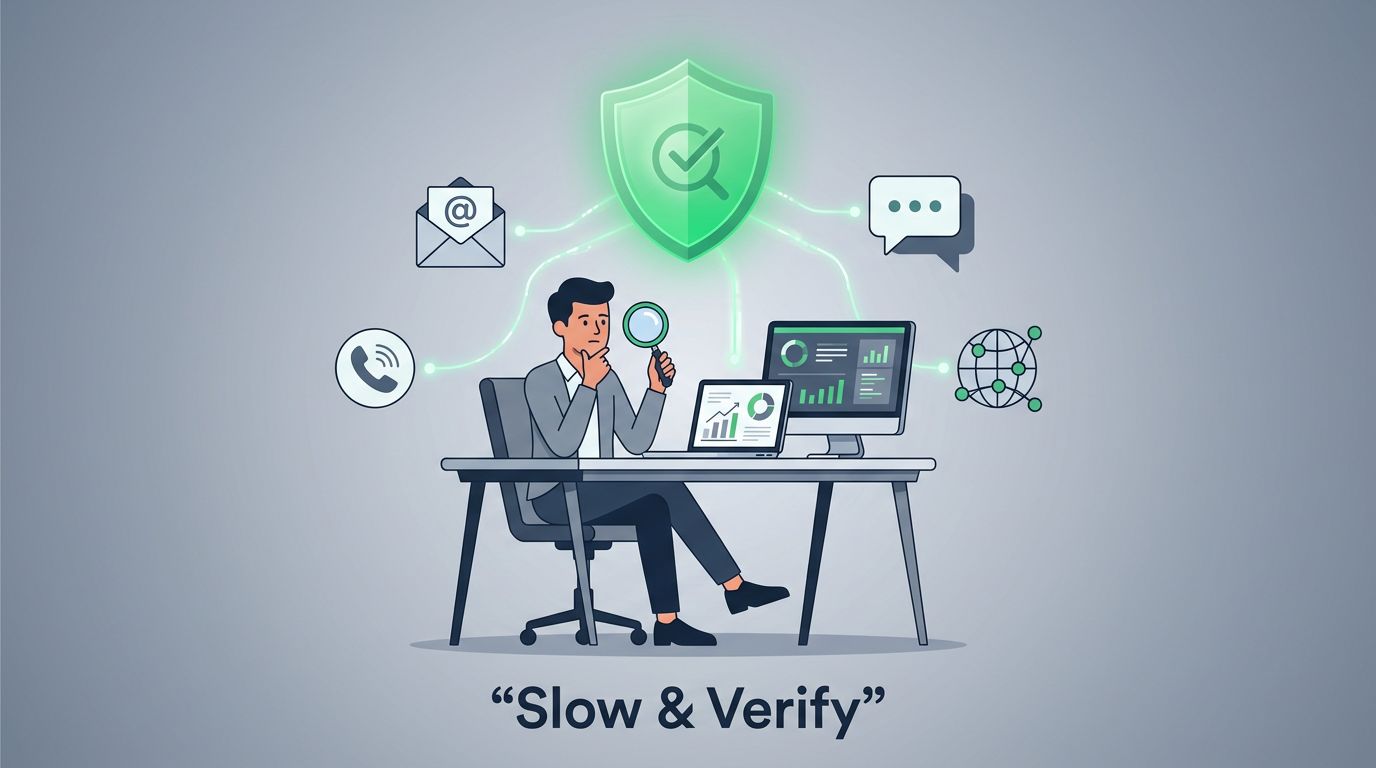
Sales reps are trained to move fast, but attackers count on that speed. In 2026, social engineering often arrives by email, phone, text, chat, and social media in the same workflow, so a fake request can look like normal business. Good social engineering training gives your team one habit that matters most, slow the moment down and verify it.
The goal is not paranoia. It’s clean judgment under pressure. When reps know what to watch for, they protect deals, customer data, and trust at the same time.
What sales teams are up against in 2026
Classic phishing still shows up, but it’s only part of the picture. Many attacks now use AI-written messages, voice clones, and follow-up texts that reinforce the same lie from different angles. A rep may get a polished email, then a call that sounds like a manager, then a Teams message that pushes urgency.
Sales teams are attractive targets because they handle prospect data, pricing, approvals, and payment details. Attackers also reuse public details from LinkedIn, event lists, and recent conversations to sound familiar. That is why the training has to match the channels your team already uses.
For a useful primer on the human side of these attacks, Salesforce Trailhead’s social engineering lesson is a practical reference point.

Red flags reps can spot in seconds
A good training program does not ask people to memorize every scam. It teaches them to notice pressure, mismatch, and process drift. The most useful social engineering red flags stand out when something feels urgent, private, or slightly off.
- The sender asks to skip normal approval steps.
- A “client” wants a password reset, MFA code, or login help.
- The message pushes a payment change or bank detail update.
- A link or attachment shows up after a casual chat or call.
- The request comes from a new channel, but claims an old relationship.
- The person refuses a known callback number or a quick video check.
One small pattern break is often enough to stop the attack. If the request would fail in your normal deal process, it deserves a second look.
If a request breaks the process, the process is the reason to pause.
Practice with role-play scenarios that feel real
Role-play works because it gives reps a safe place to feel the pressure before it shows up in a live deal. Keep the scenes short and tied to actual work. Role-play scenario ideas for sales training can help managers build a structure, but the best drills use your own tools, deal stages, and approval paths.
Use a simple setup like this:
| Scenario | Attacker’s angle | Best rep response |
|---|---|---|
| Fake CEO asks for a discount approval | “Can you send the updated pricing doc now?” | Verify through a known internal channel before acting. |
| Prospect shares a “new portal” link | “Upload the quote here so we can sign today.” | Check the domain and confirm with the account owner. |
| Helpdesk caller asks for an MFA reset | “We need the code to finish support.” | End the call and use the saved IT support line. |
Have one person play the attacker, one play the rep, and one watch for mistakes. Rotate roles so everyone feels how the pressure changes the conversation. That makes the lesson stick.

What to do the moment something feels wrong
When a rep suspects an attack, the first move is to stop the action trail. Do not argue with the sender. Do not click the link to “see what happens.” If money, credentials, customer data, or account access are involved, the rep should use a known-good channel and loop in the right people fast.
- Stop replying and do not click anything.
- Verify through a saved number, internal directory, or direct manager check.
- Capture the message, sender, number, profile, or meeting invite.
- Tell the manager, IT, and security team right away.
- If anything was shared, reset credentials and report the event as an incident.
If the request touches finance or banking, follow the escalation path immediately. For a practical tabletop template, a social engineering breach scenario gives teams a useful starting point.

Make the training stick in the sales workflow
Training only works when it shows up in daily habits. Put a short social engineering check in onboarding, manager 1:1s, and quarterly refreshers. Then pair sales, IT, and security on one shared playbook for MFA resets, payment changes, executive requests, and CRM access issues.
Short drills work better than long lectures. Five minutes is enough if the scenario feels real and the follow-up is clear. Measure how fast reps report a suspicious contact, how often they verify through the right channel, and whether managers reinforce the habit.
If you want help building a program around real sales motions, Book a Discovery Call with Bud Consulting.
Conclusion
Sales teams do not need to become security analysts. They need a few steady habits that slow manipulation and trigger the right check. The strongest programs train for the channels attackers actually use, practice real scenarios, and make escalation easy.
When a fake request meets a calm process, the attack loses most of its power. That is the point of good social engineering training.