table of contents
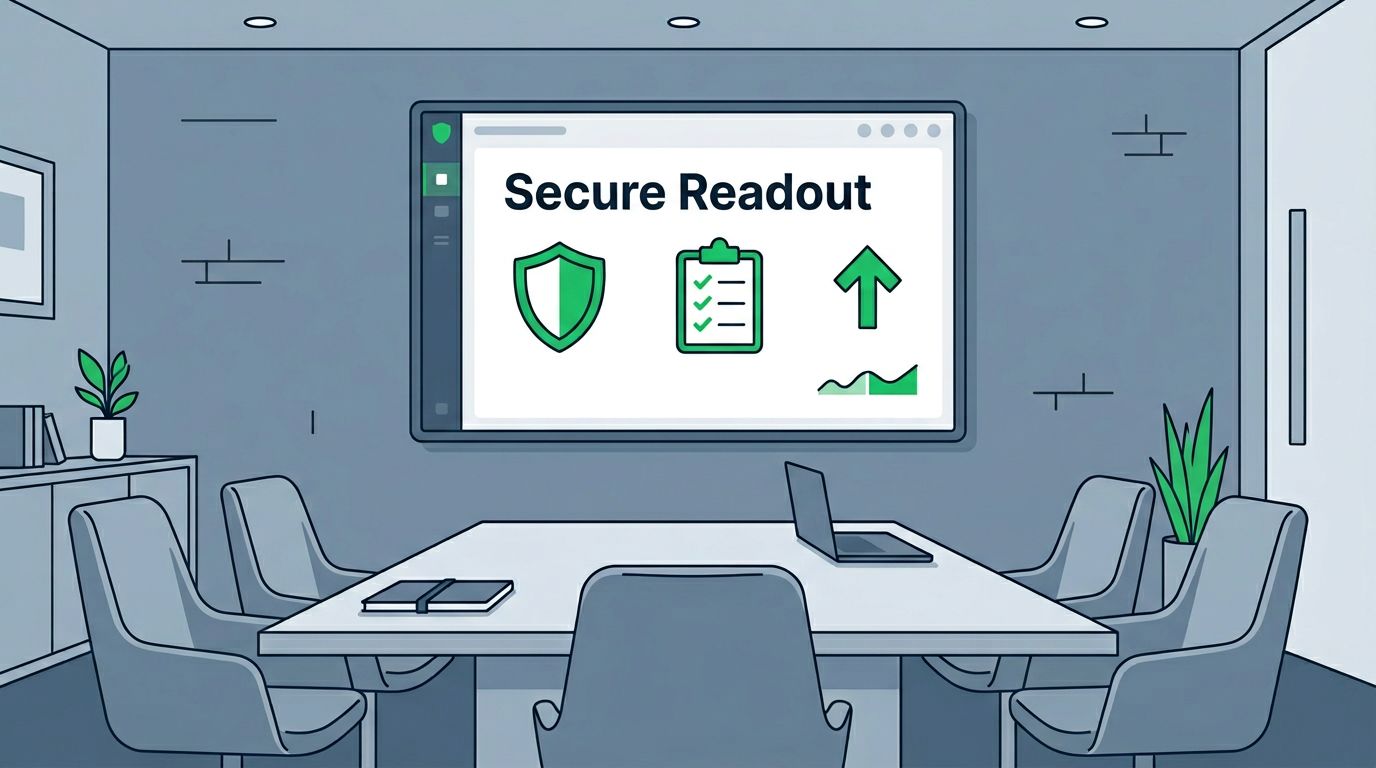
A security assessment readout can fail even when the work behind it was strong. Leaders do not need a wall of findings. They need a clear story about what matters, why it matters, and what happens next.
A strong security assessment readout gives them that story fast. It trims noise, ranks risk, and makes the next decision obvious. The goal is simple, get the room aligned before attention drops.
Lead with the decision, not the scan data
The first minute sets the tone. If you start with tool output, people start filtering. Lead with the outcome instead.
Open with one sentence that names the top risks and the ask. For example, “We found three issues that need action this month: exposed remote admin access, weak vendor review, and delayed patching on internet-facing systems.” That line tells the room where to focus.
Keep the opening simple. Avoid long background, method details, and deep technical context. Those belong later in the report. In the meeting, the audience wants the business effect, the urgency, and the choice in front of them.
If the room needs a budget ask, a go/no-go decision, or a target date, say so early. That saves time and keeps the discussion honest.
Structure the report so it scans fast
This is where the written report earns trust. The live readout can be short, but the report needs enough detail for follow-up and auditability.
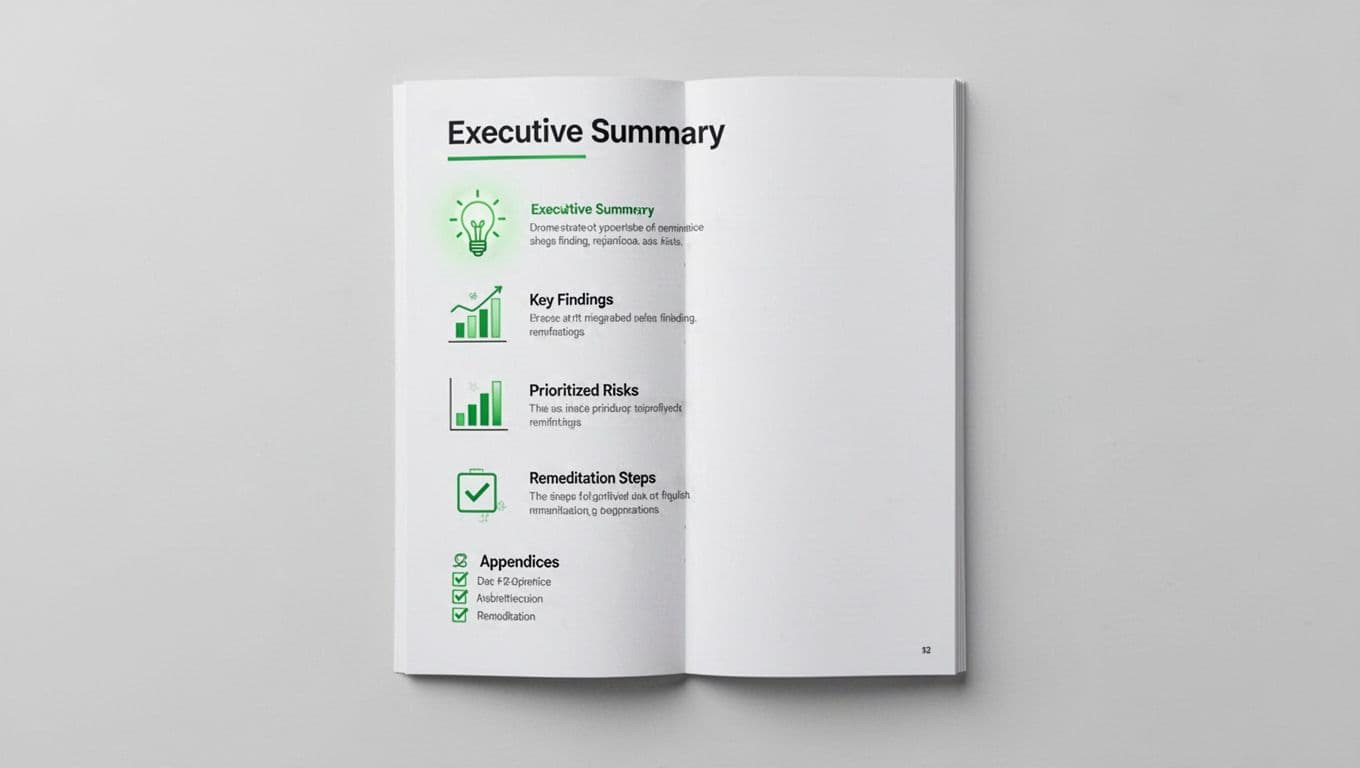
A clean structure helps readers move from summary to detail without hunting. Use sections like these:
- Executive summary with the overall risk picture and the main ask.
- Scope and method so readers know what was tested.
- Findings grouped by severity, system, or business process.
- Evidence and impact placed close to each finding.
- Recommendations and next steps with owners and timing.
Put raw screenshots, logs, and full evidence in the appendix. The main body should read like a decision brief, not a data dump. If readers need ten minutes to find the top issue, the structure is off.
Separate the written report from the live readout
The report and the presentation do different jobs. The report records facts. The readout drives discussion and decisions.
| Piece | Job | What to include |
|---|---|---|
| Written report | Full record for review and follow-up | Evidence, scope, detail, appendices |
| Live readout | Decision meeting for stakeholders | Top risks, business impact, choices |
| Follow-up note | Capture commitments after the meeting | Owners, dates, open questions |
The mistake is trying to read the report aloud. That drags the room into detail before it understands the stakes. Slides should support the conversation, not carry the full report.
Keep the live version tighter than the document. A good rule is this, if a point does not change a decision, it probably does not belong in the meeting.
Prioritize risk in business terms
A risk matrix is useful because it forces tradeoffs into the open.
Do not describe every finding as equally urgent. That blurs the message. Instead, tie each issue to a likely outcome and a business cost, such as downtime, data exposure, fraud, or recovery effort.
“This issue gives an external attacker a path into systems tied to customer data, so it should move ahead of low-impact hygiene items.”
That phrasing works because it names the path, the risk, and the priority. The same rule applies to remediation. Say what needs to change, who owns it, and when you expect it done.
For example, “Disable public admin access, require MFA, and retest within 14 days” is stronger than “improve access controls.” Another useful pattern is, “A weak vendor process can let an exposed partner account become your problem.” It keeps the message plain and hard to miss.
Adapt the readout to the assessment type
Different assessments need different emphasis. The structure stays stable, but the story changes.
Penetration tests
Focus on attack path, privilege gain, and what an attacker could do next. Leaders care less about the exploit chain than the outcome. If the test reached sensitive data, say that early and in plain language. The readout should show how the issue was chained, then point to the fix that closes the path.
Maturity assessments
These readouts should show capability gaps and the cost of delay. Talk about current state, target state, and the few control areas that will move risk the most. Avoid turning the session into a control catalog. A maturity readout works best when it shows where the program is weak, where it is improving, and which gaps block the next step.
Third-party risk reviews
Center the vendor’s exposure and your organization’s dependency. Explain what the supplier can reach, what data it touches, and what happens if they fail to fix the issue. If contract terms or compensating controls matter, say so clearly. The audience needs to understand whether the risk sits with the vendor, your team, or both.
If you need help shaping the story for leadership or clients, Book a Discovery Call with Bud Consulting.
Use a pre-delivery checklist
A good readout gets sharper before the meeting starts.

- Confirm the audience and the decision they need to make.
- Reduce the opening to one clear sentence.
- Rank findings by business impact, not by scan order.
- Tie each issue to a realistic risk scenario.
- Give each recommendation an owner, effort level, and target date.
- Remove jargon, duplicate points, and weak evidence.
- Prepare one short summary for questions and follow-up.
- Rehearse the first two minutes and the close.
If any item feels shaky, fix it before the room sees it. That small step saves a lot of confusion later.
A security assessment readout lands when it helps people decide. Keep the report complete, keep the meeting focused, and translate each finding into risk and action.
When the audience can repeat the top issue and the next step, the readout did its job.