table of contents
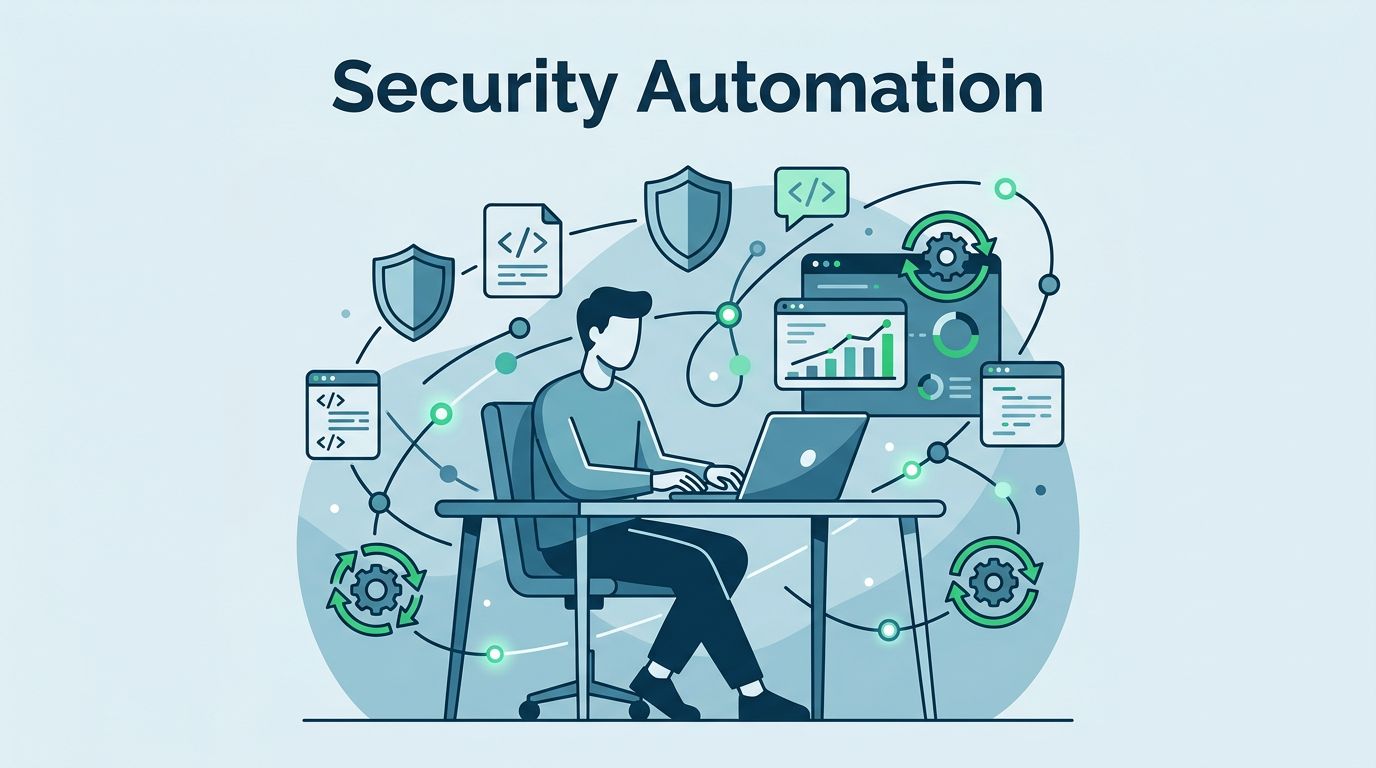
Security teams face a flood of alerts. You need someone to automate responses before burnout hits. A security automation engineer cuts manual work and speeds up threat handling.
These pros build scripts and workflows that scale. Demand stays high in 2026, with salaries from $110,000 to $190,000. Yet many teams struggle to find the right fit.
This guide shows you how to define the role, spot skills, and close hires fast. Start with your team’s current setup.
Match the Role to Your Security Maturity
Your business stage shapes the job. Early-stage teams need generalists who script basic alerts. Mature SOCs want specialists in SOAR platforms.
Ask yourself: Do you run a small IT shop or a full SIEM stack? Startups focus on cloud security basics. Enterprises demand detection engineering.
Tailor duties accordingly. For example, beginners automate ticket triage with Python. Advanced roles integrate APIs across tools like Splunk or Azure Sentinel.
Business maturity also sets scope. If you’re cloud-first, prioritize IaC with Terraform. On-prem shops stress Linux scripting.
Define success metrics upfront. Track mean time to respond (MTTR) drops or playbook coverage. This aligns hires with real needs.
Common mistake: Overlooking team gaps. Survey your analysts first. They know pain points like slow enrichment.
Key Skills Every Security Automation Engineer Needs
Look for hands-on coding first. Python tops the list; it’s key for parsing logs and building playbooks. Bash or PowerShell handles quick system tasks.
Cloud security comes next. Pros must secure AWS or Azure with tools like Sentinel. They automate guardrails via Terraform configs.
SIEM and SOAR experience matters. Candidates should query Splunk or Elastic, then orchestrate in Cortex XSOAR or Tines. Check for playbook design that cuts false positives.

Daily work mixes these. They might script API pulls from threat intel feeds, then feed data to SOAR for auto-remediation.
Detection engineering rounds it out. Build rules that spot anomalies without noise. Workflow automation ties it together, like chaining scans to deployments.
Certifications help validate. The GIAC AI Security Automation Engineer (GASAE) covers AI-driven tactics and host fixes. It’s new in 2026 and signals depth.
Soft skills count too. They explain code to non-tech analysts. Problem-solving shines in messy integrations.
Test these in screening. Ask for GitHub repos with real playbooks.
Craft a Job Description That Draws Candidates
Keep it specific to stand out. List must-haves: 3+ years Python, SOAR exposure, cloud certs like AWS Security Specialty.
Structure like this:
- Role overview: Automate SOC workflows to slash MTTR by 50%.
- Key responsibilities: Build detection rules, integrate APIs, deploy IaC for compliance.
- Requirements: Proficiency in Ansible/Terraform, SIEM queries, REST APIs.
Use action verbs. Say “develop playbooks that triage phishing” over vague “improve security.”
Post on niche boards. LinkedIn works, but target cybersecurity groups. Highlight remote options; many roles pay $125,000+ that way.
Include perks tied to 2026 trends. Offer AI tool access or conference budgets. Mention team impact, like scaling from reactive to proactive defense.
Avoid laundry lists. Focus on 5-7 bullets. End with your culture fit.
Sample opener: “Join our SOC to automate threat hunts and own detection pipelines.”
Build Your Interview Process
Screen resumes for proof. Look for pull requests in SOAR repos or scripts fixing real incidents.
Round one: 30-minute code chat. Share a prompt like “Script log parsing from JSON to flag high-severity alerts.”
Technical deep dive follows. Probe SIEM: “How do you tune rules in Elastic to reduce noise?”

Use a scorecard. Rate on a 1-5 scale:
| Skill Area | Criteria Example | Weight |
|---|---|---|
| Scripting (Python) | Writes clean, error-handling code | 25% |
| SOAR Playbooks | Designs workflows with branches | 20% |
| Cloud/IaC | Deploys secure Terraform modules | 20% |
| API Integration | Handles auth and rate limits | 15% |
| Detection Logic | Spots edge cases in rules | 20% |
Total 100%. Threshold: 4+ average to advance.
Sample questions:
- “Walk us through automating user access reviews with APIs.”
- “How do you integrate threat intel into SIEM alerts?”
- From AceMyInterviews: “Build enrichment for alerts using VirusTotal API.”
Culture fit last. Ask “Describe a failed automation and fix.”
Keep it to 4 rounds max. Decide in 2 weeks.
Benchmark Compensation for 2026
Pay matches experience. Entry-level (1-3 years): $76,000-$97,000 total. Mid (3-7): $140,000-$190,000. Seniors: $195,000-$250,000+.
Location bumps it. NYC or SF add 15-20%. Remote averages $143,000 base.
Add equity or bonuses. Top firms hit $285,000 total with perks.
Check Glassdoor data for comps. Factor certs; CISSP adds $20,000.
Negotiate total package. Offer learning stipends for GASAE.
Secure Your Hire
Hire right, and automation transforms your SOC. Focus on Python depth, SOAR savvy, and cloud fit first.
Match role to maturity, score rigorously, pay market rate. You’ll cut risks and scale fast.
Ready to fill the spot? Book a Discovery Call with Bud Consulting for vetted candidates.
(Word count: 998)