table of contents
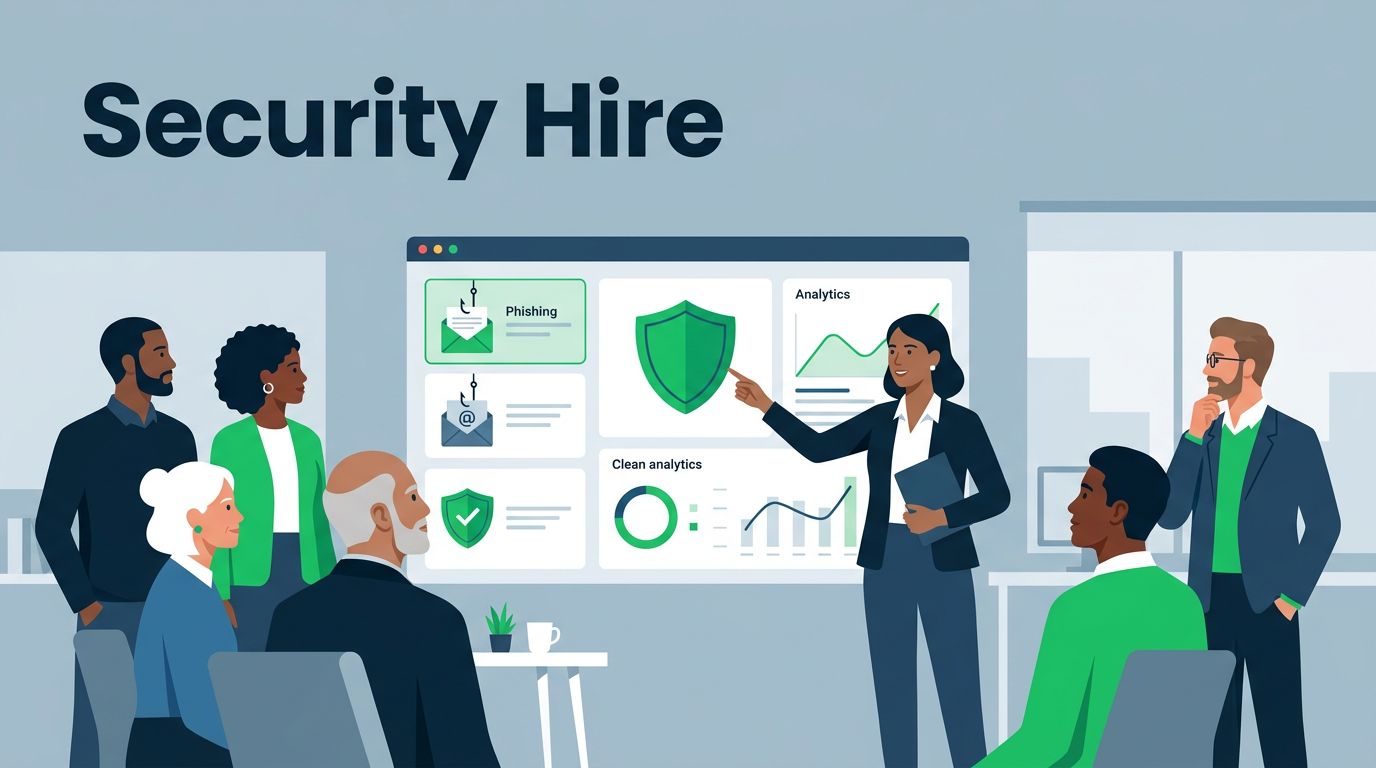
Most security awareness programs fail for one simple reason: nobody owns behavior change. A security awareness manager is not just a training coordinator. The right hire shapes habits, tracks risk, and turns security from a yearly checkbox into daily action.
That matters more in 2026, because phishing, deepfakes, and AI-made scams keep getting sharper. If you’re hiring for this role, you need someone who can teach, measure, and influence people at the same time.
The sections below show what the role should own, how to screen candidates, and where employers often get it wrong.
What a security awareness manager should own
A strong security awareness manager owns the human side of cyber risk. Recent role descriptions point to training design, phishing simulations, reporting, and stakeholder coordination, not just slide decks or annual refreshers. For a useful contrast, an information security manager job description shows how much broader that job can be.
They should run a program that changes habits over time. That means building role-based content, segmenting audiences, and using short, repeatable lessons. It also means watching how people behave after the training ends.
In practice, the role should own the annual plan, phishing tests, manager briefings, and progress reports for leadership.

How this role differs from security and compliance jobs
Role titles blur easily, so scope matters. A security awareness manager leads behavior change. A security manager focuses on controls and risk. A compliance manager keeps audits and evidence in order.
Recent cybersecurity awareness manager postings also stress global programs and human-risk reduction, which is a good sign that employers want more than training logistics.
Use the split below when you write the job spec.
| Role | Primary focus | Success looks like |
|---|---|---|
| Security awareness manager | People, habits, training, simulations | Fewer clicks, better reporting, stronger habits |
| Security manager | Controls, risk, incident support | Lower exposure, cleaner control coverage |
| Compliance manager | Standards, audits, evidence | Passing reviews, tidy documentation |
If you hire the wrong profile, you may get policy work when you need culture work.
Skills that matter most in 2026
In 2026, the best candidates understand behavior change first. They know training has to be short, relevant, and tied to real threats like phishing, vishing, and deepfakes. A current 2026 security awareness checklist shows the shift toward bite-sized learning, role-based content, and hands-on practice.
Look for five things: program design, communication, behavior metrics, stakeholder influence, and tool comfort. Someone can be great at presentations and still miss the point. You need a person who can connect security, HR, and business leaders without sounding stiff.
Recent US salary data puts the average near $93,170, so benchmark pay against scope and impact. A narrow, compliance-only role should not be priced like a program lead.
Completion rates don’t prove behavior change.
Interview questions that reveal real ability
Good interviews test proof, not polish. Ask candidates to walk through past programs, not theory. A behavioral interview guide can help you shape better prompts, but your main goal is to hear how they think.

Use questions like:
- How have you reduced phishing risk without overwhelming employees?
- Tell us about a campaign that changed a risky habit.
- How do you tailor training for different job families?
- What metrics do you trust, and why?
- How would you handle leaders who ignore awareness rules?
Listen for specific numbers, clear trade-offs, and examples of cross-team work. Weak answers stay broad. Strong answers name outcomes, setbacks, and what changed next.
Common hiring mistakes to avoid
Many hiring teams focus on the wrong proof. Certifications help, but they do not show whether a candidate can shift employee behavior. Other mistakes are even costlier.
- Writing a vague job description that mixes compliance, IT admin, and training.
- Hiring for presentation skills only.
- Forgetting to ask for reporting metrics.
- Leaving the manager without executive support.
- Treating the role as a one-person campaign factory.
If you need help defining scope before you post the role, Book a Discovery Call with Bud Consulting.
A concise job description checklist
Before you post the role, check that your job description covers:
- Program goals tied to human risk.
- Ownership of training, phishing, and reporting.
- Key partners, such as HR, IT, legal, and comms.
- Metrics the person must improve.
- Required experience with content, tools, and executive updates.
- Clear boundaries, so the role does not become generic security support.
A good job description makes the work measurable from day one.
Hiring a security awareness manager is about more than filling a seat. You’re hiring someone who can turn security messages into steady habits.
When you define ownership clearly, interview for behavior change, and measure real outcomes, the program has a real chance to stick. That’s what separates noise from progress.