table of contents
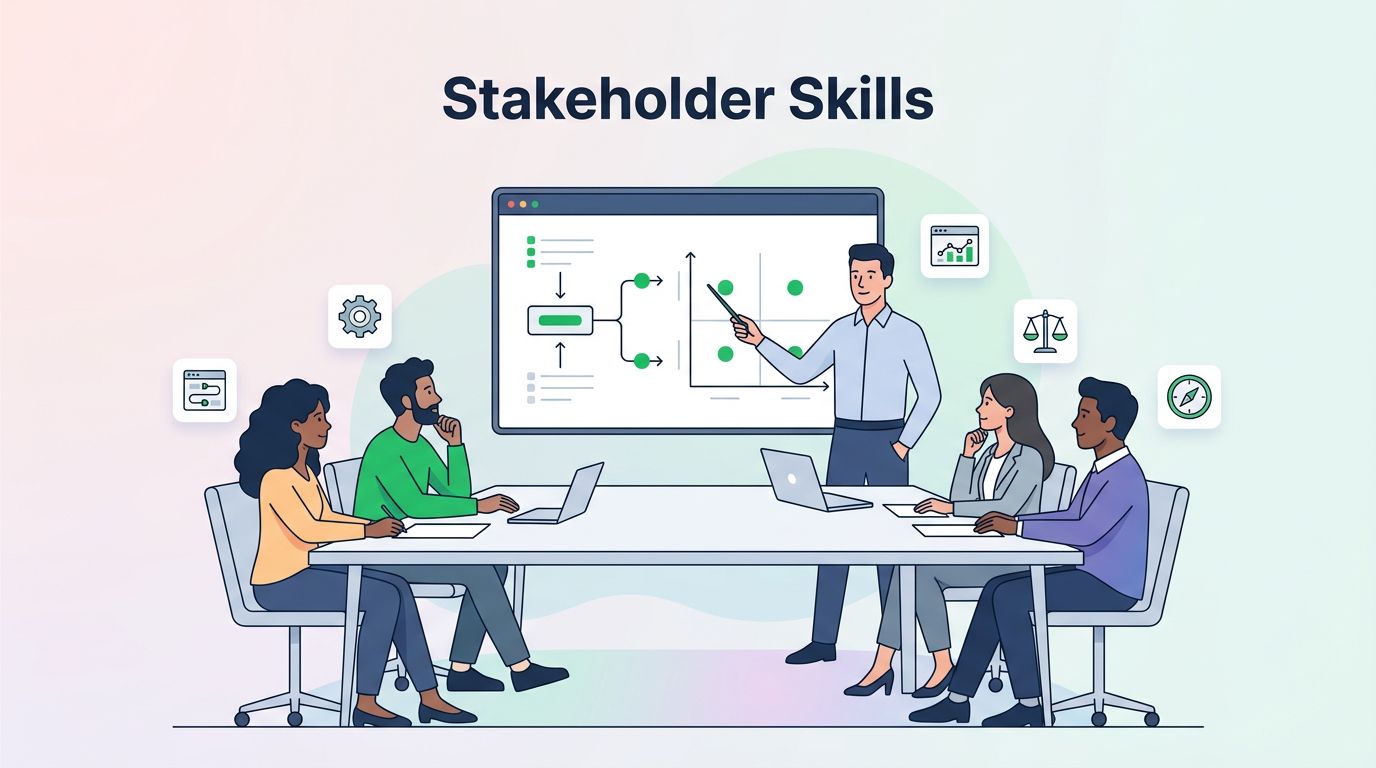
A security hire can be brilliant with tools and still struggle in the room that matters most. If they cannot explain risk, handle pushback, and move a group toward action, the team will feel it fast.
That is why security candidate assessment should go beyond technical depth. You need a way to test how a person works with product, engineering, operations, legal, and leadership, because that is where many security decisions get made.
What stakeholder skills look like in security roles
Stakeholder skill is the ability to translate security concerns into decisions other people can act on. It shows up in different ways across the function, and that distinction matters. A security analyst may need to calm a panicked business owner during an alert review. A GRC lead may need to turn a policy gap into a clear risk choice.
| Security role | What strong stakeholder skill looks like |
|---|---|
| Security analyst | Explains alerts in plain language and sets clear next steps |
| Security engineer | Works with IT and app teams on trade-offs without losing momentum |
| GRC | Turns control gaps into business choices with owners and due dates |
| AppSec | Guides developers through risk without turning reviews into fights |
| Security leadership | Builds trust with execs and frames risk in business terms |
That same skill set matters in hiring too. Guidance from soft skills in cybersecurity hiring points to communication and teamwork as core signals, and interview design should reflect that. It also helps to involve the right people in the process, as noted in this view on business stakeholders in interviews, but only if you give them a structured way to judge answers.
A candidate can be technically sharp and still miss the mark if they cannot move a group toward a decision.
Behavioral questions that expose real communication skill
Behavioral questions work best when they force the candidate to describe a real trade-off, not a polished theory. Ask for a specific situation, the audience, the resistance, and the outcome.
| Question | Strong answer sounds like | Weak answer sounds like |
|---|---|---|
| “Tell me about a time a stakeholder pushed back on a security control.” | Names the concern, explains the trade-off, and shows how buy-in happened | Blames the stakeholder or says security was right without proof |
| “How do you explain risk to a non-technical leader?” | Uses plain language, business impact, and a clear recommendation | Talks in jargon or hides behind frameworks |
| “Describe a time you had to disagree with another team.” | Stays calm, listens, and keeps the relationship intact | Wins the argument but leaves friction behind |
A strong response usually sounds specific. For example, “I showed the team two options, one fast and one safer, then tied the choice to release timing.” A weak response stays vague, like “I told them it was risky and they agreed later.”
That difference matters because stakeholder skill is visible in how a candidate structures a conversation. Do they name the audience first? Do they adjust detail level? Do they finish with a next step?

Scenario-based exercises and role-plays that feel real
Scenario exercises are better than abstract prompts because they show how a person thinks under pressure. Keep the setup close to the job. A good exercise looks and feels like work, not a puzzle.
Use one of these formats during security candidate assessment:
- A developer wants to ship a feature with a known but low-probability risk. Ask the candidate to brief the developer and propose a path forward.
- An executive asks why a remediation effort will take three sprints. Ask for a concise status update and a recommendation.
- A business owner wants an exception to a control. Ask the candidate to handle the conversation without sounding rigid.
- A cross-functional incident meeting needs a clear owner for next steps. Ask the candidate to lead the first five minutes.
The point is not to see perfect answers. The point is to see whether the candidate can gather facts, set tone, and keep the room moving.

A useful role-play also shows how the candidate reacts to pressure. If a stakeholder says, “We don’t have time for this,” does the candidate shut down, cave, or reframe the issue clearly? That reaction tells you more than a dozen polished interview answers.
A scorecard that keeps interviews fair
A clean scorecard helps interviewers judge the same behaviors in the same way. Without one, people score based on style, likability, or their own work habits.
| Criterion | 1 = weak | 3 = solid | 5 = strong |
|---|---|---|---|
| Plain-language explanation | Uses jargon or avoids clarity | Explains the issue clearly | Adjusts the message to the audience |
| Stakeholder empathy | Ignores other priorities | Acknowledges trade-offs | Balances risk and business needs |
| Decision framing | Gives no recommendation | Offers one workable option | Gives options with clear pros and cons |
| Follow-through | Leaves next steps vague | Names some actions | Defines owner, timing, and update path |
A scorecard works best when every interviewer uses the same labels. If one person scores “communication” and another scores “executive presence,” you will get noise instead of signal.
Keep bias low and calibration tight
Bias creeps in when interviewers rely on instinct or confuse polish with skill. A candidate who sounds confident is not always a candidate who can manage stakeholders well.
Use the same prompt for every candidate. Score independently before the debrief. Then compare notes using evidence, not memory. If one interviewer liked the style but another liked the content, ask which behavior matched the rubric.
A simple calibration process helps:
- Define 3 to 5 stakeholder behaviors before interviews start.
- Give every interviewer the same questions and scorecard.
- Ask for written notes tied to specific answers.
- Review a sample response together, then align on what a 1, 3, and 5 looks like.
This matters across roles. A security engineer may need sharper technical trade-offs, while an AppSec lead may need stronger developer empathy. A GRC candidate may spend more time on business language, and a security leader may need executive clarity. The rubric should fit the job, but the scoring method should stay consistent.
If your team is hiring for senior security roles and wants a tighter process, Book a Discovery Call with Bud Consulting to talk through the assessment design.
Stakeholder skill is visible when a candidate can turn tension into progress. In security hiring, that skill often decides whether the team gets a strong operator or a trusted partner.