table of contents
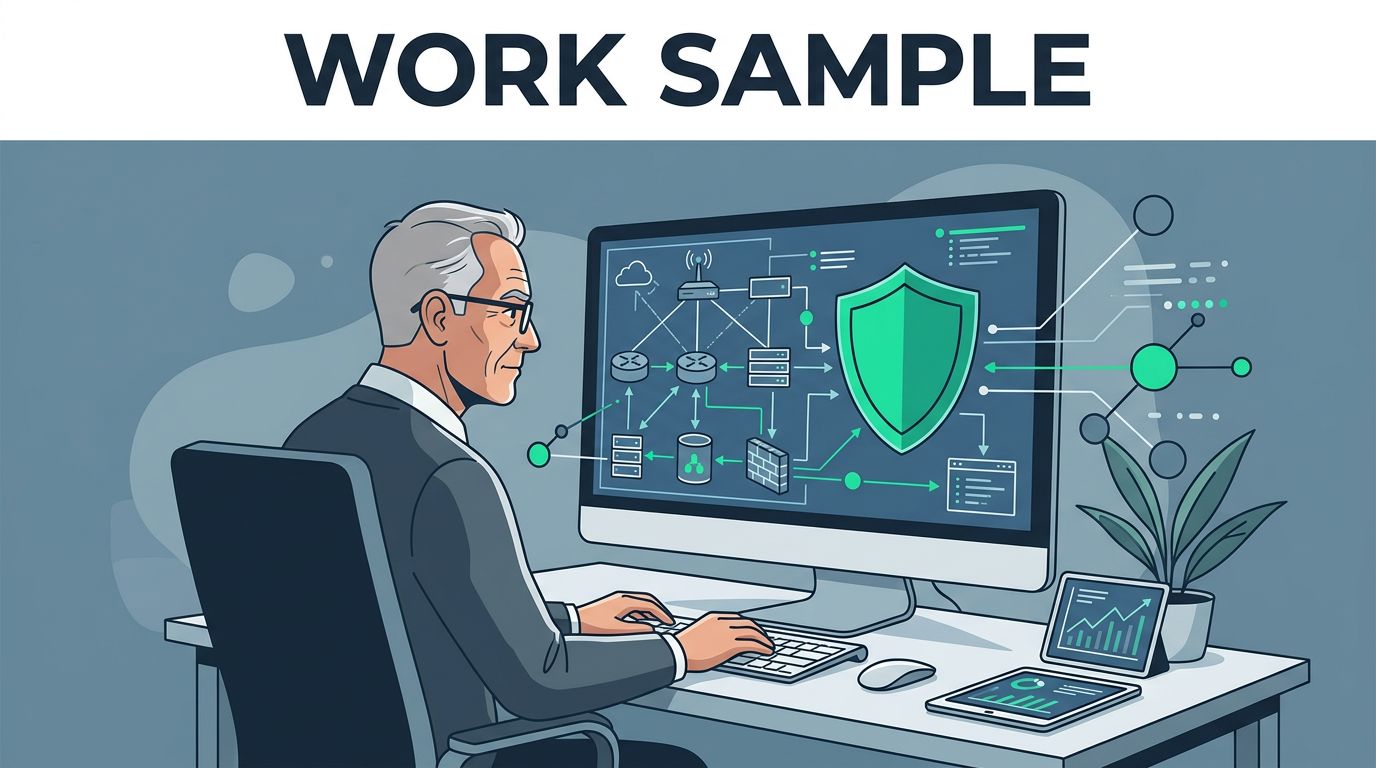
A senior security work sample should tell you how someone thinks under pressure, not how fast they can finish busywork. That matters more in 2026, when teams need people who can make solid calls, explain tradeoffs, and work well with non-security partners.
A good exercise also protects candidate experience. If the task feels like unpaid consulting, the best people will walk away.
Start with the decision you want to test
Before you write the prompt, decide what you need to learn. Do you want to see technical depth, risk judgment, or the ability to explain a plan to executives?
That answer should shape the exercise. For ideas that stay close to real hiring needs, the practical work sample exercises for hiring cybersecurity analysts article is a useful starting point.
Senior candidates rarely fail because they lack facts. They fail when they miss context, overbuild, or can’t explain why a choice matters. So the best sample mirrors that reality. It should feel like a slice of the job, not a school test.
Match the format to the senior role
Different security jobs need different signals. A cloud security leader should not get the same task as a GRC manager.
Use the table below to shape the format around the role.
| Senior role | Work sample format | Time box | What strong answers show |
|---|---|---|---|
| Security engineering | Review a service diagram and propose logging, auth, and secrets controls. | 60 to 90 minutes | Clear priorities, realistic rollout steps, and good tradeoff thinking. |
| Detection and response | Triage a short incident packet, then write the next three actions. | 60 to 90 minutes | Calm reasoning, solid escalation logic, and useful containment steps. |
| Cloud security | Assess a cloud account layout and rank the top control gaps. | 75 to 120 minutes | Platform knowledge, risk ranking, and practical fixes. |
| GRC | Map one policy gap, one control issue, and one audit response plan. | 60 minutes | Structure, judgment, and the ability to make controls usable. |
| Security leadership | Draft a 30-60-90 day memo for a new team or risk program. | 60 to 90 minutes | Prioritization, stakeholder sense, and business awareness. |
These formats work because they test decisions, not memory. They also make it easier for interviewers to compare candidates fairly.

Keep the assignment fair and time-boxed
A strong exercise has boundaries. It uses a realistic scenario, but it doesn’t steal useful work from the candidate.
Set a clear time limit and say it out loud. For most senior roles, 60 to 120 minutes is enough for a take-home. If you need more, pay for the time and explain why. Long, open-ended assignments damage trust fast.
Also, remove hidden traps. Give enough context to do the task well. Share assumptions, a simple environment diagram, and the goal of the exercise. If the role needs writing, say so. If it needs analysis, say so. Ambiguity should test judgment, not guesswork.
A good work sample tests judgment, not free labor.
You can also borrow structure from formal rubric guidance. The NIST guide on writing a hiring rubric is a useful reference when you want clearer scoring and less bias.
Score with a simple rubric
Keep the rubric short enough that every interviewer can use it. If the sheet is too long, people stop reading it. If it’s too vague, they score vibes.
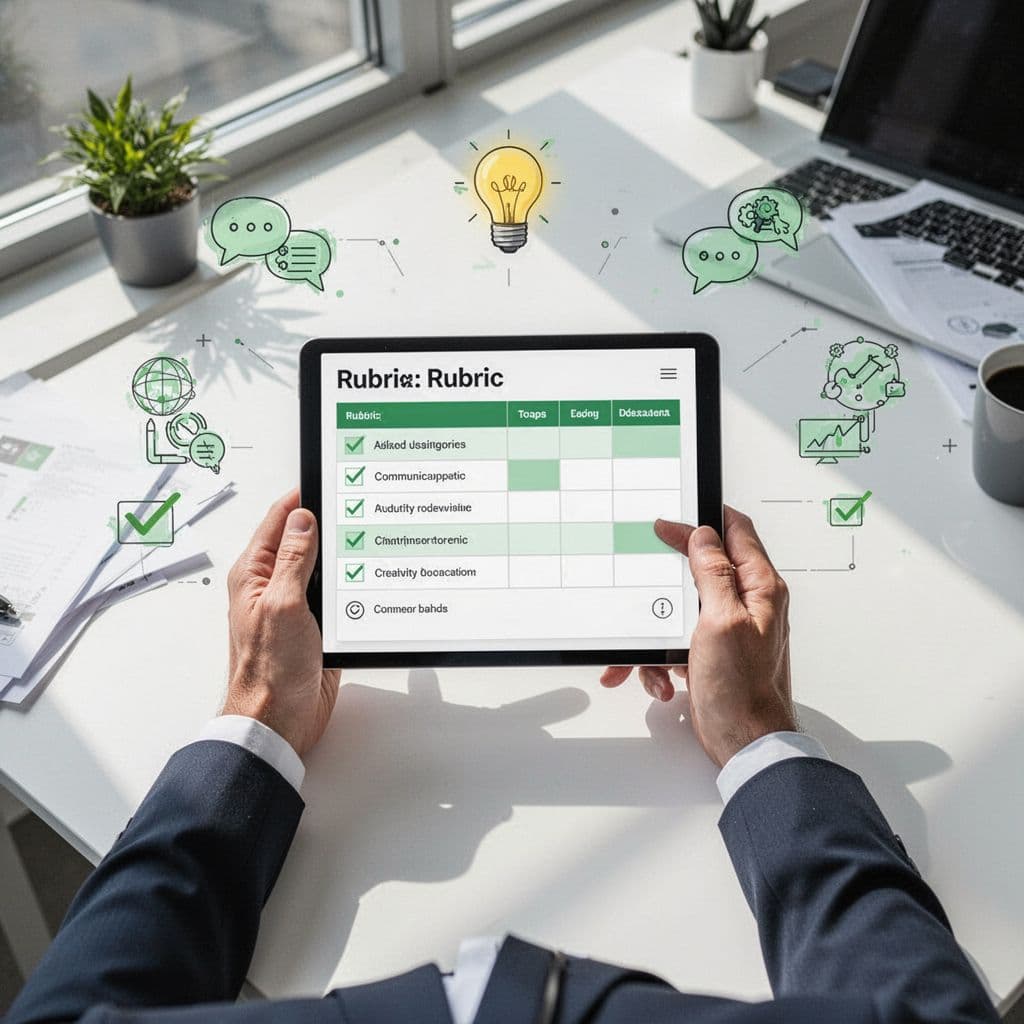
Use four criteria, each scored from 1 to 5.
| Criterion | 1 point | 3 points | 5 points |
|---|---|---|---|
| Problem framing | Misses the main issue | Sees part of it | Defines the real risk clearly |
| Technical judgment | Picks obvious fixes | Balances some tradeoffs | Makes strong, realistic calls |
| Communication | Hard to follow | Mostly clear | Easy to act on |
| Practicality | The plan is too broad | Some useful steps | Ready for real use |
Have each reviewer score independently first. Then compare notes. That keeps loud opinions from taking over the room.
Debrief the submission with evidence
A good debrief asks, “What did the candidate do, and why does that matter?” It does not start with gut feel.
Give the candidate a short presentation slot, then ask follow-up questions. Look for how they defend choices, respond to missing data, and adjust when you add one new fact. That tells you a lot about senior-level thinking.
The panel should use examples from the submission, not impressions from the chat. If someone says, “I liked the answer,” ask what part of the answer showed strong judgment. If they can’t point to evidence, the score is too soft.

Avoid the mistakes that weaken signal
The most common errors are easy to spot once you look for them:
- The task is too broad: A full incident plan or architecture review takes too long and muddies the result.
- The prompt is too close to real work: If the company can reuse the output, the exercise is exploitative.
- The scoring is based on polish: Great formatting can hide weak thinking.
- The interviewers disagree on the goal: One person wants depth, another wants speed, and the candidate gets judged twice.
- The feedback is slow or vague: Senior candidates expect a clean process and timely follow-up.
One more point matters in 2026. Candidates notice whether your process respects their time. That shapes your employer brand before they ever meet the team.
A strong work sample respects the candidate and the role
The best senior security work sample is focused, fair, and close to real decisions. It gives you signal on judgment, communication, and practical thinking without turning the process into free labor.
When the exercise is time-boxed, scored with a clear rubric, and debriefed with evidence, it becomes one of the best tools in security hiring. If you want help designing that kind of process, Book a Discovery Call with Bud Consulting.