table of contents
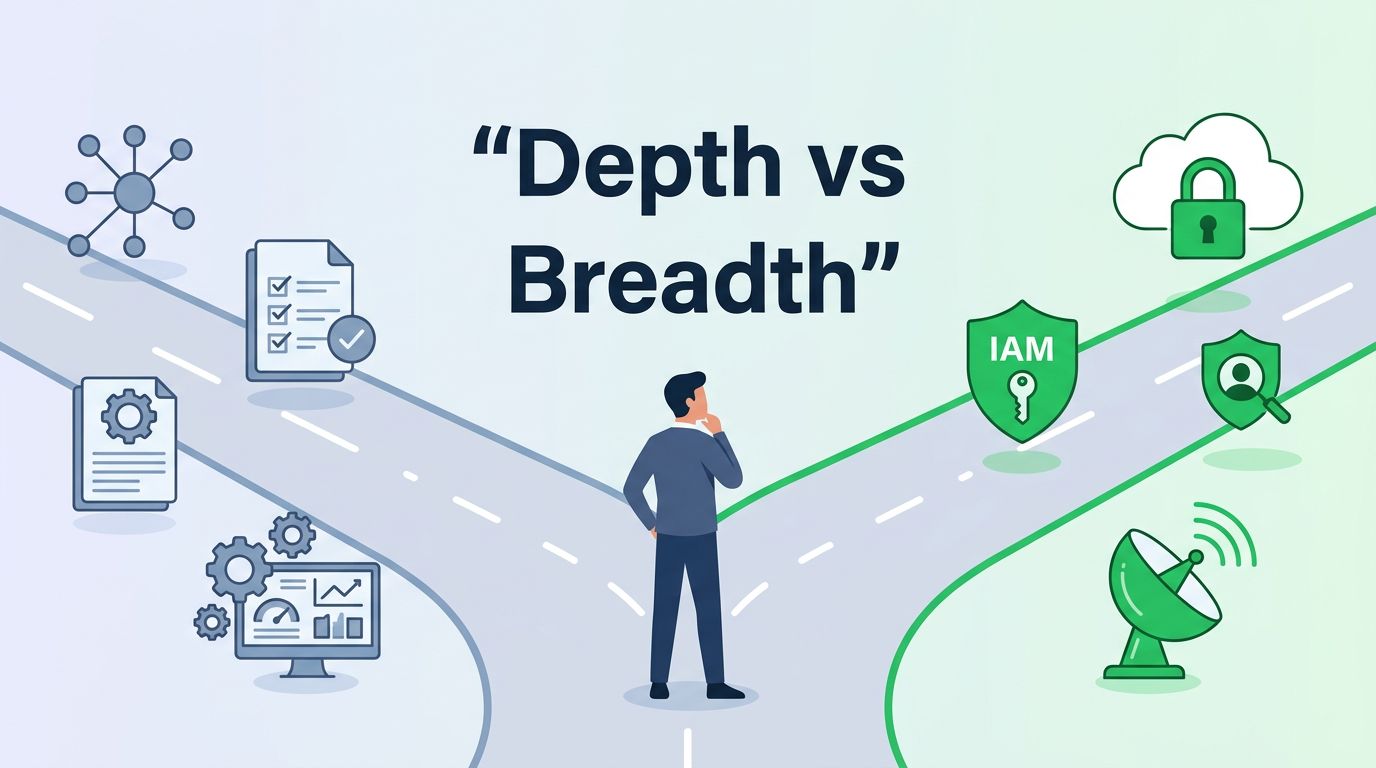
You’ve handled tickets across networks, compliance, and basic ops. Now, the job market rewards those who pick a lane. Generalists in cybersecurity face a clear choice. Stay broad and versatile, or go deeper for higher pay and stability?
In April 2026, demand surges for specialists in cloud security, IAM, and more. Your broad experience gives you an edge. It helps you connect dots others miss. Let’s map out security career paths that fit your background.
Why Move from Breadth to Depth?
Generalists thrive in small teams. You fix issues fast because you know a bit of everything. However, larger firms want experts who own tough problems. They pay premiums for that focus.
Depth means higher salaries. Cloud security roles hit $228K on average. Detection engineers command respect in SOCs. Breadth keeps you employable, but depth accelerates promotions.
Tradeoffs exist. Specialists risk missing big-picture risks. Yet, your generalist skills counter that. You spot how cloud misconfigs link to IAM flaws. That makes you marketable.
Market data backs this. Companies hire leaner now. Precision beats versatility alone. Still, blend both for the win.
Key Security Depth Areas to Consider
Pick an area that matches your strengths. Cloud security leads demand. Firms chase pros who secure AWS or Azure setups. Misconfigs cause breaches, so architects earn top dollar.
IAM follows close. You control access in hybrid worlds. Generalists from directory services transition easy. Design policies that scale.
Application security grows with DevOps. Test code early in pipelines. If you know QA, pair it with SAST tools.
Detection and response needs rule writers. Build SIEM alerts from threats. SOC vets shine here.
Security engineering builds tools. Automate defenses. GRC ties policy to ops. Threat intelligence turns data into hunts.
Here’s a quick view of demand:
| Specialization | Key Demand Driver | Generalist Transition Tip | Example Salary (USD) |
|---|---|---|---|
| Cloud Security | Cloud breaches | Own architecture decisions | ~$228K |
| IAM | Modern access control | Design governance models | High growth |
| App Security | Dev pipeline threats | Work with devs | ~$139K |
| Detection Engineering | Response speed | Build detection rules | N/A |
| GRC | Compliance ops | Link policy to practice | Steady |
| Threat Intel | Actionable insights | Integrate with hunting | N/A |

For details on GRC paths, check this 2026 career overview. Cloud and IAM top skills lists too.
Mapping Your Skills to Specialization
Your broad base is gold. IT ops pros map to cloud security. You already touch configs. Add certs like CCSP.
Network folks fit detection engineering. You know traffic. Learn EDR tools next.
Compliance experience suits GRC. Turn audits into ongoing processes. Dev background? AppSec calls.
Security engineering favors script writers. Automate what you fixed manually.
Threat intel needs analysts. Pair your ops view with OSINT.

Generalists stand out because you collaborate well. Specialists often tunnel. For tech transition tips, see this generalist-to-specialist guide.
Position your resume right. List projects that show depth in one area. Highlight breadth as a plus.
Steps to Transition Effectively
Start small. Pick one area. Cloud security? Volunteer for migrations.
Next, learn hands-on. Build a home lab. Practice IAM on free tiers.
Get certs that matter. CCSP for cloud. CISSP for GRC. Skip generics.
Network in communities. Share posts on detections. Join Slack groups.
Track progress. Update LinkedIn quarterly. Quantify wins, like “Cut alerts 30%.”
Seek mentors. Ask for stretch projects at work.

For full ladders, review cybersecurity career paths from entry to exec. Aim for roles that value your mix.
Employers notice hybrids. You reduce ramp time.
Position Yourself for 2026 Success
Depth pays off in 2026. Cloud, IAM, and detection lead jobs. Your generalist roots make you adaptable.
Blend skills smartly. Own one area, but connect it to others. That lands senior spots fast.
Firms seek pros like you. If this fits, Book a Discovery Call with Bud Consulting to review your path.
Pick your focus today. Build deliberately. Watch opportunities grow.